
Main Courses
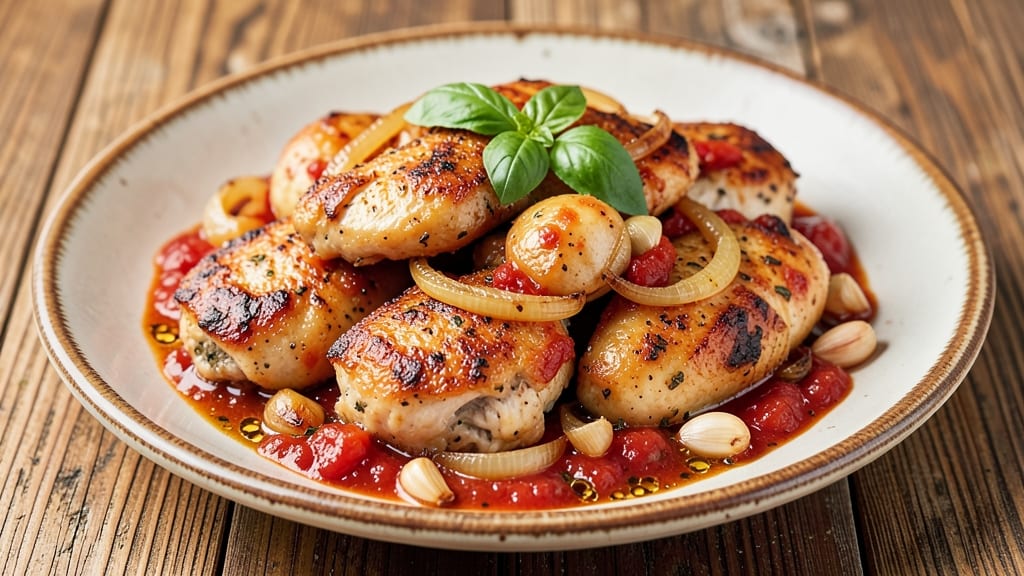
Giada De Laurentiis' chicken cacciatore recipe delivers the kind of tomato-braised richness that makes weeknight dinners feel like a Tuscan feast. 💛 After years of perfecting this dish in my professional kitchen, I've simplified Giada's signature techniques to create a version that's both restaurant-quality and doable at home.
The secret lies in proper searing and layering flavors—starting with aromatic vegetables, then wine, tomatoes, and herbs.
What sets this recipe apart is the balance of textures and flavors: tender chicken, caramelized onions, and bright herbs all simmered in a deeply aromatic tomato sauce. Unlike many cacciatore recipes, this version incorporates fresh basil at the end for a bright finish that cuts through the richness.
The dish develops its best flavors when simmered slowly, allowing the ingredients to meld together perfectly.
By the time you serve this dish, your kitchen will smell like an Italian trattoria, and every bite will deliver that perfect combination of tender chicken, caramelized vegetables, and tangy tomato sauce.
The sauce clings to the chicken, making each forkful flavorful and satisfying. This recipe is versatile enough to serve with crusty bread, pasta, or over polenta—whatever suits your meal.
Giada's method ensures you'll achieve the same restaurant-quality results without needing specialized equipment. With just a few simple ingredients and some patience, you'll create a dish that's impressive yet approachable. Let's get started on this classic Italian favorite!
Ingredients for giada's chicken cacciatore
Tuscan flavors come together in this restaurant-quality chicken cacciatore with tender chicken and bright herbs.
| Ingredient | Amount | Notes |
|---|---|---|
| Boneless Chicken Thighs 🍗 | 1 ½ lb | Pounded to even thickness |
| Yellow Onions 🧅 | 2 whole | Thinly sliced, caramelized |
| Garlic Cloves 🧄 | 6 cloves | Mince finely for aroma |
| Red Wine 🍷 | 1 cup | Bold, dry variety preferred |
| Canned San Marzano Tomatoes 🍅 | 28 oz | Crushed or diced |
| Tomato Paste 🍆 | ¼ cup | High-quality for depth |
| Fresh Basil Leaves 🌿 | 1 cup | Torn, not chopped |
| Dried Rosemary 🌿 | 1 tsp | Crushed between fingers |
| Dried Thyme 🌿 | 1 tsp | Italian variety preferred |
| Extra-Virgin Olive Oil 🫒 | ½ cup | High-quality fruity variety |
| Diamond Crystal Kosher Salt 🧂 | 1 ½ tbsp | For seasoning and caramelization |
| Freshly Ground Black Pepper 🌶️ | 1 tsp | Freshly ground preferred |
| Unsalted Butter 🧈 | 2 tbsp | For finishing sauce richness |
| Crusty Bread 🍞 | 4 slices | For serving, optional |
The chicken thighs are your foundation—boneless, skinless for even cooking, but pounded to ¼-inch thickness so they caramelize perfectly. I always grab fresh, organic thighs from Whole Foods or the butcher counter at Trader Joe's—they stay juicier than breasts. The onions need patience: low and slow caramelization for that golden depth. Don't rush it; this is where the flavor builds. For the wine, any bold red works—Chianti or Cabernet Sauvignon—just make sure it's dry. A splash of balsamic vinegar at the end brightens the sauce if you want extra tang.
No San Marzano tomatoes? Regular diced tomatoes with 1 extra tbsp tomato paste will work, but they lack that sweet, low-acid quality. Fresh basil is non-negotiable for that bright finish, but if you're short, dried basil at half the amount is a decent swap. Want to skip the wine? Beef broth plus 1 tbsp red wine vinegar mimics the acidity. The rosemary and thyme can be swapped for Italian seasoning blend, but you'll lose some complexity. Butter at the end is a Giada touch—trust me on the full-fat version—it rounds out the sauce beautifully.
This sauce tastes even better the next day as flavors meld. Store in an airtight container in the fridge for 5 days, or freeze portions for up to 3 months. I always make extra—half goes into pasta, half gets reheated with polenta. For serving, a crusty baguette is ideal, but any bread works. The chicken keeps moist if you reheat gently in the sauce—microwave in 30-second bursts, stirring between each. Don't skip the butter at the end; it's worth the extra minute to make the sauce shine.
Why You'll Love This Recipe
- No Dutch Oven? No Problem: Honestly, I’ve made this with just a heavy pot—same results. The key’s in the sear and slow braise, not fancy equipment. Plus, the caramelized onions and crisped chicken thighs? That’s the magic, not the pot.
- Red Wine Magic: That cup of bold red wine isn’t just for show—it deepens the sauce into something ridiculously complex. The 3-4 minutes of reduction? That’s where the wine turns from drinkable to downright delicious, turning the dish into a flavor bomb.
- Leftover Legend: Between us, this is my secret weapon for lazy Sundays. Reheat gently in the sauce, and the chicken stays juicy as ever. Five days in the fridge? I’ve got leftovers for lunch, dinner, and even a midnight snack. (Yes, even on a Tuesday night.)
Step-by-step instructions for tomato-braised chicken with herbs
Here's how to create Giada's signature cacciatore—rich, aromatic, and effortlessly elegant.
🍳 Step 1: Sear the Chicken for Deep Flavor
Heat a large Dutch oven over medium-high heat until hot. Add 0.5 cup extra-virgin olive oil and swirl to coat the bottom. Pat the 1.5 lb boneless chicken thighs dry with paper towels—this ensures a perfect sear. Season both sides generously with 1.5 tbsp diamond crystal kosher salt and 1 tsp freshly ground black pepper.
Working in batches to avoid crowding, add the chicken thighs to the Dutch oven. Sear for 4-5 minutes per side until golden brown with crisp edges. The chicken should release easily when ready to flip—this means it's developed that crucial crust. Transfer the seared chicken to a plate and set aside. Here's the thing—don't clean the Dutch oven yet. Those browned bits are pure flavor gold.
👨🍳 Step 2: Build the Aromatic Base
In the same Dutch oven, add 2 whole yellow onions sliced into thin half-moons. Cook over medium heat for 8-10 minutes until softened and beginning to caramelize—this should give you a sweet, golden color. Here's where it gets fun: sprinkle in 1 tsp dried rosemary and 1 tsp dried thyme, crushing the herbs between your fingers to release their essential oils.
Add the 6 minced garlic cloves and cook for 30 seconds until fragrant—don't let them brown or they'll turn bitter. Stir in 0.25 cup tomato paste and cook for 1 minute to deepen its flavor. Pour in the 1 cup red wine and scrape up all those browned bits from the bottom with a wooden spoon. Let the wine simmer for 3-4 minutes until reduced by half.
🥘 Step 3: Braise with Tomatoes and Herbs
Add the 28 oz canned San Marzano tomatoes (crushed by hand if not pre-crushed) to the Dutch oven. Stir in the seared chicken thighs, making sure they're well-coated in the sauce. Bring to a gentle simmer over medium-low heat, then reduce heat to low. Cover and let it cook for 45-50 minutes, stirring occasionally, until the chicken is tender and the sauce has thickened slightly.
Here's the moment that matters: stir in the 1 cup fresh basil leaves torn by hand and the 2 tbsp unsalted butter cut into small pieces. Let it cook uncovered for another 5 minutes to allow the butter to melt into the sauce, creating a luxurious, velvety finish. The sauce should coat the back of a spoon and the chicken should be fork-tender with no resistance.
⏰ Step 4: Rest and Serve with Crusty Bread
Remove the Dutch oven from heat and let the cacciatore rest for 10 minutes. This resting time allows the juices to redistribute throughout the chicken, ensuring each bite is moist and flavorful. Taste and adjust seasoning if needed—you might want to add a pinch more salt or a crack of black pepper to taste.
Ladle the chicken and sauce into serving dishes, passing the 4 slices crusty bread on the side. The bread is optional but perfect for soaking up every last drop of that rich tomato-herb sauce. Serve immediately while the chicken is still warm and the flavors are at their peak. The perfect cacciatore should have tender, juicy chicken swimming in a sauce that's neither too thick nor too thin—just right for dipping.
Pro Tips For Making Giada'S Chicken Cacciatore
- Salt the Chicken First: DESCRIPTION: I learned this the hard way—seasoning after searing means salt gets stuck to the pan instead of the meat. Pat the thighs dry, then hit them with all 1.5 tbsp kosher salt before they hit the oil. The crust will be crispier, and the flavor will penetrate deeper.
- Don’t Rush the Onions: DESCRIPTION: Those 2 whole yellow onions need 8-10 minutes over medium heat to caramelize properly—no skimming or stirring constantly. Let them bubble away, even if they look messy. Sweet, golden onions are the flavor backbone of cacciatore.
- Deglaze Immediately: DESCRIPTION: As soon as you remove the seared chicken, pour in that 1 cup red wine right away while the pan is still screaming hot. Scrape every last bit of browned chicken from the bottom—this isn’t just flavor, it’s the difference between good and exceptional.
- Finish with Butter Slowly: DESCRIPTION: Tossing in the 2 tbsp unsalted butter all at once can turn the sauce greasy. Cut it into small pieces and let it melt in over 5 minutes, uncovered. This emulsifies the sauce into a silky finish—no lumps, just richness.
Storing and reheating your giada's chicken cacciatore
Fridge Storage Secrets
Let your cacciatore cool to room temperature for no more than 1 hour before transferring to an airtight container—I use Le Creuset Dutch oven lids for perfect seals. Store in the fridge at 40°F or below for up to 5 days, where the flavors actually deepen overnight.
The sauce will thicken slightly, making it even more luxurious when reheated. ❄️
Freezing Like a Pro
This dish freezes beautifully for up to 3 months without losing texture. Divide into portion-sized containers or quart-sized freezer bags (squeeze out excess air). Label with the date—this sauce tastes best within 2 months.
Thaw overnight in the fridge for even reheating. I always freeze half for lazy weeknight lunches.
Reheating the Right Way
For stovetop perfection, pour the cacciatore into a heavy-bottomed pot and add 2 tbsp chicken broth to prevent sticking. Heat over medium-low for 15-20 minutes, stirring occasionally. The broth prevents the sauce from becoming gluey. Taste before serving—often needs just a pinch of salt to restore balance.
Microwave Hack
When short on time, use a microwave-safe dish and cover loosely with a damp paper towel. Heat on 50% power for 2-minute intervals, stirring between each.
The damp towel prevents the sauce from drying out. Add a splash of water if it looks too thick—this brings back that perfect dipping consistency.
Chicken-Specific Tips
The chicken stays moistest when reheated directly in the sauce. If serving separately, cover with foil and warm in 300°F oven for 10 minutes. This maintains that juicy texture Giada's method creates. I always reheat the sauce first, then add the chicken to warm through gently.
Leftovers Reinvented
Use half the sauce as a pasta sauce—toss with fettuccine and top with extra basil. The other half becomes a polenta topping. I've even spread it on toasted sourdough for a quick lunch. These leftovers prove why I always make extra—every repurpose tastes like a new dish. 💛
Nutrition facts
Frequently asked questions
Can I use chicken breasts instead of thighs in this recipe?
Chicken breasts work but require extra care to stay tender. Pound them to ¼-inch thickness and cook them for 3-4 minutes per side before braising. They'll need 10-15 minutes less braising time than thighs. For best results, use bone-in, skin-on breasts—the skin helps retain moisture during cooking.
What wine should I use if I don't have red wine?
For a non-alcoholic version, substitute with 1 cup chicken broth plus 1 tbsp red wine vinegar. If you prefer white wine, use dry white wine like Pinot Grigio, but add ½ tsp extra tomato paste to compensate for the lack of acidity. The key is maintaining that tangy brightness that cuts through the richness.
Why does my sauce turn out too thick or too thin?
Too thick? Add 2-3 tbsp warm water or broth and simmer for 5 minutes to loosen. Too thin? Simmer uncovered for 10-15 minutes to reduce, or stir in 1 tbsp cornstarch mixed with 1 tbsp cold water and cook for 2 minutes. The ideal sauce should coat the back of a spoon but still be pourable.
Can I make this dish in a slow cooker?
Yes! Sear the chicken first, then transfer everything to a 6-quart slow cooker. Cook on low for 6 hours or high for 3 hours. Add the fresh basil and butter in the last 30 minutes to preserve their flavor. The slow cooker method is perfect for hands-off prep but may need 1 extra tbsp broth to prevent drying.
What sides pair best with this dish?
Giada's cacciatore pairs beautifully with creamy polenta, crusty Italian bread, or al dente pasta like fettuccine. For a lighter option, serve with roasted seasonal vegetables or a simple mixed green salad with lemon vinaigrette. The key is balancing the dish's richness with something textural or fresh.