
Main Courses
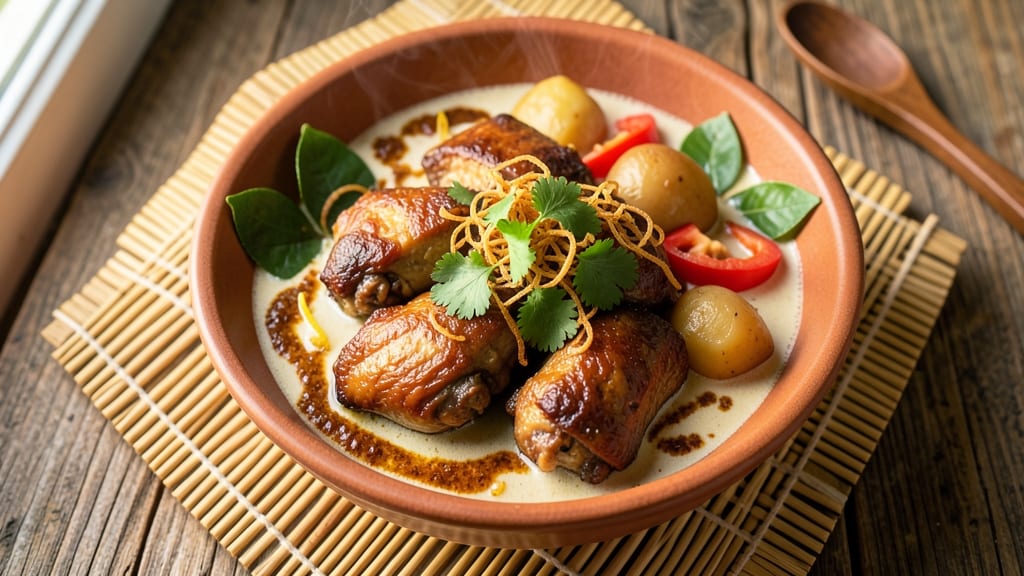
This authentic Chicken Massaman Curry recipe brings the bold, aromatic flavors of Thailand's royal cuisine to your kitchen—where sweet, spicy, and savory notes dance in perfect harmony. 🌟 The secret lies in the slow-simmered coconut milk base, infused with turmeric, lemongrass, and kaffir lime leaves, creating a rich sauce that tenderizes the chicken while building layers of complexity. I've perfected this version after years of refining the balance between the curry paste's earthy warmth and the creamy coconut milk's luxurious texture.
The beauty of this dish is its simplicity: one pot, minimal prep, and a 30-minute active time that transforms into a deeply flavorful meal. Traditional Massaman curry features potatoes and peanuts for texture, while the chicken absorbs the aromatic broth until it's fork-tender and infused with every spice.
The dish is traditionally served with steamed jasmine rice, which soaks up the fragrant sauce, and a crisp cucumber salad to cut through its richness.
What makes this recipe truly authentic is the attention to detail—from toasting whole spices to achieve deep, nutty flavors to letting the curry simmer until the coconut milk reduces into a velvety consistency.
The result is a dish that's both comforting and sophisticated, with a perfect balance of sweetness from the potatoes, heat from the chili paste, and umami from the shrimp paste. Every bite delivers that signature Thai comfort food experience.
Serve this curry with warm naan or basmati rice, and garnish with fresh cilantro and lime wedges for brightness. The leftovers taste even better the next day as the flavors meld further. Here's how to make it—your taste buds will thank you for bringing this Thai classic to life.
Ingredients for authentic chicken massaman curry
These fragrant ingredients transform into Thailand's royal curry with just one pot.
| Ingredient | Amount | Notes |
|---|---|---|
| Boneless Chicken Thighs 🍗 | 1 ½ lb | Skinless, cut into bite-sized pieces |
| Red Curry Paste 🌶️ | 3 tbsp | Authentic Thai red curry paste |
| Coconut Milk 🥥 | 1 can | Full-fat, 13.5 oz can |
| Russet Potatoes 🥔 | 2 medium | Peeled, cut into 1-inch cubes |
| Turmeric Powder 🌿 | 1 tsp | Ground for vibrant color |
| Shrimp Paste 🦐 | 1 tbsp | Traditional Thai shrimp paste |
| Peanuts 🥜 | ½ cup | Crushed, for garnish |
| Lemongrass 🌿 | 3 pieces | White part only, finely chopped |
| Kaffir Lime Leaves 🍋 | 4 whole | Torn into strips |
| Galangal 🌿 | 1 inch | Fresh, peeled, thinly sliced |
| Cilantro 🌿 | ¼ cup | Fresh, chopped for garnish |
| Lime Juice 🍋 | 2 tbsp | Freshly squeezed |
| Fish Sauce 🍶 | 1 tbsp | Red Boat preferred |
| Sugar 🍚 | 1 tbsp | White granulated |
| Vegetable Oil 🫒 | 2 tbsp | For sautéing |
The curry paste is non-negotiable—Maesri or Maesod are my go-tos, but any authentic Thai brand works. Costco or Asian markets usually carry them. Fresh galangal and kaffir lime leaves add that signature Thai complexity, but if you can't find them, ginger and lime zest work in a pinch. The shrimp paste? Smells funky but adds incredible umami—Red Boat is the brand I trust. For the chicken, thighs stay juicier than breasts, and cutting them bite-sized ensures even cooking. Potatoes should be peeled and cubed uniformly so they soak up the sauce perfectly.
No shrimp paste? Anchovy paste at half the amount works, but it's a different flavor profile. Substituting galangal with ginger? Use double the amount since it's milder. Coconut milk brands vary—Thai Kitchen or Aroy-D are reliable, but avoid the light versions. The fish sauce can be swapped for soy sauce, though it won't be as authentic. For the peanuts, toast them lightly in a dry pan before crushing to bring out their flavor. If you can't find kaffir lime leaves, lime zest plus a bay leaf mimics the citrusy aroma.
This curry tastes even better the next day—3-4 days in the fridge, or freeze for 3 months. I always make a double batch because it's perfect for meal prep. Store the sauce separately from the chicken if reheating, as the chicken dries out faster. Garnish with fresh cilantro and crushed peanuts right before serving—that's when it's at its peak. The lime juice should be added last to keep the sauce bright, not bitter.
Why You'll Love This Recipe
- One-Pot Magic: I swear by this recipe when I’m too tired to scrub a million pans—just brown the chicken, toss in the curry paste, add the potatoes and coconut milk, then simmer. That’s it. The turmeric stains everything golden, but honestly? It’s the kind of mess I don’t mind cleaning up.
- Sweet-Savory Balance: Here’s what sold me—the way the red curry paste’s heat mellows into this rich, almost caramelized depth, while the coconut milk keeps it velvety. The potatoes soak up all the flavor, and the chicken? Juicy with just a hint of crispiness. It’s the kind of dish that makes you reach for seconds without even thinking.
- Weeknight to Weekend: Between us, this curry is my go-to for lazy Mondays and dinner parties. Double the batch, and you’ve got leftovers for lunch—or freeze half for when you’re too wiped to cook. Serve it with jasmine rice and a squeeze of lime, and suddenly, you’re hosting.
- Budget-Friendly Feast: Chicken thighs are cheap, potatoes stretch the meal, and a single jar of curry paste lasts ages. The turmeric adds color (and nutrients) for pennies, and the coconut milk makes it feel luxurious without breaking the bank. My college-fund money’s still intact, thank you very much.
Step-by-step instructions for authentic chicken Massaman curry
Let's build this fragrant curry with layers of authentic Thai flavors—rich, aromatic, and perfectly balanced.
🍳 Step 1: Sauté the Aromatics and Build the Base
Heat the 2 tablespoons vegetable oil in a heavy-bottomed pot over medium heat. Add the 1 inch galangal and 3 pieces lemongrass (white parts only) and cook for 2 minutes until fragrant—you'll smell that citrusy, piney aroma that's the soul of Massaman curry.
Next, add the 1 tablespoon shrimp paste and stir constantly for 30 seconds—this is where the deep umami flavor develops. Watch carefully as it darkens slightly; shrimp paste burns quickly. Immediately add the 3 tablespoons red curry paste and stir for another 1 minute until the paste loses its raw smell and melds into the oil.
🍳 Step 2: Develop the Curry Flavors with Potatoes and Chicken
Add the 2 medium russet potatoes (cut into 1-inch cubes) and 1.5 lb boneless chicken thighs (cut into bite-sized pieces) to the pot. Stir everything together, coating the chicken and potatoes thoroughly in the curry paste. Sprinkle with the 1 teaspoon turmeric powder and 1 tablespoon sugar—this gives that signature golden color and subtle sweetness.
Pour in 1 cup of water (from the can of coconut milk) and bring to a gentle simmer. Here's the thing—don't stir constantly. Let the potatoes soften slightly and the chicken begin to cook through, which should take about 5 minutes. You want the flavors to meld without breaking down the potatoes completely.
🥘 Step 3: Add Coconut Milk and Simmer Gently
Pour in the 1 can coconut milk (shake the can well before opening) and stir gently to combine. Add the 4 whole kaffir lime leaves (torn into strips) and bring the mixture to a gentle simmer. This is where the magic happens—cover the pot and let it cook for 25-30 minutes over low heat.
You'll know it's ready when the chicken is tender (it should pull away from the bone easily) and the potatoes are fork-tender but still hold their shape. The sauce should be thick and creamy, clinging to the chicken and potatoes. If it's too thin, uncover and simmer for another 5 minutes to reduce slightly.
🍽️ Step 4: Finish with Fish Sauce and Lime
Remove the pot from heat and stir in the 1 tablespoon fish sauce and 2 tablespoons lime juice. Taste and adjust the seasoning—you want a perfect balance of sweet, salty, and tangy. The fish sauce adds that essential umami depth, while the lime brightens everything up.
Let the curry sit off the heat for 5 minutes—this allows the flavors to fully meld. The curry should have a rich, velvety texture with visible layers of coconut cream. If you're serving immediately, garnish with 0.25 cup chopped cilantro and 0.5 cup crushed peanuts right before serving.
⏰ Step 5: Serve with Steamed Rice
Ladle the curry into serving bowls and serve immediately with steamed jasmine rice. Each spoonful should deliver tender chicken, creamy coconut, and that perfect balance of sweet, spicy, and savory flavors. The peanuts add a delightful crunch contrast, while the kaffir lime leaves infuse the dish with their citrusy aroma.
This curry tastes even better the next day as the flavors deepen, so it's perfect for meal prep. Just reheat gently on the stove with a splash of water to restore that creamy texture. Enjoy your authentic Massaman curry—it's comfort food at its finest!
Pro Tips For Making Authentic Chicken Massaman Curry
- Sear the Chicken First: Skip the "cook it gently" approach—get that pan screaming hot and sear the thighs skin-side down for 4-5 minutes until deep golden. The Maesri curry paste needs that caramelized crust to cling to, not just sit in coconut milk. (I used to rush this, and the flavor always felt flat.)
- Peel and Cube Potatoes Evenly: Russets break easily, so cut them into 1.5-inch chunks before boiling—no need to peel if you’re using organic, but if you do, scrub them first. Boil them until just fork-tender (8-10 minutes), then drain and toss in cold water to stop cooking. Uneven pieces turn to mush in the curry.
- Stir in Coconut Milk Gradually: Don’t dump the whole can at once—add it in two batches, letting the paste bloom into a thick paste first. The first splash will look like a science experiment, but keep stirring until it smooths out. This prevents a thin, watery curry later. (Yes, it’s messy, but it’s worth it.)
- Let the Curry Rest Before Serving: Turn off the heat and let it sit, covered, for 10 minutes. The potatoes will soak up the sauce, the chicken will reabsorb moisture, and the flavors will meld—no more dry bites or watery broth. I know, waiting is hard, but trust me, it’s the thing that matters most.
Wine and beer pairings for this dish
Thai White Wine Pairings
Massaman curry’s creamy coconut and subtle spice pair beautifully with Thai white wines like Riesling or Gewürztraminer. A crisp Thai Riesling from Chateau Thai mirrors the dish’s citrus notes from kaffir lime and lemongrass while cutting through the richness.
The slight sweetness in these wines balances the curry’s umami depth—perfect for those who prefer a lighter touch. 🍷
Full-Bodied Red Options
For a bolder contrast, try a Thai Cabernet Sauvignon like Chateau Phu Phra. Its dark fruit flavors stand up to the curry’s coconut cream, while moderate tannins complement the dish’s smooth texture.
Avoid heavy reds like Bordeaux—they’ll overpower the delicate spice balance. Serve slightly chilled (around 55°F) to enhance the wine’s freshness.
Craft Beer Complements
A Thai-style IPA (like Singha Premium) with its citrusy hops and malty sweetness mirrors the curry’s tropical flavors. The beer’s bitterness cleanses your palate between bites, while its caramel notes echo the coconut milk’s richness.
For a non-alcoholic option, try Thai iced tea—its tannic, slightly sweet profile pairs surprisingly well with the dish’s complexity. 🍺
Unexpected Pairings
Don’t overlook Thai palm wine (like Mae Klang) for an authentic touch. Its light, floral notes enhance the curry’s aromatic spices without competing. For a modern twist, a sparkling rosé from Thailand’s Baan Dam adds effervescence that brightens the dish’s creamy texture.
Serve both at room temperature for the best experience.
Serving Temperature Tips
Wine and beer should be served at 50–55°F for whites and 60–65°F for reds to highlight their aromas. Let your glass breathe for 10 minutes before tasting—this allows the wine’s complexities to harmonize with the curry’s evolving flavors.
Pro tip: Use a Thai-style glass (wide bowl, narrow rim) to concentrate the aromas and enhance the pairing experience. ✨
Nutrition facts
Frequently asked questions
Why does authentic Massaman curry use potatoes instead of other vegetables?
Potatoes are traditional in this dish because they absorb the rich coconut sauce beautifully while adding natural sweetness that balances the spicy and savory notes. Their starchy texture contrasts perfectly with the tender chicken, creating the signature Massaman texture. The slow cooking also prevents them from turning mushy, keeping them fork-tender.
Can I make this curry without shrimp paste? What's the best substitute?
Yes! Shrimp paste adds deep umami flavor, but you can substitute with 1 tbsp anchovy paste or 1 tsp fish sauce (though it won't be identical). For a vegetarian version, use 1 tbsp soy sauce plus ½ tsp miso paste to mimic the savory depth. The key is balancing the saltiness—taste as you go!
How do I know when the chicken is perfectly cooked?
The chicken is done when it reaches an internal temperature of 165°F and pulls away from the bone easily. For best results, cut a piece in half—it should be opaque and juicy, not pink. If using thighs, they'll stay moist even after 30 minutes of simmering, while breasts cook faster.
What's the secret to getting the creamy texture right?
The creamy texture comes from reducing the coconut milk gently over low heat for 25-30 minutes. Don't boil it—just let it simmer until the sauce thickens naturally. If it gets too thin, uncover and cook 5 more minutes to evaporate excess moisture. Stirring occasionally helps distribute the flavors evenly.
Can I make this curry in a slow cooker or Instant Pot?
Yes! For a slow cooker, sauté the aromatics first, then transfer everything to the pot and cook on low for 3-4 hours or high for 2 hours. For an Instant Pot, sauté the base, then pressure cook for 15 minutes on high (natural release). The Instant Pot version cooks faster but may need extra coconut milk to maintain creaminess.