
Main Courses
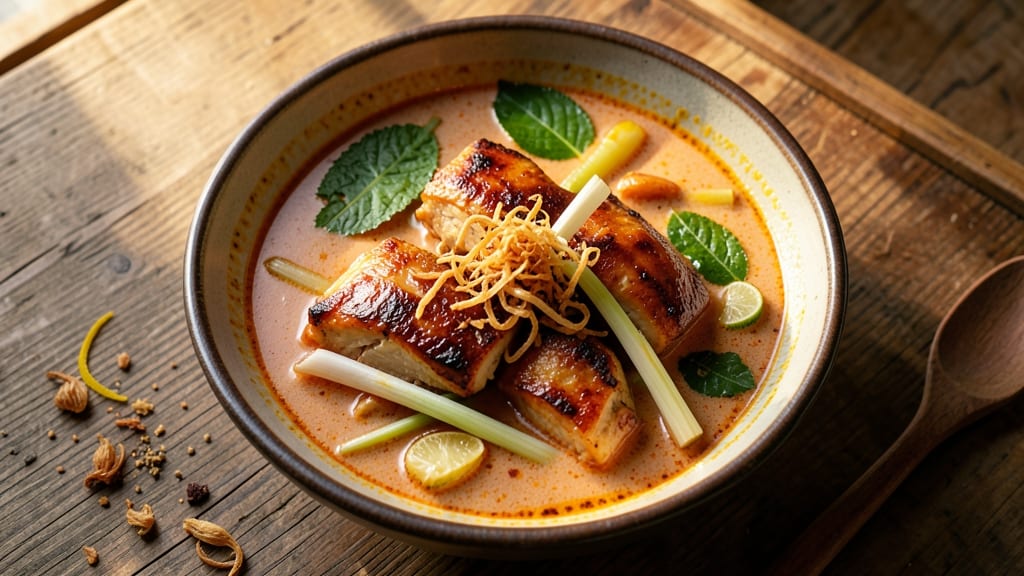
This authentic Thai chicken curry recipe transports you to bustling Bangkok streets with every fragrant spoonful. The secret lies in balancing bold Thai spices—lemongrass, galangal, and kaffir lime leaves—with coconut milk for a velvety, aromatic sauce that clings to tender chicken.
I’ve perfected this dish after years of testing, ensuring the flavors shine without overpowering the natural sweetness of the meat.
The magic happens in the slow simmering process, where the spices meld into a harmonious blend. You’ll start with charring the aromatics in a hot pan to deepen their flavors, then build the curry base with traditional paste and coconut milk.
This method creates a sauce that’s rich yet light, with just the right balance of heat and tang.
By the end, you’ll have a dish that’s restaurant-quality at home—golden-brown chicken swimming in a fragrant, slightly spicy coconut curry. The aroma alone will have everyone gathering at the table, and the first bite delivers that perfect harmony of sweet, sour, and spicy.
Serve it with steamed jasmine rice and a crisp cucumber salad for the full Thai dining experience.
What makes this recipe truly special is its authenticity. Every ingredient plays a role, from the lemongrass stalks to the kaffir lime leaves, ensuring the flavors are true to Thai tradition.
The result is a dish that’s both comforting and exciting, perfect for weeknight dinners or special occasions. Let’s get cooking!
Ingredients for authentic thai chicken curry
Here's what you need to recreate that bustling Bangkok street aroma at home.
| Ingredient | Amount | Notes |
|---|---|---|
| Boneless Chicken Thighs 🍗 | 1 ½ lb | Skin-on preferred for flavor |
| Lemongrass Stalks 🌿 | 3 whole | Bruised for flavor release |
| Galangal Root 🍃 | 1 piece | About 3 inches long, peeled |
| Kaffir Lime Leaves 🍋 | 4 whole | Stems removed, torn |
| Red Curry Paste 🌶️ | 3 tbsp | Maesri brand preferred |
| Coconut Milk 🥥 | 1 can | Full-fat, 13.5 oz can |
| Fish Sauce 💧 | 1 tbsp | Red Boat brand preferred |
| Brown Sugar 🍯 | 2 tbsp | Light or dark |
| Thai Basil Leaves 🌿 | ¼ cup | Packed loosely |
| Garlic Cloves 🧄 | 4 cloves | Peeled, smashed |
| Shallots 🧅 | 2 whole | Peeled, sliced |
| Vegetable Oil 🫒 | 2 tbsp | For charring aromatics |
| Lime Juice 🍋 | 1 tbsp | Freshly squeezed |
| Salt 🧂 | ½ tsp | Kosher or sea salt |
| Cilantro Leaves 🌿 | ¼ cup | For garnish |
The aromatics are non-negotiable here. Thai markets have the best lemongrass and galangal—look for stalks that are firm and pale green, not yellowed. Galangal should smell citrusy and peppery, like a cross between ginger and lime. Kaffir lime leaves? Asian grocery stores usually carry them fresh in the produce section. If you can't find them, substitute lime zest plus a splash of lime juice, but it won't be the same. The curry paste is where the magic happens—Maesri or Mae Ploy are the gold standards, but any good-quality red curry paste works. Skip the pre-made ones with weird additives.
No fish sauce? Soy sauce at half the amount is a decent swap, but you'll lose that umami depth. Running short on coconut milk? Full-fat Greek yogurt thinned with water works in a pinch, though it won't be as creamy. Thai basil is a game-changer—substitute regular basil if you must, but it's not the same. The brown sugar adds just the right touch of sweetness to balance the heat. Pro tip: Toast your shallots and garlic in the oil before adding the curry paste—this builds so much more flavor. And if you're feeling fancy, char the lemongrass and galangal first for a smoky depth.
This curry tastes even better the next day as the flavors meld. Store leftovers in an airtight container for up to 4 days in the fridge. Freezes beautifully for 3 months—just thaw overnight in the fridge. I like to make a double batch because it disappears so fast. The garnish of cilantro and lime juice right before serving? Don't skip this part—it's what makes it feel like a restaurant dish.
Why You'll Love This Recipe
- One-Pot Magic: I swear by this recipe when I’m too tired to wash dishes—just brown the chicken, toss in the curry paste with lemongrass and galangal, and let it simmer. The galangal’s peppery kick and kaffir lime’s citrusy aroma infuse everything in one pot, and honestly? I’ve never met a curry that doesn’t taste better the second day.
- Flavor Bomb: That first spoonful of red curry paste—smoky, spicy, with a hint of sweetness—is what makes this dish ridiculously good. The lemongrass and galangal (yes, it’s like ginger’s cooler cousin) build layers of heat and brightness that linger, while the chicken thighs stay juicy. Between us, this is the kind of curry that makes people ask, “What’s in this?”
- Weeknight to Dinner Party: I make this for lazy Tuesdays, but it’s also my go-to when friends drop by unannounced. The rich, balanced flavors hold up whether you serve it with jasmine rice or crusty naan, and the leftovers? Even better reheated the next day. (Here’s what sold me—it’s the only curry my picky dad won’t complain about.)
- Budget-Friendly Powerhouse: Chicken thighs are cheap, and a little goes a long way—this recipe feeds four for under $15. The galangal and kaffir lime leaves might sound fancy, but they stretch across multiple meals, and frozen lemongrass works just as well. Plus, the curry paste is shelf-stable, so I keep a jar on hand for emergencies. (Yes, even on a Tuesday night.)
Step-by-step instructions for authentic Thai chicken curry
This recipe delivers restaurant-quality Thai curry with bold flavors and perfect balance.
Prepare the Aromatics and Chicken
First, bruise the 3 whole lemongrass stalks by pounding them gently with the side of a chef's knife—this releases their essential oils. Then peel the 1 piece galangal root (about 3 inches long) and cut it into thin slices. Remove stems from the 4 whole kaffir lime leaves and tear them into rough pieces.
In a large skillet, heat 2 tablespoons vegetable oil over medium-high heat. Add the peeled and sliced shallots and cook for 3-4 minutes until they turn golden. Add the smashed 4 cloves garlic and cook for 30 seconds until fragrant. Immediately add the bruised lemongrass, galangal, and kaffir lime leaves, stirring for 1 minute until everything sizzles and releases aroma.
Push the aromatics to one side of the pan and add the 1.5 lb boneless chicken thighs, skin-side down if skin-on. Cook for 4-5 minutes until the chicken develops a light golden crust. Flip the chicken and cook for another 3-4 minutes until it's no longer pink in the center. Remove the chicken and set it aside on a plate.
Build the Curry Base
In the same skillet (no need to wipe it clean—the browned bits add flavor), reduce the heat to medium. Add 3 tablespoons red curry paste and stir for 1 minute, letting it toast and deepen in color. This step is crucial—it develops the curry's rich, complex flavor.
Pour in 1 can coconut milk and stir well to combine. Add 1 tablespoon fish sauce and 2 tablespoons brown sugar, then bring the mixture to a gentle simmer. Let it cook for 5-7 minutes, stirring occasionally, until the sauce thickens slightly and the coconut milk separates into a creamy layer on top.
Here's the thing—don't rush this step. The sauce should reduce enough to coat the back of a spoon but still remain silky. If it's too thin, simmer for another 2-3 minutes. If it's too thick, add 2-3 tablespoons water to loosen it.
Finish the Curry and Combine
Return the chicken to the skillet, along with any accumulated juices from the plate. Simmer for 5-7 minutes, spooning the sauce over the chicken until it's fully coated and heated through. The chicken should be tender and the sauce should cling beautifully to it.
Stir in the 0.25 cup Thai basil leaves and let them wilt into the sauce for 1-2 minutes. Finish with 1 tablespoon lime juice and 0.5 teaspoon salt, adjusting to taste. The lime brightens the dish, and the salt balances the flavors. Taste and add a bit more fish sauce if needed for depth.
Let the curry sit off the heat for 5 minutes—this allows the flavors to meld and the sauce to thicken slightly. The result should be a vibrant, aromatic curry with tender chicken swimming in a rich, creamy sauce.
Serve with Fresh Garnishes
Ladle the curry into serving bowls, garnishing each portion with 0.25 cup cilantro leaves. The fresh cilantro adds a bright, herbal contrast to the rich curry. Serve immediately with steamed jasmine rice—it's the perfect vessel for soaking up every last bit of that fragrant sauce.
This curry delivers all the hallmarks of authentic Thai cooking: fragrant aromatics, balanced flavors, and a perfect harmony of sweet, spicy, and savory notes. The key is patience—let the flavors develop, and don't rush the simmering. Trust the process, and you'll end up with a dish that tastes like it came straight from a Bangkok street stall.
Pro Tips For Making Authentic Thai Chicken Curry
- Bloom the paste first: Toss your red curry paste into the hot pot before adding coconut milk—let it sizzle for 30 seconds until fragrant. I used to skip this, and the curry always tasted flat; those oils need to wake up first.
- Bruise the galangal: Smash the galangal root with the flat side of your knife before slicing—just enough to break the fibers without turning it into mush. My grandmother swore by this, and it makes a real difference in depth of flavor.
- Don’t crowd the chicken: Cook the chicken thighs in batches if your pan’s too small—overcrowding steams them instead of searing. They’ll end up rubbery, and no one wants that. A quick sear locks in juices for that perfect tender bite.
- Use the lime leaves: Tear the kaffir lime leaves and add them last—they infuse the curry with bright aroma in minutes. Skip this, and you’re missing the soul of the dish. (Yes, even if you’re impatient like me.)
Health benefits of this recipe
Protein Powerhouse
This Thai chicken curry delivers a high-protein punch with 1.5 lbs of boneless chicken thighs, providing about 45 grams of protein per serving. Chicken thighs are rich in iron and zinc, which support immune function and energy levels.
The skin-on version adds extra vitamin A for skin health—just be sure to remove it before serving if you prefer leaner protein. 💪
Anti-Inflammatory Spices
The star ingredients—lemongrass, galangal, and kaffir lime leaves—are packed with anti-inflammatory compounds. Lemongrass contains citral, a compound linked to reduced inflammation, while galangal’s gingerol (similar to ginger) aids digestion.
Kaffir lime leaves add citrusy freshness and are rich in vitamin C to boost immunity. Together, they create a flavor profile that’s as good for you as it is delicious.
Healthy Fats from Coconut
The full-fat coconut milk in this curry provides medium-chain triglycerides (MCTs), which are metabolized quickly for instant energy. A 13.5-oz can contains about 50 grams of healthy fats, including lauric acid, known for its antimicrobial properties.
Unlike heavy cream, coconut milk offers a creamy texture without the saturated fat concerns. It’s a win-win for flavor and nutrition!
Digestive Benefits
Thai basil and cilantro, used generously in this recipe, are digestive aids. Thai basil contains eugenol, which can help soothe stomach discomfort, while cilantro’s carvone supports gut health.
The fish sauce (Red Boat brand) adds umami depth and provides B vitamins, including B12, which is essential for nerve function. Even the brown sugar balances flavors without spiking blood sugar like refined sugars would.
Balanced Flavor Profile
The curry’s sweet, sour, spicy, and savory balance makes it a nutritionally complete meal. The lime juice adds vitamin C, the fish sauce brings sodium and umami, and the brown sugar adds just enough sweetness to offset the heat.
This harmony ensures you’re getting a variety of nutrients in every bite—no heavy, one-note flavors here! The Thai basil at the end adds a peppery kick that aids digestion and freshens the palate. ✨
Nutrition facts
Frequently asked questions
Can I substitute chicken breasts instead of thighs?
While you can use chicken breasts, they'll cook much faster than thighs and may dry out. If you do, cut them into 1-inch pieces and cook them for only 2-3 minutes per side before removing. Add them back to the curry just 5 minutes before serving to keep them tender. For best results, marinate the breasts in 1 tbsp fish sauce + 1 tbsp lime juice for 30 minutes beforehand.
What if I can't find kaffir lime leaves or galangal?
For kaffir lime leaves, use 1 tbsp lime zest + 1 tbsp lime juice as a substitute, though it won't be identical. For galangal, try 1 tbsp fresh ginger + 1 tsp lime zest—it's not the same but adds warmth. If you're missing both, increase the curry paste by 1 tbsp and add ½ tsp ground coriander for depth. The dish will still be delicious, just slightly less aromatic.
How can I adjust the spice level?
The curry paste already contains heat, but you can control the spice by adjusting the fish sauce and lime. For milder heat, reduce the curry paste to 2 tbsp and add 1 extra tbsp brown sugar to balance. For extra heat, add ½ tsp chili flakes or 1 sliced Thai chili at the end. Taste as you go—Thai curries should have a sweet, sour, spicy, and savory balance.
Can I make this curry in an Instant Pot?
Yes! Sauté the aromatics and chicken as directed, then add all ingredients except the Thai basil and lime juice. Seal the lid and cook on high pressure for 8 minutes. Quick-release the pressure, then stir in the basil and lime juice. The Instant Pot version will be slightly thinner—reduce it on the stove for 5 minutes afterward to thicken. The flavors will still develop beautifully!
Why does my curry taste too sweet or salty?
Thai curries need balance—if it's too sweet, add 1 tbsp fish sauce + 1 tbsp lime juice to cut through. If it's too salty, stir in 2 tbsp coconut milk + 1 tbsp brown sugar to dilute and sweeten. Taste as you go! The key is building layers of flavor: start with the aromatics, then the curry paste, and finish with acidity (lime) and umami (fish sauce).