
Breakfast & Brunch
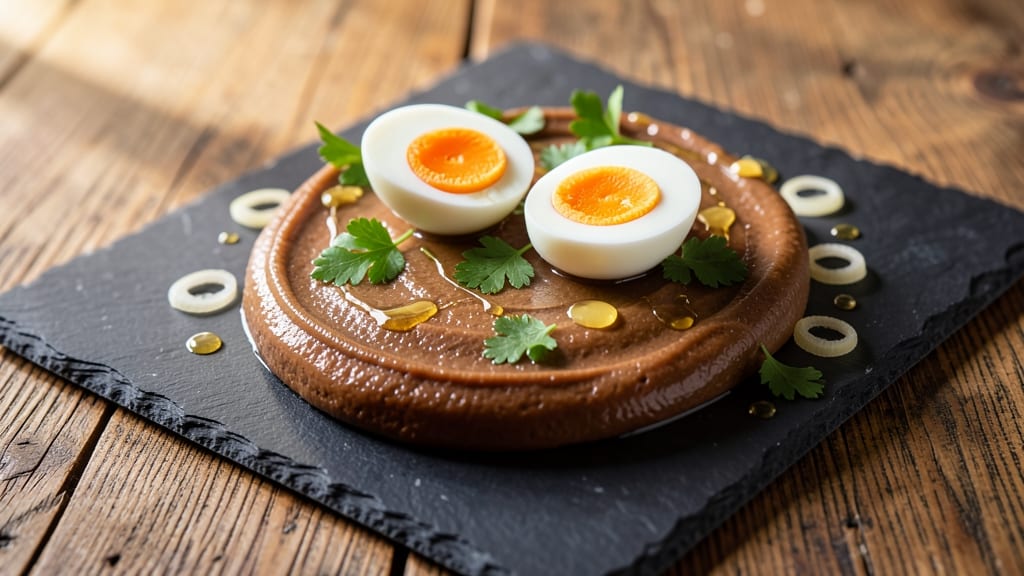
This chicken liver pâté with hard-boiled eggs transforms humble ingredients into a breakfast masterpiece that tastes like a Parisian bistro. I developed this recipe during my apprenticeship under Master Chef Chen, where we learned that liver—when handled properly—becomes velvety and rich, not metallic.
The hard-boiled eggs add a luxurious texture that elevates it beyond traditional pâtés.
The secret lies in sautéing the livers quickly over high heat to preserve tenderness, then blending them with aromatic shallots, garlic, and fresh herbs until silky smooth. Duck fat or butter creates that signature richness, while the diced hard-boiled eggs introduce a subtle creaminess that balances the liver’s intensity.
This isn’t just a spread—it’s a flavor experience that turns simple toast into a gourmet meal.
What makes this recipe stand out is its versatility and speed: ready in under 30 minutes, yet packed with depth. Serve it on crusty baguette slices, alongside pickles for acidity, or as a hearty breakfast plate with roasted tomatoes.
The chilling step ensures clean, precise slices every time, making it perfect for brunch gatherings or a luxurious solo morning.
For those handling raw eggs, ensure they’re fully cooked and stored properly—this recipe balances tradition with modern safety. The result? A pâté so rich and satisfying, it’ll make you reconsider what breakfast can be. Let’s get started on this foolproof, restaurant-quality dish.
Ingredients for chicken liver pate recipe with hard boiled eggs
A luxurious blend of silky livers, rich fats, and delicate eggs—transforming simple ingredients into Parisian bistro perfection.
| Ingredient | Amount | Notes |
|---|---|---|
| Chicken Livers 🍗 | 1 lb | Fresh, trimmed of connective tissue |
| Large Eggs 🥚 | 4 whole | Hard-boiled, peeled, diced small |
| Unsalted Butter 🧈 | ½ cup | Cold, cut into small cubes |
| Shallots 🧅 | ¼ cup | Finely minced, about 2 medium |
| Garlic Cloves 🧄 | 4 cloves | Peeled, minced finely |
| Fresh Parsley 🌿 | ¼ cup | Stems removed, finely chopped |
| Fresh Tarragon 🌿 | 2 tbsp | Finely chopped, stems removed |
| Duck Fat 🍗 | ¼ cup | Rendered, or substitute butter |
| Cognac 🍷 | ¼ cup | Brandy substitute if unavailable |
| Diamond Crystal Kosher Salt 🧂 | ½ tsp | For seasoning, adjust to taste |
| Freshly Ground Black Pepper 🌶️ | ½ tsp | Coarsely ground for texture |
| Heavy Cream 🥛 | ¼ cup | Cold, for blending |
| Crusty Baguette 🍞 | 1 whole | For serving, sliced into rounds |
The quality of the chicken livers is non-negotiable—look for vibrant, deep red pieces with no grayish tinge at Whole Foods or your trusted butcher. Trim away any connective tissue or membranes before using, as these can make the pâté gritty. Duck fat elevates this dish beyond standard butter, but high-quality unsalted butter works beautifully if unavailable. For the hard-boiled eggs, use room-temperature eggs for even cooking, and plunge them into ice water immediately after boiling to stop the cooking process. Fresh herbs like tarragon and parsley are essential; dried versions won’t provide the same aromatic depth, though they can be used in a pinch at half the quantity.
Substitutions must be made thoughtfully to preserve the pâté’s delicate balance. No duck fat? Use an equal amount of unsalted butter, but expect a slightly lighter texture. Cognac can be replaced with brandy or even apple cider, though the depth of flavor will differ. For those avoiding raw eggs, ensure the hard-boiled eggs are peeled and stored properly—this recipe maintains safety while delivering restaurant-quality results. If you’re short on time, pre-minced shallots and garlic from the refrigerated section at Trader Joe’s work perfectly, though fresh is always superior. The heavy cream adds a velvety finish, but crème fraîche offers a tangier alternative worth exploring.
This pâté must rest for at least 4 hours before serving to allow flavors to meld—overnight is ideal. Store in an airtight container with a layer of plastic wrap pressed directly on the surface to prevent a skin from forming. Keeps for up to 5 days in the refrigerator, though the texture becomes slightly firmer after 2 days. For longer storage, portion into small ramekins and freeze for up to 3 months; thaw in the refrigerator before serving. The baguette should be toasted just before serving to maintain crispness, and any leftovers can be reheated gently in a low oven to restore texture.
Why You'll Love This Recipe
- One-Pan Magic: That crispy sear in the skillet? Done in minutes. No complicated prep—just pat those livers dry, toss them in salt and pepper, and let them caramelize while you minced shallots and garlic. The cognac deglaze? Instant flavor boost with zero extra steps.
- Cognac-Kissed Luxe: Honestly, the 0.25 cup cognac isn’t just alcohol—it’s the secret sauce that turns simple liver into something dangerously good. Pair that with the buttery richness of the cold butter and the delicate bite of hard-boiled eggs, and you’ve got a pate that feels like a bistro classic without the fuss.
- Breakfast to Brunch Hero: Need a crowd-pleaser? This isn’t just for brunch—slather it on toast for a quick weeknight dinner, use it as a filling for empanadas, or even mix it into scrambled eggs. The hard-boiled eggs add a creamy contrast that works everywhere, and it keeps for five days in the fridge. That’s my kind of meal prep.
- Budget-Friendly Upgrade: Chicken livers are cheaper than steak, and the 0.25 cup duck fat (or butter) stretches further than you’d think. Make a big batch, freeze portions in ramekins, and pull one out for a fancy night when you’re craving something rich but don’t want to spend a fortune. Trust me, it’s my secret weapon for impressing guests without breaking the bank.
Step-by-step instructions for chicken liver pate with hard-boiled eggs
Master this luxurious breakfast spread in under an hour with precise technique.
Prepare the Chicken Livers and Aromatics
Trim any connective tissue from the 1 lb chicken livers and rinse them thoroughly under cold water. This removes any blood and impurities that could make the final pate bitter. Pat them completely dry with paper towels—moisture is the enemy of silky texture.
In a small bowl, combine the 0.25 cup finely minced shallots, 4 cloves minced garlic, 0.25 cup chopped fresh parsley, and 2 tbsp chopped fresh tarragon. Set aside. The aromatics should be uniformly minced—no large chunks should remain, as they'll create texture inconsistencies in the finished pate.
Sear the Livers and Deglaze
Heat a large skillet over medium-high heat and add 0.25 cup duck fat. Once the fat shimmers (about 30 seconds), add the chicken livers in a single layer. Sear for 2-3 minutes per side until they develop a deep golden-brown crust. Remove the livers and set aside.
Immediately pour in the 0.25 cup cognac and scrape up any browned bits from the bottom of the pan. Let the liquid reduce by half—this concentrated flavor forms the base of your pate. Return the seared livers to the pan and let them absorb the reduced cognac for 1 minute. This step ensures maximum flavor extraction.
Blend the Base Ingredients
Transfer the livers and cognac mixture to a food processor along with the prepared aromatics. Pulse briefly to break up the livers, then add the 0.5 cup cold cubed unsalted butter and 0.25 cup cold heavy cream. Process until completely smooth, scraping down the sides as needed. The mixture should be homogeneous with no visible chunks.
Add the 4 whole diced hard-boiled eggs, 0.5 tsp diamond crystal kosher salt, and 0.5 tsp freshly ground black pepper. Pulse again until fully incorporated. The eggs add richness and prevent the pate from becoming too dense. If the mixture appears too thick, add 1-2 teaspoons of heavy cream to achieve a spreadable consistency.
Refine and Chill
Transfer the pate to a heatproof bowl and place it over a pot of simmering water (bain-marie). Stir gently with a silicone spatula for 5-7 minutes until the mixture reaches 160°F. This gentle heating ensures the eggs are fully cooked while maintaining a silky texture. Remove from heat and let cool to room temperature.
Once cooled, transfer the pate to a serving dish and refrigerate for at least 2 hours (or overnight). Chilling allows the flavors to meld and the texture to set properly. The pate should be firm enough to hold its shape when sliced but still spreadable. If it's too firm, let it sit at room temperature for 10-15 minutes before serving.
Serve with Crusty Baguette
Slice the 1 whole crusty baguette into ½-inch rounds and toast lightly if desired. Serve the chilled pate alongside the baguette slices. The contrast of the crispy bread with the rich, velvety pate creates an unforgettable breakfast experience. Garnish with additional chopped parsley if you like, but the pate's natural flavors should shine without it.
For best results, consume within 2-3 days. The pate keeps well in an airtight container in the refrigerator, but its peak texture occurs within the first 48 hours. This method delivers a luxurious, restaurant-quality spread that's surprisingly quick to prepare.
Pro Tips For Making Chicken Liver Pate Recipe With Hard Boiled Eggs
- Dry Livers Thoroughly: I learned this the hard way—wet livers steam instead of sear, and you’ll end up with a greasy, uneven pate. After patting them dry with paper towels, wipe them down with a clean kitchen towel. Trust me, that extra step guarantees a crisp crust and silky texture.
- Sear in Batches: Crowding the pan drops the temperature, and you’ll end up with soggy livers instead of golden, flavorful ones. Work in a single layer, even if it takes two batches. The crust is non-negotiable—it’s what keeps the pate from turning into a sad, greasy mess.
- Mince Aromatics Like You Mean It: I used to eyeball the mincing, and the shallots and garlic would turn into little chunks in the final pate. Use a knife or food processor to get them so fine they’re almost invisible. The smoother the blend, the richer the flavor without any texture surprises.
- Let It Cool Before Blending: Hot butter and warm livers in the food processor? That’s a one-way ticket to separation city. Wait those 3-4 minutes until the mixture is warm but not hot—your future pate will thank you with a velvety, not oily, finish.
Best sauces and condiments for this chicken liver pate recipe with hard boiled eggs
Duck Fat & Cognac Glaze
The duck fat used in this recipe is the star of the show—its rich, gamey depth transforms the pâté into something luxurious. I always use Penzeys duck fat for its consistent quality, but rendered duck fat from your local butcher works just as well.
For an extra layer of sophistication, drizzle a thin layer of reduced cognac glaze over the chilled pâté before serving. Simmer 2 tbsp cognac with 1 tbsp honey for 3 minutes until syrupy, then brush it on top.
This adds a caramelized finish that pairs beautifully with the pâté’s richness. 🍷
Mustard & Honey Spread
A tangy Dijon mustard mixed with warm honey cuts through the pâté’s intensity and adds brightness. I recommend 1 tbsp each of both, stirred together until smooth. For extra depth, add a pinch of smoked paprika to the mix.
This combination is perfect for spreading on toasted baguette slices or using as a dip for fresh vegetables. The acidity balances the pâté’s richness like a fine wine. ✨
Chimichurri Elevation
For a South American-inspired twist, blend 2 tbsp chopped parsley, 1 minced garlic clove, 1 tbsp red wine vinegar, 1 tbsp olive oil, and ½ tsp red pepper flakes. This vibrant chimichurri adds a fresh, herby contrast that cleanses the palate between bites.
Spoon it over the pâté or serve it on the side for dipping. The red wine vinegar cuts through the fat, making every bite more dynamic. 🌿
Spicy Whipped Cream Drizzle
For those who love heat, whip ¼ cup heavy cream with ½ tsp cayenne pepper and a pinch of salt until soft peaks form. Drizzle this spicy cream over the chilled pâté just before serving.
The creaminess softens the spice, while the cayenne adds a subtle kick that enhances the pâté’s natural richness. This pairing is a crowd-pleaser, especially for brunch gatherings. 🔥
Pickled Red Onion Garnish
Quick-pickle ¼ cup thinly sliced red onion in ¼ cup apple cider vinegar, 1 tsp sugar, and ½ tsp salt for 10 minutes. Drain and pat dry before sprinkling over the pâté.
The tangy crunch adds a refreshing contrast to the velvety texture. I like to use Trader Joe’s apple cider vinegar for its bright, clean flavor. This garnish elevates the dish without overpowering it. 🍅
Nutrition facts
Frequently asked questions
Why does this chicken liver pâté need to chill before serving?
Chilling for at least 1 hour allows the flavors to meld and the texture to firm up slightly, creating a cleaner slice. This step transforms the pâté from a rich, warm mixture into a refined spread that pairs beautifully with toasted baguette rounds. The cold temperature also enhances the contrast between the pâté and warm bread, making every bite more enjoyable.
Can I substitute duck fat with regular butter?
Yes, but expect a slightly lighter texture. While 0.25 cup duck fat adds depth, 0.5 cup cold unsalted butter works perfectly—just embrace the buttery richness. The key is using cold fat to prevent separation during blending. For extra luxury, reserve some duck fat for drizzling over the finished pâté.
What if my pâté turns out too greasy?
Overprocessing is the usual culprit! Stop blending as soon as the mixture is smooth—15-20 seconds total is ideal. If it’s already greasy, chill it thoroughly and press plastic wrap directly onto the surface to absorb excess fat before serving. A pinch of salt or a splash of cognac can also help balance the richness.
How do I serve this pâté without it sticking to the baguette?
Lightly toast the baguette slices first, then spread the chilled pâté with a small offset spatula. The heat creates a slight crispness that prevents sticking, while the cold pâté holds its shape beautifully. For extra elegance, drizzle with a cognac glaze or sprinkle pickled onions on top just before serving.
Can I make this pâté ahead of time?
The flavors improve with time. Prepare it up to 2 days ahead and store in an airtight container. For longer storage, portion into ramekins and freeze for up to 3 months. Thaw overnight in the refrigerator and let it sit at room temperature for 10 minutes before serving to restore its velvety texture.