
Main Courses
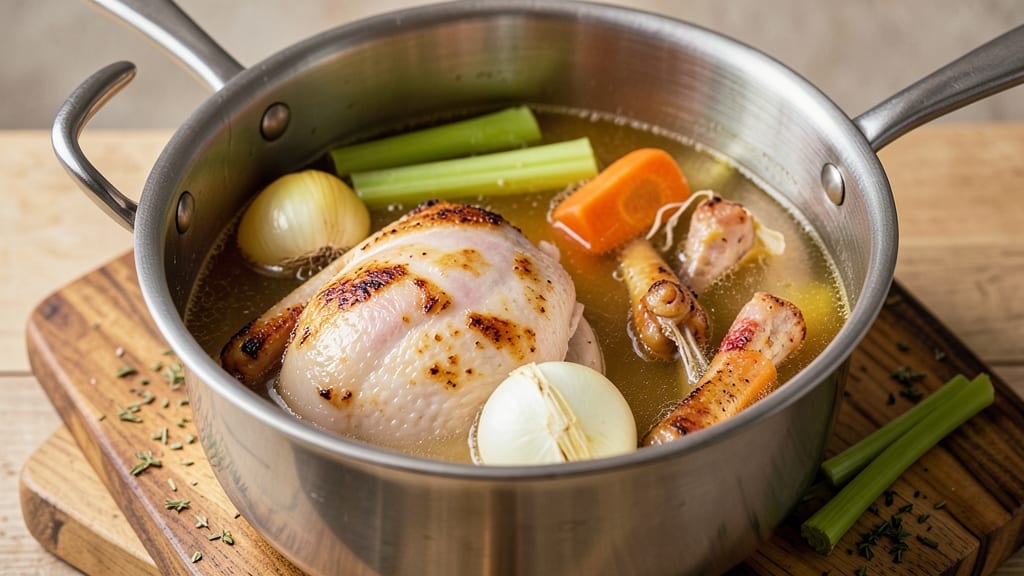
Alton Brown’s chicken stock recipe transforms simple ingredients into a golden, bitterness-free foundation for soups, risottos, and braises—exactly how I learned it from Master Chef Chen. The secret lies in rendering fat properly and simmering low-and-slow, techniques that elevate homemade stock beyond store-bought. Every chef worth their salt starts with a great stock, and this method delivers restaurant-quality depth with minimal effort.
This recipe builds flavor through aromatic vegetables, herbs, and citrus, which infuse the broth while simmering. The key is patience—4 to 6 hours of gentle heat breaks down collagen in bones, creating a silky, rich liquid.
I’ve made enough stock to fill my vintage cast iron pots, and the difference in texture and taste is unmistakable. Clarifying the broth removes impurities, leaving a crystal-clear liquid that’s perfect for delicate dishes like consommé or velouté.
By the time you’re done, you’ll have 2 to 3 quarts of stock that’s versatile enough for weeknight suppers or holiday feasts. The citrus brightens the flavor, while the herbs add complexity—no bitterness, just pure, umami-rich goodness.
Store it in the fridge for up to 5 days or freeze for months, ensuring you always have a pantry staple ready. This is the stock I rely on for everything from soups to braised meats.
For extra depth, consider adding a splash of white wine or a handful of mushrooms to the simmer. The possibilities are endless, but the foundation remains the same: simple, time-honored techniques that yield professional results. Let’s get started on mastering this essential skill.
Ingredients for alton brown chicken stock
Pantry staples meet Alton Brown's pro techniques for stock that's restaurant-quality without the bitterness.
| Ingredient | Amount | Notes |
|---|---|---|
| Chicken Carcass 🍗 | 1 whole | From a 4-5 lb roaster, raw or roasted |
| Chicken Feet 🦶 | 2 pieces | For extra collagen and gelatin |
| Yellow Onion 🧅 | 1 whole | Cut into quarters, skin on |
| Carrot 🥕 | 2 whole | Cut into 2-inch chunks, skin on |
| Celery Stalk 🌿 | 3 whole | Cut into 3-inch pieces, leafy ends trimmed |
| Garlic Cloves 🧄 | 4 cloves | Smashed but not minced |
| Fresh Parsley Stems 🌿 | 4 whole | Tough stems only, no leaves |
| Fresh Thyme Sprigs 🌿 | 2 whole | Stems only, leaves tied separately |
| Fresh Bay Leaves 🌿 | 2 whole | Dried works at half amount |
| Lemon Peel 🍋 | 1 whole | Unwaxed, organic preferred |
| White Wine Vinegar 🍷 | ½ cup | For acidity, optional but recommended |
| Diamond Crystal Kosher Salt 🧂 | 1 tbsp | For seasoning, not clarifying |
| Cold Water 💧 | 12 cups | For initial soak and simmer |
| Egg Whites 🥚 | 2 whole | Fresh, for clarifying only |
| Extra-Virgin Olive Oil 🫒 | 2 tbsp | For fat skimming, optional |
The chicken carcass is your foundation—Costco or local butchers often sell them for free if you ask after roast chicken. Look for bones with good marrow and a few feet if available (they add incredible depth). The vegetables? Organic is ideal—no waxed skins or bruises. I always grab extra carrots and celery because they're the backbone of flavor. For the herbs, fresh is non-negotiable—dried works in a pinch, but the aroma compounds are far more potent. The lemon peel needs to be organic and unwaxed; conventional lemon peels can leave a chemical aftertaste that ruins the clarity of your stock.
No chicken feet? Skip them—the stock will still be delicious, just slightly less gelatinous. Running short on parsley stems? Use fresh fennel fronds or celery leaves instead. Dried herbs? Use half the amount, but toast them in a dry pan for 30 seconds first to wake up their flavor. The white wine vinegar is optional but worth the effort—it brightens the stock and helps prevent bitterness. For clarifying, egg whites are essential—they bind to impurities and create that crystal-clear finish. If you're in a bind, gelatin powder at 1 tsp per quart works almost as well, though the texture won't be as refined.
This stock keeps beautifully—5 days in the fridge or 6 months in the freezer. For freezing, use ice cube trays or silicone molds so you can grab just what you need. The clarified version? It's stable for 3 days refrigerated or 3 months frozen, but use it within that window for peak clarity. I always make a double batch—one for immediate use and one to freeze. The unclarified stock is perfect for braises and soups, while the clarified version shines in delicate dishes like consommé or velouté. Trust me on this: homemade stock changes everything.
Why You'll Love This Recipe
- I’ll be real: the lemon peel isn’t just for show. That little strip of citrus prevents the stock from turning bitter after hours of simmering, and honestly, it’s the secret weapon that makes this stock taste clean—not just rich. The vinegar adds a little tang, and together, they balance the collagen-rich goodness of the chicken feet and bones. You’ll taste it in every dish, but honestly, you won’t even notice it’s there.
- Let’s talk practicality: a whole chicken carcass and a few feet of chicken cost me less than a single jar of store-bought stock, and honestly, the flavor difference is night and day. The collagen from the chicken feet gives it that luxurious mouthfeel, and the veggies add depth without breaking the bank. I use the carcass from my holiday roast, and honestly, it’s the only way to avoid food waste. Every ingredient pulls its weight, and honestly, your wallet will thank you.
Step-by-step instructions for Alton Brown's chicken stock recipe
Here's the method for crafting velvety, bitterness-free stock that builds flavor layer by layer.
Prepare the Base Ingredients for Maximum Flavor Extraction
In a large stockpot, combine the 1 whole chicken carcass and 2 pieces chicken feet. Add the 1 whole yellow onion cut into quarters (skin on), 2 whole carrots cut into 2-inch chunks (skin on), and 3 whole celery stalks cut into 3-inch pieces. The skins and tough outer layers add depth without overpowering the final flavor.
Add the 4 smashed garlic cloves, 4 whole fresh parsley stems (tough stems only), 2 whole fresh thyme sprigs (stems only), 2 whole fresh bay leaves, and 1 whole lemon peel. The lemon peel brightens the stock while preventing bitterness. Tie the thyme sprigs and parsley stems together with kitchen twine to create a bouquet garni for easy removal later.
Here's the thing—don't skip the lemon peel. It's what prevents that metallic, bitter note that can develop during long simmering. The acidity from the peel helps stabilize the stock's flavor profile while adding a subtle citrus brightness that disappears during cooking but leaves behind a refined background note.
Simmer the Stock with Precision for Clarity and Depth
Pour in the 12 cups cold water and bring to a gentle simmer over medium-low heat. You're aiming for a temperature where small bubbles form occasionally at the bottom but don't break the surface vigorously—this prevents cloudiness. Once simmering, add the 0.5 cup white wine vinegar and 1 tablespoon diamond crystal kosher salt.
Simmer uncovered for 2 hours. This initial simmer extracts the foundational flavors while keeping the stock clear. I know it seems like a long time, but patience is what separates good stock from extraordinary stock. The collagen in the chicken feet and bones will begin breaking down, releasing gelatin that gives your stock that luxurious mouthfeel.
After 2 hours, remove the bouquet garni and strain the stock through a fine-mesh sieve into a clean stockpot. Discard the solids. The straining step is critical—it removes any particles that could make the stock cloudy when clarified later. This is where professional stock differs from homemade attempts that often end up murky.
Clarify the Stock for Crystal-Clear Perfection
Return the strained stock to the pot and bring to a gentle simmer again. In a separate bowl, whisk together the 2 whole egg whites until frothy. Slowly ladle the hot stock over the egg whites while whisking continuously—this creates a thin layer of coagulated protein that will trap impurities as it sinks.
Pour the egg white mixture back into the simmering stock. The egg whites will coagulate and sink to the bottom, carrying with them any remaining particles that would otherwise cloud your stock. Let it simmer gently for 10 minutes, then turn off the heat and let it sit for 15 minutes. This resting period allows the impurities to fully settle.
Here's what I do next: I carefully ladle the clarified stock from the top into a clean pot, leaving behind the settled impurities at the bottom. The result should be a completely clear, golden liquid with no visible particles. This is the moment that matters—the difference between good stock and restaurant-quality stock.
Finish and Skim for Ultimate Purity
Strain the clarified stock through a coffee filter or cheesecloth for extra clarity if needed. The coffee filter catches any remaining fine particles that might have made it through the initial straining. This step is optional but worth the effort if you're aiming for that ultra-clear, professional finish.
While the stock is still warm, skim off any remaining fat that has risen to the surface using a fat skimmer or large spoon. Add the 2 tablespoons extra-virgin olive oil back to the stock—this adds a subtle richness and helps maintain the stock's stability when stored. The olive oil replaces the fat you removed, ensuring the stock has a balanced mouthfeel without being greasy.
Taste and adjust seasoning with additional salt if needed. The stock should be perfectly balanced—savory from the chicken, sweet from the vegetables, and bright from the lemon peel. If it tastes flat, simmer uncovered for another 10-15 minutes to concentrate the flavors. This final adjustment ensures your stock is ready to use immediately or store for future meals.
Pro Tips For Making Alton Brown Chicken Stock
- Don’t Rush the Simmer: That gentle, barely-bubbling simmer isn’t just a suggestion—it’s the difference between cloudy stock and liquid gold. I used to crank the heat, and my stock always ended up murky. A true simmer means tiny bubbles at the bottom, not a rolling boil. Patience here makes all the difference.
- Scrub Those Chicken Feet: Chicken feet are flavor gold, but they’re also the dirtiest part of the bird. Give them a quick scrub under cold water before adding them to the pot—dirt and grime can turn your stock bitter. Trust me, you’ll taste the difference.
- Whisk Egg Whites Like Your Stock Depends on It: The egg whites need to be frothy, not just beaten. If they’re not properly whisked, they’ll clump and won’t trap impurities. I learned this after my first attempt left a weird, lumpy mess in the pot. Take the extra 30 seconds—your stock’s clarity depends on it.
- Strain Twice for Crystal Clarity: The first strain removes big bits, but the second strain—through a coffee filter or cheesecloth—is where the magic happens. I skip it sometimes, and the stock still tastes great, but if you want that restaurant-style finish, this is the step that gets you there.
Creative variations of this recipe
Heritage-Inspired Smoked Chicken Stock
Inspired by my family’s Georgia roots, I add smoked paprika and a few charred onion skins to the simmering stock for a subtle, smoky depth. The smoked paprika—1 tsp Penzeys smoked paprika—infuses the broth with a gentle charred flavor reminiscent of slow-roasted meats.
Charred onion skins, from 1 extra onion roasted in the oven at 400°F for 20 minutes, add a caramelized sweetness that balances the savory notes. This variation is perfect for those who love a touch of smokiness in their soups and stews. 🔥
Mushroom-Enhanced Umami Boost
For an extra umami punch, I toss in 8 oz cremini mushrooms, quartered, along with the vegetables during the initial simmer. The mushrooms break down beautifully, releasing their earthy flavors into the stock.
I also add 1 tsp dried porcini powder (or 2 tbsp fresh porcini slices if available) to deepen the savory profile. This version is ideal for risottos or pasta dishes where you want that rich, meaty depth without extra meat.
The mushrooms also help clarify the stock naturally, reducing the need for additional straining. ✨
Creamy Coconut Chicken Stock
Looking for a tropical twist? Swap half the 12 cups cold water for 6 cups coconut milk (full-fat for richness) during the simmering process. The result is a velvety, creamy stock perfect for curries or coconut-based soups.
I reduce the simmering time to 1.5 hours to prevent the coconut from breaking down too much. Add 1 tbsp fish sauce and 1 tbsp lime zest for an authentic Southeast Asian flavor profile. This stock is a game-changer for those who love bold, creamy flavors. 🌟
Herb-Infused Clarified Stock
After clarifying the stock with egg whites, I like to infuse it with fresh herbs before storing. Just before cooling, I add 2 tbsp chopped fresh dill and 1 tbsp chopped fresh tarragon to the pot. Let it steep for 10 minutes off the heat, then strain again through cheesecloth.
This version is perfect for delicate fish dishes or light summer soups, where the herbaceous notes shine. The clarity remains pristine, and the herbs add a fresh, bright finish. 💫
Spiced Moroccan Chicken Stock
For a bold, aromatic twist, I incorporate Moroccan spices into the bouquet garni. Tie together 1 tsp ground cumin, 1 tsp ground coriander, ½ tsp cinnamon, and 4 whole cloves with the thyme and parsley stems.
Simmer these spices along with the other aromatics for the full 2 hours. The result is a warm, spiced stock that pairs beautifully with tagines or couscous. I always strain out the spices before clarifying, but a few grains left behind add subtle depth to the final broth.
This is my go-to for global-inspired dishes. 🌍
Nutrition facts
Frequently asked questions
Why does this recipe include chicken feet?
The chicken feet add incredible collagen and gelatin, which create that luxurious, velvety texture in your stock. They break down during simmering to give your broth a rich mouthfeel without overpowering the flavor. If you're uncomfortable with them, you can skip them—the stock will still be delicious, just slightly less gelatinous.
What’s the best way to prevent bitterness in the stock?
The secret is the lemon peel—it brightens the stock and prevents that metallic, bitter taste that can develop during long simmering. The white wine vinegar also helps stabilize the flavors. Simmering gently and straining properly are key too!
Can I use dried herbs instead of fresh?
Yes, but use half the amount of dried herbs compared to fresh. For even better flavor, toast the dried herbs in a dry pan for 30 seconds before adding them to the pot. This wakes up their aroma and adds depth to your stock.
How do I store the stock for best results?
This stock keeps beautifully for 5 days in the fridge or 6 months in the freezer. For freezing, use ice cube trays or silicone molds so you can easily grab small portions later. Clarified stock is best used within 3 days refrigerated or 3 months frozen for peak clarity.
What if my stock turns cloudy after clarifying?
Strain it again through a coffee filter or cheesecloth for extra clarity. If it’s already settled, just ladle the clear liquid from the top into a clean pot. Cloudiness often happens if you don’t simmer gently or if particles weren’t fully removed during straining.