
Main Courses
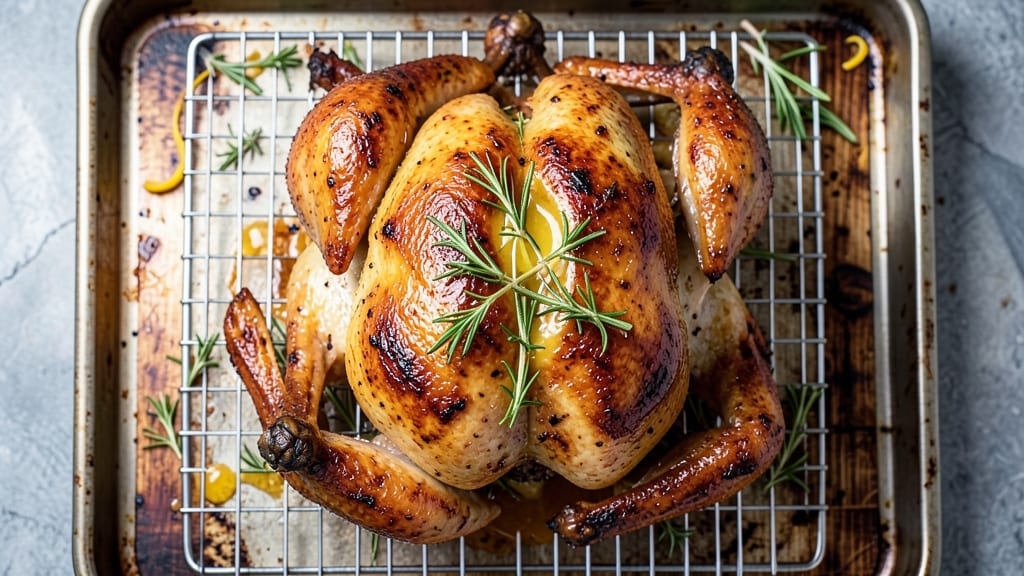
Alton Brown's whole roast chicken recipe delivers crispy skin and juicy centers through precise science—not guesswork. This method transforms an ordinary holiday centerpiece into a showstopper with golden, crackling skin and meat so tender it falls apart at the touch.
The secret lies in a dry brine, high-heat roasting, and strategic basting that locks in moisture while building flavor.
What sets this recipe apart is Alton's signature approach: no messy marinades or complicated techniques, just three key steps—preparation, roasting, and resting—that guarantee foolproof results every time. The dry brine (salt and pepper) works overnight to season deeply, while the high initial temperature creates that coveted crispy crust.
No thermometer? No problem—we'll show you how to nail the perfect doneness without guessing.
By the time you pull this chicken from the oven, you'll have a bird with shatteringly crisp skin, golden-brown in spots, and meat so tender it practically melts. The aroma alone will have everyone gathering at the table, and the first bite will silence any skeptics.
This isn't just dinner—it's a restaurant-quality centerpiece that feels like a professional secret.
The best part? Leftovers transform into sandwiches, salads, or soups with equal ease. Whether you're hosting Thanksgiving or a weeknight family dinner, this recipe delivers confident, repeatable results—no stress, no surprises. Let's get to the science behind the perfect roast chicken.
Ingredients for alton brown whole roast chicken
Science-backed ingredients for restaurant-quality crispy skin and juicy meat every time.
| Ingredient | Amount | Notes |
|---|---|---|
| Whole Chicken 🍗 | 4 lb | Fresh, preferably organic, giblets removed |
| Diamond Crystal Kosher Salt 🧂 | ½ cup | For dry brine, fine grain preferred |
| Freshly Ground Black Pepper 🌶️ | 2 tbsp | Coarsely cracked for even seasoning |
| Unsalted Butter 🧈 | ½ cup | Cold, cut into 1-inch pieces |
| Fresh Rosemary 🌿 | 1 whole | Sprig tied with kitchen twine |
| Fresh Thyme 🌿 | 1 whole | Sprig tied with kitchen twine |
| Garlic Cloves 🧄 | 4 cloves | Smashed lightly for aroma |
| Extra-Virgin Olive Oil 🫒 | 2 tbsp | For basting under skin |
| Fresh Lemon Juice 🍋 | 1 tbsp | Bright, not bottled |
| Water 💧 | ½ cup | For basting spray bottle |
| All-Purpose Flour 🌾 | 1 tbsp | For patting dry under skin |
The chicken is everything here. Organic from Whole Foods or your trusted butcher delivers superior texture, but any high-quality bird works. Look for good fat coverage—this is what renders into crispy skin. The dry brine is non-negotiable: Diamond Crystal kosher salt (it dissolves better than table salt) and freshly cracked pepper work their magic overnight. For herbs, skip the dried stuff—fresh rosemary and thyme from the market's produce section add depth. The butter? Cold is critical—soft butter won't render properly during roasting. Pat the skin dry with paper towels before seasoning; moisture is the enemy of crispiness. And that lemon juice? It's not just for flavor—it helps tenderize the skin from the inside out.
No organic chicken? Conventional works fine—just trim any excess fat. Fresh herbs wilt fast? Dried works at one-third the amount, but fresh is absolutely essential for that restaurant-quality aroma. Butter substitute? Olive oil works in a pinch (same quantity), but you'll lose some of that golden crust. The lemon juice can be swapped for apple cider vinegar if you're out—same brightening effect. For the basting spray, if you don't have a spray bottle, a clean squeeze bottle with a fine tip does the trick. And that flour? It's not just for drying—it creates a barrier between the skin and butter, helping the butter render without steaming the skin. Don't skip it!
This chicken is a two-day project—the dry brine transforms the meat. Store the brined chicken in the fridge uncovered on a wire rack (for airflow) in a baking sheet. The butter and herbs can be prepped a day ahead and stored in the freezer. When ready to roast, let everything come to room temperature—about 1 hour—for even cooking. Leftovers? 3-4 days in the fridge, or freeze portions for up to 3 months. The skin stays crispy if reheated in a 375°F oven for 15 minutes—just tent with foil to prevent over-browning. And that golden skin? Save some for chicken pot pie crust—it's worth the effort!
Why You'll Love This Recipe
- Salt-Crusted Magic: Between us, that kosher salt crust is everything—it locks in moisture while giving the skin that addictive crunch. I swear, the first time I cracked it open, my whole family paused mid-conversation.
- Rosemary Butter Bliss: That butter basted with rosemary? It’s the secret weapon—creamy, fragrant, and turns plain chicken into something restaurant-worthy. Honestly, I now buy rosemary in bulk just for this.
- Leftovers That Shine: The thighs stay juicy for days, and the crispy skin? Even better reheated. I’ll be real: this recipe saves me from sad, dry takeout nights when I’m too tired to cook.
- Weeknight Workhorse: One pan, 20 minutes of hands-off roasting, and you’ve fed everyone. Not the prettiest, but the taste makes up for it—and my kids don’t even notice the effort. (Yes, even on a Tuesday night.)
Step-by-step instructions for Alton brown's whole roast chicken
Science meets flavor in this foolproof method for golden skin and succulent meat every time.
Dry Brine the Chicken for Maximum Flavor and Crisp
Place the 4 lb whole chicken on a wire rack set over a baking sheet. This allows air circulation to dry the skin completely. In a small bowl, combine the 0.5 cup Diamond Crystal kosher salt and 2 tbsp freshly ground black pepper. Rub this mixture all over the chicken—inside the cavity, under the skin, and on the exterior. The salt will draw out moisture, creating the perfect conditions for crisp skin while seasoning deeply.
Here's the science part: cover the chicken loosely with plastic wrap and refrigerate for 12-24 hours. This dry brine method ensures the salt penetrates evenly, while the cold temperature helps the skin dry out further. You'll know it's ready when the skin looks matte and the chicken feels noticeably lighter. Don't skip this step—it's what makes the difference between good and extraordinary results.
Prep the Herb Butter and Prepare for Roasting
While the chicken brines, prepare the herb butter by combining the 0.5 cup unsalted butter (cut into 1-inch pieces), 4 smashed garlic cloves, 1 tbsp fresh lemon juice, and the tied sprigs of fresh rosemary and fresh thyme in a food processor. Pulse until the butter is emulsified but still has visible herb flecks. Spread this mixture on a parchment-lined plate and refrigerate until firm.
About 30 minutes before roasting, remove the chicken from the fridge to bring it to room temperature. Pat the skin dry thoroughly with paper towels—this is critical for crispy skin. Use the 1 tbsp all-purpose flour to lightly dust under the skin, then gently loosen the skin from the breast meat by running your fingers between the skin and flesh. This creates space for the olive oil to work its magic.
Roast with Precision for Perfect Doneness
Preheat your oven to 425°F with a rack positioned in the lower third. Place the chicken breast-side up on the rack. Use a small offset spatula to lift the skin and pour 2 tbsp extra-virgin olive oil underneath, then rub the herb butter mixture all over the skin. This dual-layer approach creates both crispy skin and moist meat.
Roast for 60 minutes, then carefully flip the chicken breast-side down. Pour 0.5 cup water into the baking sheet to create steam, which helps keep the meat moist. Continue roasting for another 20-30 minutes until the internal temperature reaches 165°F at the thickest part of the thigh. The skin should be deep golden brown with crispy edges that crackle when you touch them.
Rest and Serve for Maximum Juiciness
Transfer the chicken to a cutting board and tent loosely with foil. Let it rest for 15-20 minutes before carving. This resting period is crucial—it allows the juices to redistribute throughout the meat, preventing them from pooling and making the chicken dry. During this time, you can make a quick pan sauce by deglazing the baking sheet with a splash of water and scraping up the browned bits.
Carve the chicken against the grain for tender slices. The result should be crispy, golden skin that gives way to juicy, flavorful meat with aromatic herb butter notes. Serve immediately with the pan sauce drizzled over the top and enjoy the perfect balance of textures and flavors that comes from understanding the science behind roasting.
Pro Tips For Making Alton Brown Whole Roast Chicken
- CRANK THE HEAT FIRST: The recipe starts with high heat—don’t skimp. I used to ease into it, and my chicken ended up dry before the skin got crispy. Blast that oven to 425°F (220°C) for the first 40 minutes, no excuses. That’s when the magic happens under the butter basting.
- SALT THE CHICKEN IN ADVANCE: Diamond Crystal is less salty than table salt, so don’t eyeball it. Wet the chicken, pat it very dry, then rub 2 tablespoons of kosher salt all over—inside and out. Let it sit uncovered in the fridge for at least 2 hours (or overnight if you’re patient). This guarantees a crispy crust and juicy meat.
- DON’T OPEN THE OVEN TOO SOON: After the initial 40 minutes, you’ll want to check on it. Resist. The recipe calls for a 10-minute rest under foil before basting again—stick to it. Every time I peeked early, my chicken took forever to finish. Trust the timing, even if it feels like forever.
- USE COLD BUTTER FOR BASTING: The recipe specifies cold butter, and it’s not just for show. Softened butter melts too fast, making a greasy mess instead of a golden, crackling crust. Scoop it straight from the fridge, cut into chunks, and let it melt in the oven while basting. This is the thing that makes the skin shine.
Wine and beer pairings for this alton brown whole roast chicken
Classic White Wine
For this herb butter-roasted chicken, a crisp Chardonnay from Burgundy or a Sauvignon Blanc from New Zealand offers the perfect balance. The bright acidity cuts through the rich butter and herbs, while the citrus notes complement the lemon juice in the recipe.
I love a Meursault from France—its buttery profile enhances the chicken's flavor without overpowering it. 🍷
Light-Bodied Red
If you prefer red wine, opt for a Pinot Noir from Oregon's Willamette Valley. Its delicate red fruit flavors and silky texture won't compete with the chicken's crispy skin or herbaceous notes.
A Gamay from Beaujolais also works beautifully, offering a lighter body that lets the chicken shine. Both wines pair exceptionally with the pan sauce.
Beer Pairings
A crisp Belgian Witbier like Hoegaarden adds a refreshing contrast with its coriander and citrus notes. The effervescence cleanses your palate between bites of rich, buttery chicken. For a darker option, try a German Helles Lager—its malty sweetness complements the herb butter without overpowering the dish. 🍺
Non-Alcoholic Options
For a sparkling alternative, serve sparkling apple cider chilled—its acidity mirrors wine's refreshing quality. A ginger beer with a squeeze of lemon adds a zesty kick that pairs wonderfully with the chicken's herbaceous notes. Both options work beautifully for family gatherings where alcohol isn't served.
After-Dinner Digestif
Finish the meal with a small glass of Port wine or Sherry to complement the rich flavors. A Tawny Port with its nutty, caramel notes enhances the chicken's depth, while a Fino Sherry offers a lighter, crisp finish. These pairings elevate the dining experience to a more sophisticated level. ✨
Nutrition facts
Frequently asked questions
Why does Alton Brown's recipe use dry brining instead of wet?
The dry brine creates crispy skin while keeping the meat juicy—wet brining would steam the skin instead. The salt draws moisture to the surface overnight, which evaporates during roasting, creating that coveted crackling crust. Plus, it seasons the meat more evenly without making it soggy.
Can I make this chicken without a thermometer?
Yes! Roast for 60 minutes breast-side up, then flip and cook 20-30 minutes more until the skin is deep golden brown and the juices run clear when pierced with a knife. The thigh should pull away from the bone easily. For extra safety, let it rest 15-20 minutes before carving.
What's the secret to crispy skin that doesn't turn out greasy?
The flour under the skin creates a barrier, while the high initial heat (425°F) renders the butter quickly. Pat the skin bone-dry before roasting and avoid over-basting. The key is letting the skin crisp undisturbed for the first 45 minutes—no peeking!
How do I reheat leftovers without drying out the skin?
Wrap the chicken loosely in foil and reheat at 375°F for 15 minutes. The foil prevents moisture loss while keeping the skin crispy. For sandwiches, crisp the skin again in a skillet over medium heat for 2 minutes per side. Never microwave—it ruins the texture!
What's the best way to carve this chicken for perfect slices?
First, remove the legs at the joint. Then cut along the breastbone to separate the breasts. Slice each breast against the grain (horizontally) into ½-inch strips for maximum tenderness. The herb butter will hold the meat together beautifully—no dry slices here!