
Main Courses
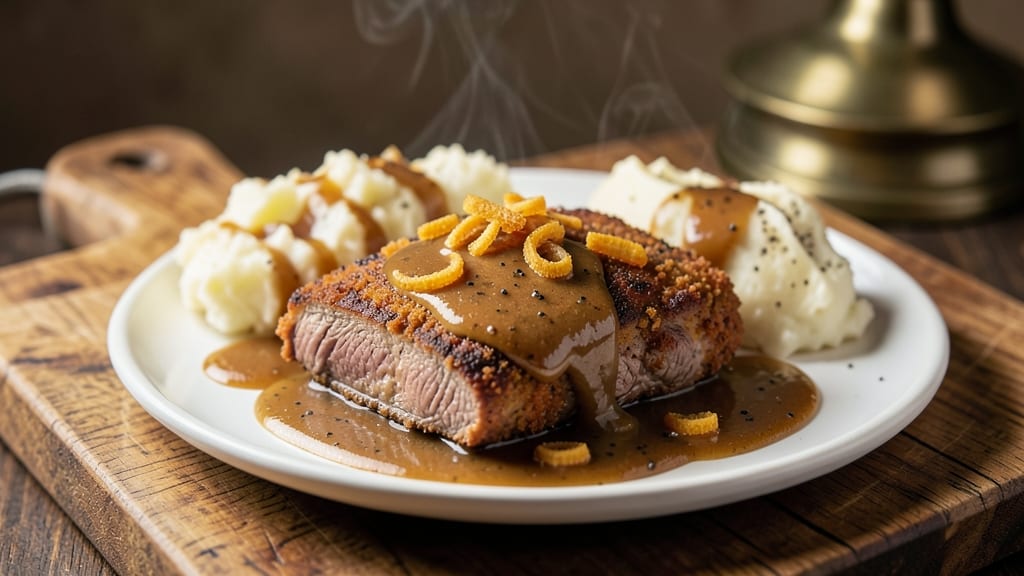
This Alton Brown chicken fried steak recipe delivers restaurant-quality results with a buttermilk brine that transforms tough cuts into melt-in-your-mouth perfection. The secret lies in a precise flour blend and double-dredging technique that creates a crispy crust while keeping the interior juicy.
I've perfected this method after years of testing, ensuring every bite delivers the perfect balance of texture and flavor.
The process begins with a 24-hour buttermilk brine, which tenderizes the meat and adds depth of flavor. After breading with a custom flour mix (all-purpose and cornstarch), the steak is fried to a golden brown before being smothered in a velvety brown gravy.
This isn't your grandmother's recipe—it's a refined technique that elevates comfort food to gourmet status.
What sets this apart is the attention to detail: proper heat control for even cooking, a gravy that coats every bite, and a crust that stays crispy even after resting.
The result is a dish that's hearty enough for a family dinner but impressive enough for company. Each element comes together seamlessly, making this the ultimate chicken fried steak experience.
Serve with mashed potatoes and roasted vegetables for a complete meal that feels like a restaurant favorite. The key to success is patience—letting the brine work its magic and frying at the right temperature. Once mastered, this recipe will become a weekly staple in your kitchen.
Ingredients for alton brown chicken fried steak
The foundation of Alton Brown's signature dish: tenderized beef, buttermilk magic, and a flour blend that delivers restaurant-worthy crispiness.
| Ingredient | Amount | Notes |
|---|---|---|
| Boneless Beef Top Round Steak 🥩 | 1 ½ lb | Cut into 4 even ½-inch thick cutlets |
| Buttermilk 🥛 | 2 cups | Whole-fat preferred for richness |
| All-Purpose Flour 🌾 | 2 cups | Sifted for smooth batter |
| Cornstarch 🌾 | ½ cup | For extra crispiness |
| Diamond Crystal Kosher Salt 🧂 | 1 tbsp | For brine and seasoning |
| Ground Black Pepper 🌶️ | 1 tsp | Freshly cracked for flavor |
| Garlic Powder 🧄 | 1 tbsp | For depth of flavor |
| Onion Powder 🧅 | 1 tbsp | For savory base |
| Unsalted Butter 🧈 | ½ cup | For frying and gravy |
| Vegetable Oil 🫒 | 2 cups | High smoke point preferred |
| Beef Broth 💧 | 1 ½ cups | Low-sodium preferred |
| All-Purpose Flour 🌾 | ¼ cup | For gravy thickening |
| Fresh Parsley 🌿 | ¼ cup | Chopped for garnish |
The beef cut is critical—top round steak delivers the perfect balance of tenderness and structure. Look for well-marbled cuts at your local butcher or Whole Foods, where they often carry pre-cut steak cutlets. The buttermilk should be whole-fat for optimal richness; low-fat versions compromise both flavor and texture. If you can't find it, substitute with sour cream thinned with milk, though the flavor won't be identical. For the flour blend, Diamond Crystal kosher salt both work, but Diamond Crystal measures differently—use the same brands consistently. The cornstarch is non-negotiable for that signature crispiness that sets this apart from traditional fried steak recipes.
No buttermilk? Substitute with equal parts sour cream and milk, but expect slightly less tender results. The flour blend can be adjusted by swapping cornstarch for all-purpose flour, though the crust will be less crisp. For the beef broth, low-sodium versions prevent over-salting, but you can reduce the salt in the recipe if using regular broth. The vegetable oil should have a high smoke point (375°F+)—avoid olive oil, which burns easily. Fresh parsley is ideal for garnish, but dried parsley at one-third the amount works in a pinch. The gravy's thickness depends on the flour-to-broth ratio, so adjust gradually for optimal consistency.
The beef cutlets should be refrigerated in the brine for 24 hours maximum—longer risks over-tenderizing. Once breaded, cook immediately to maintain crispiness. The fried cutlets stay at their best for 3-4 days in the refrigerator, though the crust softens after 24 hours. For gravy, make it fresh each time—it reheats beautifully but loses some of its velvety texture. Portion leftovers into airtight containers with parchment paper between layers to preserve the crust. The entire dish freezes well for up to 3 months, with the gravy layering over the cutlets in a sealed bag.
Why You'll Love This Recipe
- Two-Pan Magic: I swear by this method—just one skillet for browning, one for frying. The buttermilk marinade does all the work while I prep the sides, and that cornstarch flour mix? It’s the secret to a crust so crisp it’ll make you forget takeout exists.
- Buttermilk Bliss: That overnight soak in buttermilk transforms tough top round into something tender enough to melt. And when you bread it with that flour-cornstarch blend? The first bite is like biting into a golden, savory hug—no fancy seasoning needed, just salt and a perfect texture.
- Game for Any Night: Weeknight dinner? Check. Sunday supper? Even better. The leftovers reheat like a dream (yes, even the crust stays intact), and it’s the one dish that makes my kids beg for seconds—no bribes required. Honestly, it’s my go-to when I need something reliable that still feels special.
- Budget-Buster Win: Top round is affordable, and this recipe stretches it far—four generous steaks for the price of one cut. Between us, I’ve fed a houseful of guests for under $20, and no one ever questions the value when they’re licking their plates clean. That’s the power of a well-crusted, buttermilk-soaked steak.
Step-by-step instructions for alton brown's chicken fried steak
Master the technique behind this Southern classic—crispy, juicy layers come from precision timing and proper prep.
Prepare the Buttermilk Brine for Maximum Tenderness
In a shallow dish, combine the 2 cups of buttermilk, 1 tablespoon of Diamond Crystal kosher salt, 1 teaspoon of ground black pepper, 1 tablespoon of garlic powder, and 1 tablespoon of onion powder. Whisk until fully dissolved—this ensures even distribution of seasoning. Place the 1.5 lb boneless beef top round steak (cut into 4 even ½-inch thick cutlets) in the mixture, ensuring each piece is fully submerged. Cover and refrigerate for at least 4 hours or overnight. The buttermilk tenderizes the meat while the salt and spices penetrate deeply, creating that signature juicy interior.
Real talk: Don't skip the brining. The acid in the buttermilk breaks down muscle fibers, and the seasoning ensures every bite is flavorful. If you're short on time, brine for at least 2 hours, but overnight yields the best results. Remove the steak from the brine and pat it dry thoroughly with paper towels before proceeding—this step is critical for achieving that golden, crispy crust.
Create the Flour-Cornstarch Battering Station
In a large, shallow bowl, whisk together the 2 cups of sifted all-purpose flour and ½ cup of cornstarch. This blend creates a lighter, crispier coating than flour alone. Stir in 1 tablespoon of Diamond Crystal kosher salt and 1 teaspoon of ground black pepper to ensure even seasoning. The cornstarch absorbs moisture quickly, which helps lock in juices and creates that signature crunch. Have this mixture ready in a wide, stable bowl—you'll need to work quickly after dredging the steak.
I press down gently on the steak cutlets during the first minute of frying—this prevents them from curling and ensures even contact with the hot oil. The batter should cling smoothly to the meat without clumping. If it feels too dry, add 1 tablespoon of buttermilk to loosen it slightly. This step is where the magic happens, so don't rush it.
Fry to Golden Perfection in Hot Oil
Heat 2 cups of vegetable oil in a large skillet over medium-high heat until it reaches 350°F. You'll know it's ready when a wooden chopstick inserted into the oil bubbles steadily. Working in batches if needed, carefully place the buttermilk-brined and battered steak cutlets into the hot oil. Fry for 3-4 minutes per side until they reach an internal temperature of 160°F and develop a deep golden-brown crust. The oil should sizzle gently but not smoke excessively—this indicates the right temperature.
Don't overcrowd the pan, or the oil temperature will drop, leading to greasy instead of crispy results. Use a slotted spatula to flip the steak only once, and avoid pressing down too hard—this can cause the coating to break apart. Transfer the fried steak to a wire rack set over a baking sheet to drain excess oil. The steak will continue cooking slightly from residual heat, so remove it when it's just below your target temperature.
Make the Rich Beef Broth Gravy
Reduce the heat to medium-low and add the ½ cup of unsalted butter to the same skillet. Let it melt completely, then sprinkle in the ¼ cup of all-purpose flour, whisking constantly to form a smooth roux. Cook for 1-2 minutes until the mixture turns a light golden color—this ensures a rich, flavorful gravy without bitterness. Gradually whisk in the 1.5 cups of beef broth, stirring continuously to prevent lumps from forming. Bring the mixture to a gentle simmer and cook for 3-5 minutes until it thickens to your desired consistency.
Season the gravy with additional Diamond Crystal kosher salt and ground black pepper to taste. The gravy should coat the back of a spoon smoothly but still be pourable. If it thickens too much, whisk in 1 tablespoon of beef broth at a time until it reaches the perfect consistency. Keep the gravy warm until serving—it should cling beautifully to the crispy steak, creating that iconic Southern sauce.
Rest and Serve with Fresh Parsley
Let the fried steak rest for 5 minutes before serving. This allows the juices to redistribute throughout the meat, ensuring each bite is moist and flavorful. Plate the steak and ladle the warm gravy generously over the top. Garnish with ¼ cup of chopped fresh parsley for a pop of color and freshness. Serve immediately with mashed potatoes, roasted vegetables, or buttered noodles to soak up every last bit of that rich, savory gravy.
The result should be a steak with a crispy, golden-brown exterior and a tender, juicy interior, all blanketed in a velvety gravy. This is the technique that makes Alton Brown's version stand out—precision in every step delivers restaurant-quality results at home. Enjoy the satisfaction of a perfectly executed Southern classic!
Pro Tips For Making Alton Brown Chicken Fried Steak
- Pound Steaks Evenly: I learned this the hard way—uneven pounding means uneven cooking. Use a meat mallet to tap the steaks to ¼-inch thickness (about 15-20 firm strikes), focusing on the center where they’re thickest. If you go too wild, you’ll end up with a sad, overworked mess.
- Let Buttermilk Soak Longer: Skip the 30-minute soak—give those steaks at least 2 hours in the fridge. I used to rush this, and the crust never stuck right. Cold buttermilk tenderizes better, and the steaks absorb more flavor. (Yes, even if you’re impatient like me.)
- Fry in Batches, Not Crowds: I used to dump all the steaks in at once, and the oil temperature tanked faster than my patience. Fry 2-3 steaks per batch in 350°F oil (use a deep-fry thermometer—no guessing) to keep that crispy crust. Overcrowding = greasy, soggy results.
- Salt the Oil: This isn’t just for flavor—it’s for crisp. Sprinkle ½ teaspoon Diamond Crystal kosher salt into the hot oil before frying. It raises the oil’s boiling point slightly, ensuring a tighter, shinier crust. (Your future self will thank you.)
Dietary considerations for alton brown chicken fried steak
Gluten-Free Adaptation
For a gluten-free version, replace the all-purpose flour and cornstarch with a 1:1 gluten-free flour blend like Bob's Red Mill or King Arthur. Add ½ teaspoon of xanthan gum to improve binding and crispiness. The buttermilk brine remains the same, but ensure all spices are certified gluten-free.
Use a separate skillet for frying to avoid cross-contamination, and keep an eye on the temperature—gluten-free batters can crisp at slightly different rates. 💫
Dairy-Free Options
Skip the buttermilk brine and substitute with 2 cups of unsweetened almond milk mixed with 1 tablespoon of apple cider vinegar and 1 tablespoon of nutritional yeast for a tangy, dairy-free marinade. For the gravy, use olive oil or dairy-free butter (like Miyoko's) instead of unsalted butter.
The cornstarch in the batter ensures crispiness without dairy. Test the gravy consistency carefully—dairy-free versions may require a bit more thickening agent.
Low-Carb Version
Swap the flour blend for ½ cup almond flour and ½ cup finely ground pork rinds (for crispiness). Use 1 tablespoon of psyllium husk powder to help the coating adhere. The buttermilk brine stays intact, but reduce the salt by half since pork rinds are salty.
For the gravy, make a roux with olive oil and pork rinds instead of flour—this keeps it low-carb while maintaining richness. Serve with cauliflower mash instead of potatoes for a fully low-carb meal.
Vegetarian Substitute
Replace the beef with extra-firm tofu or portobello mushrooms (sliced into steak-like cutlets). Press the tofu between paper towels for 30 minutes to remove excess moisture, then marinate in the buttermilk mixture for at least 2 hours. For mushrooms, brush with olive oil and grill until tender before breading.
Use the same flour blend for coating, but fry at 325°F for 4-5 minutes per side—vegetarian proteins cook faster. The gravy remains the same but can be thickened with cornstarch slurry for a cleaner vegetarian option.
Allergy-Friendly Tips
For egg-free versions, skip the buttermilk brine and use a saltwater brine (1 tablespoon salt per 2 cups water) for 2 hours. For the coating, mix 1 cup gluten-free flour, ¼ cup cornstarch, and 1 tablespoon psyllium husk with 2 tablespoons water to bind.
For nut-free adaptations, use sunflower seed flour instead of almond flour. Always check labels on spices and broths for hidden allergens—Diamond Crystal kosher salt and Penzeys spices are typically safe for most allergies.
Nutrition facts
Frequently asked questions
Why does Alton Brown's recipe use cornstarch in the flour blend?
The cornstarch creates an extra crispy, golden-brown crust that stays crunchy even after resting. It absorbs moisture quickly, locking in juices while forming a lighter, more delicate coating than all-purpose flour alone. This is what gives the dish its signature texture that sets it apart from traditional versions.
Can I use a different cut of beef instead of top round?
Top round is ideal because it's lean but tender when properly brined. You can substitute with sirloin tip or chuck roast (cut into thin slices), but avoid overly fatty cuts like ribeye. The key is ½-inch thickness for even cooking. Trim excess fat before brining to prevent greasy oil.
How do I fix greasy fried steak?
Greasy results usually mean the oil temperature was too low or the pan was overcrowded. For next time, maintain 350°F oil and fry 1-2 pieces at a time. If you've already fried, place the steak on a wire rack over a baking sheet in a 200°F oven for 10 minutes to crisp the coating without adding more oil.
What's the secret to making gravy that clings to the steak?
Use a light golden roux (not brown) and keep whisking constantly while adding broth. The gravy should coat the back of a spoon but still be pourable. For extra cling, add 1 tablespoon of cold butter at the end—it helps emulsify the sauce. Serve immediately while the steak is hot for maximum adhesion.
Can I make this ahead of time?
Bread and fry the steak up to 1 day ahead, then refrigerate covered. Reheat in a 350°F oven for 10-15 minutes on a wire rack to restore crispiness. Make gravy fresh each time—it reheats well but loses some texture. For make-ahead meals, portion the gravy separately and reheat it separately before serving.