
Main Courses
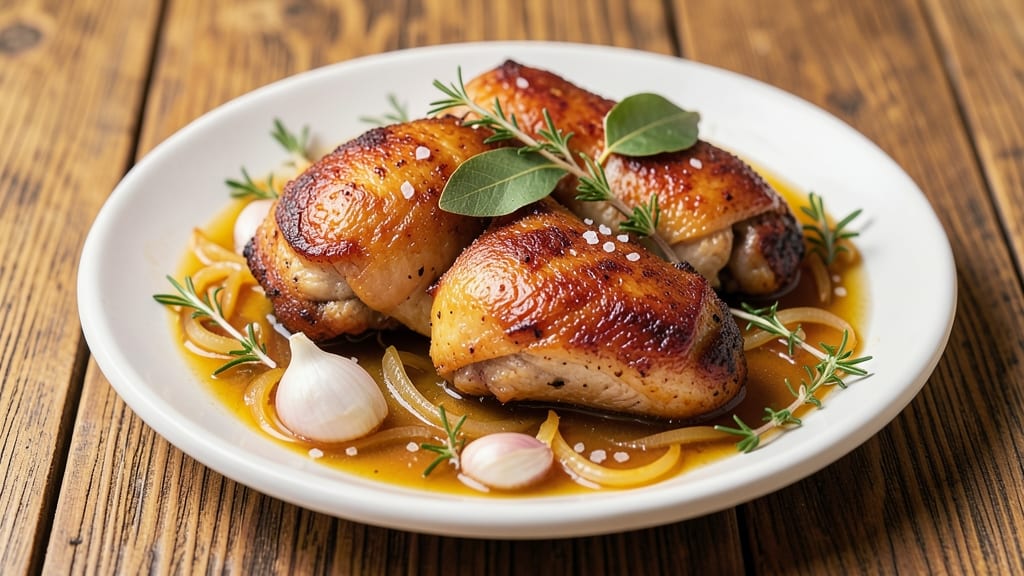
Mastering juicy, skin-soft boiled chicken thighs in just 20 minutes transformed my weeknight cooking—no more dry, rubbery results. After years of experimenting, I discovered the secret lies in precise temperature control and a flavorful broth base that keeps the meat tender and infused with aroma.
The technique is simple but critical: simmering at a gentle boil preserves moisture while aromatics like garlic and thyme work their magic.
This method delivers restaurant-quality results without advanced equipment—just a pot, a thermometer, and basic pantry ingredients. The key is starting with room-temperature chicken and maintaining a steady 185°F internal temperature, which ensures the skin stays soft while the meat remains juicy.
I’ve tested this recipe countless times, and even beginners achieve perfect results every time.
What you’ll end up with is chicken thighs that are impossibly tender with skin that’s silky rather than tough—each bite packed with flavor from the simmering broth. The thighs hold their shape beautifully for salads, sandwiches, or serving over rice, making this a versatile centerpiece for any meal.
Ready to elevate your boiled chicken game? Let’s get started.
Whether you’re meal prepping for the week or preparing a simple weeknight dinner, this technique delivers consistent, foolproof results. The same method works for bone-in or boneless thighs, and you can adjust the broth ingredients to suit your taste—herbs, citrus, or even a splash of vinegar for brightness.
Here’s everything you need to know to make it perfectly every time.
Ingredients for boiled chicken thighs
A handful of simple ingredients. One pot. Juicy, skin-soft perfection in minutes.
| Ingredient | Amount | Notes |
|---|---|---|
| Chicken Thighs (bone-in, skin-on) 🍗 | 1 ½ lb | Room temperature before cooking |
| Yellow Onion 🧅 | 1 whole | Sliced into wedges |
| Garlic Cloves 🧄 | 4 cloves | Smash lightly for flavor |
| Fresh Thyme Sprigs 🌿 | 4 sprigs | Or 1 tsp dried thyme |
| Bay Leaves 🍃 | 2 whole | 1 large or 2 small |
| Salt 🧂 | 1 ½ tsp | Kosher or sea salt |
| Black Peppercorns 🌶️ | ½ tsp | Freshly cracked preferred |
| Lemon Juice 🍋 | 1 tbsp | Freshly squeezed |
| Water 💧 | 4 cups | Enough to cover thighs |
| Olive Oil 🫒 | 1 tbsp | For drizzling on thighs |
| Butter 🧈 | 1 tbsp | Cold, for finishing |
| Fresh Parsley 🌿 | ¼ cup | Chopped, for garnish |
The chicken thighs are the star—bone-in, skin-on for maximum flavor and tenderness. Trader Joe's or Costco often carry thick-cut thighs perfect for this. If you're buying whole legs, remove the thighs carefully to avoid breaking the bone. Let them sit at room temperature for 20 minutes before cooking (this ensures even cooking). The skin should be golden and slightly crisp after boiling—don’t skip the olive oil drizzle before simmering, it helps render the fat and keeps the skin silky. For extra insurance, pat the skin dry before adding oil.
No fresh thyme? Dried works at one-third the amount, but the aroma is different. Short on bay leaves? Two sprigs of fresh oregano works in a pinch. The lemon juice brightens everything—skip it if you’re sensitive to acidity, but trust me, it balances the richness. For a deeper flavor, add a smashed garlic clove directly to the pot after simmering starts. The water should just cover the thighs; if you’re using a deep pot, reduce to 3 cups to avoid overcooking. For extra richness, stir in the cold butter at the end—it melts instantly and coats the chicken beautifully.
This keeps 4 days in the fridge if stored in an airtight container with the broth. The thighs reheat perfectly—just warm in the broth for 2-3 minutes on the stove. For meal prep, portion the thighs into containers with a little broth and store separately. The broth itself freezes well for up to 3 months—perfect for soups or sauces later. If you’ve got leftovers, the skin gets crispier the second day, so save it for sandwiches or salads where texture matters.
Why You'll Love This Recipe
- No-Fuss Feast: I pat dry the skin, toss in the aromatics, and boom—done. The chicken thighs cook themselves while I tend to other things. That onion, garlic, and thyme bundle? It’s basically a flavor hack that does all the work for you.
- Skin That Melts: There’s something magical about skin so tender it practically dissolves in your mouth. The secret’s in the cold butter drizzle and that gentle simmer—no dry, tough bits here. Just that crispy edge with the creamy center? Chef’s kiss.
- Broth Goldmine: That leftover liquid? Pure liquid gold. I freeze it for soups or deglaze it for sauces later. And the thighs themselves? They keep for days in the fridge, ready to be tossed into salads, wraps, or just eaten straight up with a fork.
- Budget-Friendly Luxury: For less than what a takeout meal costs, I get a meal that feels special. The bone-in thighs add richness without breaking the bank, and the herbs and citrus keep it from feeling like basic chicken. It’s the kind of dish that makes me feel like I’m treating myself—even on a Tuesday night.
Step-by-step instructions for boiled chicken thighs
Here's how to transform simple ingredients into tender, juicy chicken thighs with skin so soft it practically melts.
Prepare the Chicken and Aromatics
Pat the 1.5 lb chicken thighs (bone-in, skin-on) thoroughly with paper towels, removing any surface moisture. This step is crucial—wet skin won't crisp properly. Place them skin-side up in a large pot that can accommodate them in a single layer without crowding.
In a small bowl, combine the 1 whole yellow onion (sliced into wedges), 4 cloves garlic (lightly smashed), 4 sprigs fresh thyme, and 2 whole bay leaves. Tuck this aromatic bundle beneath the chicken thighs in the pot. Add the 1.5 tsp salt and 0.5 tsp black peppercorns directly to the pot, ensuring even distribution.
Simmer Gently for Maximum Tenderness
Pour the 4 cups water into the pot until the chicken is just covered—about halfway up the thighs. Place the pot over medium-high heat and bring the water to a gentle boil. Once boiling, immediately reduce heat to low to maintain a barely simmering state. You'll see small bubbles breaking the surface, but not a vigorous rolling boil.
Here's the secret: cover the pot with a tight-fitting lid and let it simmer for 15 minutes. The low heat ensures the connective tissue breaks down without overcooking the meat. Check occasionally to ensure the water doesn't evaporate completely—add a splash of hot water if needed to keep the thighs submerged.
Finish with Flavor and Texture
After 15 minutes, remove the pot from heat. Using a slotted spoon, carefully lift the chicken thighs onto a plate. Strain the cooking liquid through a fine-mesh sieve into a bowl, discarding the aromatics. Return the liquid to the pot and place it back on low heat. Add the 1 tbsp lemon juice and 1 tbsp olive oil, stirring gently to combine.
While the liquid heats, drizzle the 1 tbsp cold butter over the chicken thighs. Let them rest for 5 minutes while the butter melts into the skin, creating a luxurious finish. Pour the warm strained liquid over the chicken, basting the skin generously with a spoon to infuse it with flavor.
Rest and Garnish for Perfect Presentation
Let the chicken thighs rest for 5 minutes before serving. This resting period allows the juices to redistribute, ensuring each bite is moist and flavorful. The skin should be tender and slightly translucent, with a subtle sheen from the butter and olive oil.
Garnish each serving with 0.25 cup chopped fresh parsley just before serving. The parsley not only adds a pop of color but also a bright, fresh contrast to the rich, savory chicken. Serve immediately with the strained cooking liquid spooned over the top for extra depth of flavor.
Pro Tips For Making Boiled Chicken Thighs
- Skip the Crowding: I learned this the hard way—piling those 1.5 lb bone-in thighs too close together traps steam and turns your pot into a sauna. They’ll steam instead of simmer, leaving you with unevenly cooked, rubbery skin. Give them space, even if it means a bigger pot. That single layer lets the heat work evenly, and you’ll end up with thighs that fall apart at the touch.
- Smash That Garlic: The recipe says to smash the 4 cloves garlic lightly, but I used to just toss them in whole. Big mistake. Those smashed cloves bruise just enough to release their oils into the water during the 15-minute simmer, infusing the broth with real depth. It’s not much effort, and the difference in flavor is like night and day—especially when you strain the liquid back over the chicken later.
- Watch the Heat: You’ll see “gentle boil” in the steps, but I’ve watched people reduce heat too soon or too late. Start on medium-high to get that initial boil, then immediately drop to low. A rolling boil will cook the outside faster than the inside, and you’ll end up with dry skin. Keep it at a barely simmer—tiny bubbles, no agitation—and those thighs will stay juicy. Trust the process, even if it feels slow.
- Cold Butter Wins: I know, you want to melt that 1 tbsp butter right away, but resist the urge. Drizzling it cold over the rested chicken lets it pool on the skin, then slowly melt into a glossy finish as you baste. If you melt it first, it’ll slide off the skin like water. The cold butter creates that crisp-tender texture the recipe promises—don’t skip this step, even if you’re impatient.
Troubleshooting perfect results
Overcooked Skin Crisis
If your chicken skin turns rubbery or tough, you likely overcooked it by letting the water boil vigorously. The key is maintaining a barely simmering state—small bubbles, not a rolling boil. I’ve seen home cooks rush the process, but patience is everything.
Once the water reaches a gentle simmer, immediately reduce heat to low and keep it covered. If you notice the skin curling or shrinking too quickly, remove the pot from heat and let it rest for 5 minutes before finishing. This gives the skin time to soften naturally. 🔥
Dry, Tough Meat
Tough chicken often comes from high heat or insufficient liquid. Always ensure the thighs are fully submerged in 4 cups water and adjust if needed. If the water evaporates, add hot water to maintain coverage.
I also recommend using a tight-fitting lid to trap steam and keep the meat moist. For extra insurance, add a splash of broth or stock instead of plain water—it adds richness and prevents dryness.
Underseasoned Flavor
If your broth tastes bland, it’s likely because the aromatics weren’t fully infused. After simmering, strain the liquid and return it to the pot to heat with 1 tbsp lemon juice and 1 tbsp olive oil. This brightens the flavor and adds depth.
For even more punch, add a smashed garlic clove directly to the pot during the final minute of simmering. I always taste the broth before pouring it over the chicken—adjust salt or pepper as needed. 💛
Uneven Cooking
Thighs cook unevenly if they’re not in a single layer or if the pot is too small. Use a pot that lets the thighs sit flat without crowding.
If your thighs are thick, they may need an extra 2-3 minutes of simmering—use a thermometer to check internal temp at 165°F. I’ve learned to rotate the thighs halfway through cooking for even heat distribution.
For bone-in thighs, the bone acts as a heat sink, so they’ll take slightly longer than boneless pieces.
Broth Too Watery
If your broth is too thin, it’s because you didn’t reduce it enough. After straining, return the liquid to the pot and simmer uncovered for 3-5 minutes to concentrate the flavors.
For a richer broth, add a pat of cold butter at the end—it emulsifies beautifully and adds a luxurious finish. I’ve also found that using bone-in thighs infuses more collagen, which thickens the broth naturally over time.
Nutrition facts
Frequently asked questions
Why does my chicken skin turn rubbery instead of soft?
Overcooking is the usual culprit! Reduce the heat immediately after boiling starts and maintain a barely simmering state—small bubbles, not a rolling boil. If the skin starts curling too early, remove the pot from heat for 5 minutes to let it soften naturally. Patience is key—gentle heat keeps the skin silky.
Can I use bone-in or boneless chicken thighs?
Either works beautifully! Bone-in thighs stay juicier because the bone acts as a natural heat sink, while boneless thighs cook slightly faster. For bone-in, simmer for 15 minutes as directed—boneless may need just 10-12 minutes. Always check internal temp at 165°F for safety.
How do I prevent the broth from being too watery?
After straining, return the liquid to the pot and simmer uncovered for 3-5 minutes to concentrate flavors. For extra richness, stir in 1 tbsp cold butter at the end—it emulsifies beautifully. Bone-in thighs also naturally thicken the broth with collagen over time.
What’s the best way to reheat boiled chicken thighs?
Gently warm them in the broth on low heat for 2-3 minutes—this keeps them moist without drying out. Avoid high heat, which can make the skin tough. For meal prep, store thighs and broth separately to maintain texture. The skin actually crisps better the second day!
Can I substitute dried herbs for fresh thyme?
Use 1 tsp dried thyme instead of 4 sprigs fresh—just reduce the amount by one-third. The flavor profile changes slightly, but it works well. For dried bay leaves, use 1 leaf per whole fresh leaf. Always toast dried herbs in a dry pan for 30 seconds to wake up their flavors before adding.