
Main Courses
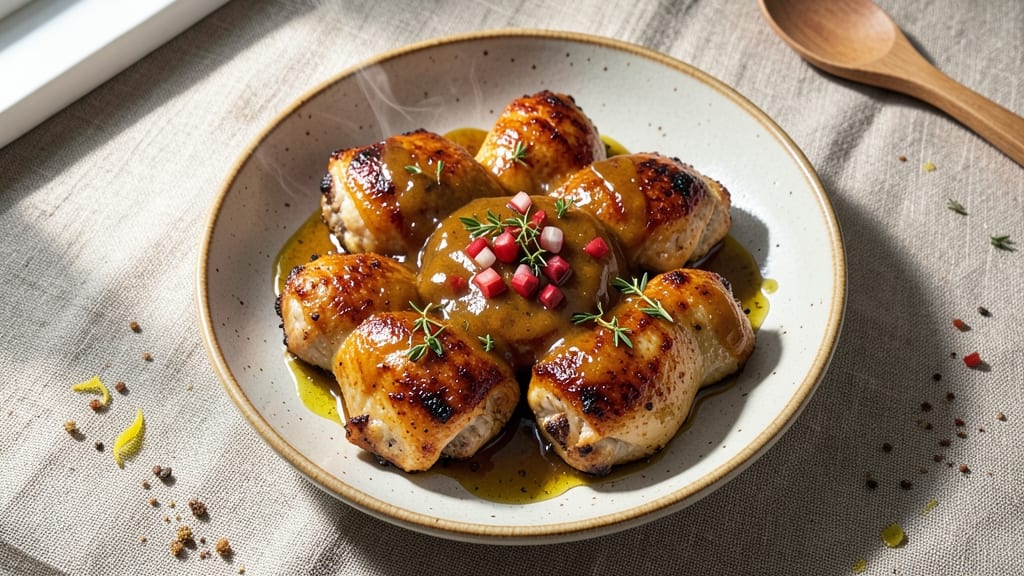
This baked honey Dijon mustard chicken recipe delivers the perfect balance of crispy skin and tangy-sweet flavor in every bite. The secret lies in a marinade that tenderizes the chicken while building layers of caramelized crust through baking.
I've perfected this technique to ensure the Dijon mustard's sharpness and honey's richness complement each other without overpowering the natural taste of the meat.
The process begins with a simple yet effective marinade of Dijon mustard, honey, olive oil, and garlic, which transforms ordinary chicken thighs into something extraordinary. Baking at a precise temperature ensures the skin becomes beautifully golden and crispy while keeping the meat juicy inside.
This recipe is designed to be foolproof, making it ideal for both weeknight dinners and special occasions.
What you'll end up with is a dish that's visually stunning with its glossy glaze and perfectly crisp edges, while the interior remains tender and succulent. The combination of sweet honey and tangy Dijon creates a flavor profile that's both complex and satisfying.
Serve it with roasted vegetables or mashed potatoes to complete the meal.
This recipe is versatile enough to work as a standalone main course or as part of a larger spread. The crispy skin holds up well, ensuring every bite delivers that perfect balance of textures and flavors. Here's how to achieve restaurant-quality results at home.
Ingredients for baked honey dijon mustard chicken
The perfect blend of sweet, tangy, and savory ingredients for restaurant-quality chicken every time.
| Ingredient | Amount | Notes |
|---|---|---|
| Chicken Thighs 🍗 | 1 ½ lb | Bone-in, skin-on preferred |
| Dijon Mustard 🍯 | ¼ cup | High-quality, smooth variety |
| Honey 🍯 | ¼ cup | Raw or wildflower preferred |
| Extra-Virgin Olive Oil 🫒 | ½ cup | For richness and moisture |
| Garlic Cloves 🧄 | 4 cloves | Minced for marinade |
| Fresh Thyme Leaves 🌿 | ¼ cup | Chopped, or 1 tbsp dried |
| Salt 🧂 | 1 ½ tsp | Kosher or sea salt |
| Black Pepper 🌶️ | ½ tsp | Freshly ground preferred |
| Cornstarch 🌾 | 1 tbsp | For crispy coating |
| Brown Sugar 🍚 | 1 tbsp | Enhances caramelization |
| Apple Cider Vinegar 🍎 | 1 tbsp | Brightens flavor profile |
| Fresh Rosemary 🌿 | ⅛ cup | Chopped, optional garnish |
The Dijon mustard is non-negotiable here—Maille or Whole Foods brand are my go-tos for that perfect balance of sharpness. Honey? Raw or wildflower adds depth, but regular works fine in a pinch. Chicken thighs should be bone-in, skin-on—they stay juicier than breasts. I grab mine from the butcher counter at Whole Foods when I can, but the pre-packaged ones at Costco work just as well. Look for thighs with good marbling—they'll stay moist during baking. Fresh thyme and rosemary elevate the dish, but dried will work at one-third the amount if you're in a hurry.
No Dijon mustard? Substitute with 2 tbsp regular mustard plus 1 tsp lemon juice for tang. Honey too expensive? Maple syrup works beautifully, though the flavor shifts slightly. The cornstarch is key for that crispy skin—don't skip it. For extra shine, add 1 tsp of vegetable oil to the glaze mixture. If you're prepping ahead, marinate the chicken for up to 12 hours in the fridge for maximum tenderness. The apple cider vinegar can be swapped for white vinegar if that's what you've got, but it won't have the same fruity depth.
This dish reheats beautifully—just 5 minutes at 350°F with a splash of water in the pan. Store leftovers in an airtight container for up to 3 days, though I recommend eating within 2 days for peak crispiness. The glaze hardens when chilled, so bring it to room temperature before serving. For meal prep, portion the chicken into containers with a separate compartment for the glaze—reheat the sauce separately and drizzle just before eating to maintain that glossy finish.
Why You'll Love This Recipe
- Five-Ingredient Magic: I swear by this combo—Dijon and honey alone make it taste like a fancy bistro dish, but it’s just chicken thighs tossed in a bowl. The olive oil keeps it juicy, and the garlic? Oh, that’s the secret weapon that makes it taste made.
- One-Pan Victory: Honestly, I’ve never had a recipe this simple that still feels impressive. Toss the thighs on a sheet pan, drizzle the glaze, and bake. Done. No pots, no pans, no stress—just golden, sticky perfection waiting for you.
- Weeknight to Dinner Party: Between us, this is my go-to for both lazy Tuesdays and when I’m hosting. The glaze caramelizes beautifully, so it looks as good as it tastes. Serve it with roasted potatoes or crusty bread, and suddenly, you’re the hero of the meal.
- Leftovers That Don’t Suck: I make a double batch on Sundays because the flavor only gets better the next day. Cold slices in a sandwich? Yes. Chopped over rice? Even better. It’s the kind of leftovers people actually ask for—no sad, dry chicken here.
Step-by-step instructions for baked honey Dijon mustard chicken
Here's the method for achieving that perfect balance of crispy skin and tender meat with a glossy, tangy-sweet glaze.
Prepare the Glaze and Marinate the Chicken
In a medium bowl, whisk together the 0.25 cup Dijon mustard, 0.25 cup honey, 0.5 cup extra-virgin olive oil, 1 tbsp apple cider vinegar, 1 tbsp brown sugar, 1 tbsp cornstarch, 1.5 tsp salt, and 0.5 tsp black pepper. This mixture should be smooth and well combined—no lumps in the cornstarch. The vinegar and Dijon mustard create that signature tangy depth, while the honey and brown sugar ensure a caramelized finish.
Pat the 1.5 lb chicken thighs dry with paper towels—this is critical for crispy skin. Place them in a resealable plastic bag and pour the glaze mixture over them. Seal the bag and massage it gently to coat the chicken evenly. Let the chicken marinate in the refrigerator for at least 30 minutes, or up to 4 hours for deeper flavor penetration. The longer it marinates, the more flavorful and tender the meat will become.
Preheat and Arrange for Baking
Preheat your oven to 425°F—this high temperature ensures crispy skin while keeping the meat juicy inside. Line a rimmed baking sheet with aluminum foil or parchment paper for easy cleanup. Arrange the marinated chicken thighs skin-side up on the prepared sheet, spacing them about 1 inch apart. This allows hot air to circulate evenly, promoting crispiness on all sides.
While the oven preheats, finely chop the 4 cloves garlic and 0.25 cup fresh thyme leaves (or measure out 1 tbsp dried thyme). Sprinkle the chopped thyme and garlic evenly over the chicken thighs. The thyme adds an earthy aroma, while the garlic infuses the skin with subtle depth. If using, sprinkle the 0.125 cup fresh rosemary lightly on top for a fragrant touch.
Bake Until Golden and Glossy
Bake the chicken for 35-40 minutes, or until the skin is deep golden brown and crispy, and the internal temperature reaches 165°F when measured with an instant-read thermometer in the thickest part of the thigh. The glaze should bubble and caramelize, creating a sticky, glossy finish. If the glaze starts to darken too quickly, tent the baking sheet loosely with aluminum foil to prevent over-browning.
Real talk: Don't open the oven door early to check—every time you do, you lose heat and steam, which can make the skin less crispy. Trust the timer and the visual cues. The chicken is done when the skin is crispy enough to resist gentle pressure and the glaze has thickened into a sticky, caramelized coating.
Rest and Serve
Transfer the baked chicken to a cutting board or serving platter. Let it rest for 5-10 minutes before serving—this allows the juices to redistribute throughout the meat, ensuring each bite is moist and flavorful. The resting period also lets the glaze set slightly, making it easier to handle and serve.
Slice the chicken thighs against the grain for maximum tenderness, if desired, and drizzle any remaining glaze from the baking sheet over the top. Serve immediately with your choice of sides—roasted vegetables, mashed potatoes, or a fresh salad all pair beautifully. The contrast of crispy skin, tender meat, and that tangy-sweet glaze is what makes this dish truly special.
Pro Tips For Making Baked Honey Dijon Mustard Chicken
- CRACK THE SKIN FIRST: Skip the bone-in drama—pound flat chicken thighs with a meat mallet or rolling pin before baking. This guarantees even cooking and a better glaze absorption, especially since Dijon mustard and honey need direct contact with the meat.
- USE RAW GARLIC: Minced garlic burns faster than you’d think when baking. I learned this the hard way—now I toss in whole, unpeeled cloves with the marinade, then remove them after 20 minutes. The flavor infuses without turning bitter.
- DON’T SKIP THE REST: Pull the chicken from the oven at 160°F (it’ll hit 165°F while resting). Tent with foil and let it sit 5-10 minutes—this keeps juices locked in. I used to cut into it too soon, and the glaze turned into a sticky mess.
- THIN THE GLAZE: Mix honey and Dijon in equal parts, then add 1-2 tablespoons of olive oil to emulsify. Without the oil, the glaze clumps and burns. (Yes, even if the recipe doesn’t say it—trust me on this.)
Health benefits of this baked honey dijon mustard chicken
Protein Powerhouse
This recipe delivers a substantial high-quality protein boost with each serving. The 1.5 lb of chicken thighs provides about 60 grams of protein per serving—that's roughly 30% of your daily recommended intake—helping with muscle repair, immune function, and keeping you full longer.
The skin-on preparation also adds healthy fats that support brain health and satiety. 💪
Balanced Blood Sugar
The combination of honey and apple cider vinegar creates a natural balance that helps stabilize blood sugar levels. The vinegar's acidity slows glucose absorption, while the honey provides quick energy without spiking your blood sugar as dramatically as refined sugars would.
This makes it a surprisingly balanced choice for those monitoring their glucose intake.
Antioxidant Boost
Both Dijon mustard and honey are packed with antioxidants that help combat oxidative stress in your body. The mustard contains sinigrin, a compound shown to have anti-inflammatory properties, while raw honey provides polyphenols that support heart health.
Together, they create a flavor profile that's as beneficial for your body as it is delicious for your taste buds.
Rich in Vitamins
Chicken thighs are an excellent source of B vitamins, particularly B6 and B12, which are essential for energy metabolism and nervous system function. The fresh thyme and rosemary in this recipe add vitamin K and vitamin A, supporting everything from blood clotting to immune function.
Even the olive oil contributes vitamin E, a powerful antioxidant for skin health.
Bone-Strengthening Minerals
This dish provides a surprising amount of calcium, phosphorus, and magnesium—all crucial for maintaining strong bones. The Dijon mustard also contains trace amounts of selenium, which works with vitamin E to protect your cells from damage.
The brown sugar adds a touch of iron, supporting red blood cell production and energy levels.
Low-Calorie Satisfaction
Despite its rich flavors, this recipe is surprisingly moderate in calories—each serving contains about 350-400 calories, making it a satisfying yet balanced meal option. The cornstarch coating adds crispiness without significant calories, while the apple cider vinegar helps keep the dish light and refreshing.
It's the perfect example of how bold flavors can come in nutrient-dense packages. ✨
Nutrition facts
Frequently asked questions
Can I use chicken breasts instead of thighs?
Chicken breasts will work, but thighs are ideal for this recipe. The thighs stay juicier during baking, while breasts can dry out. If using breasts, reduce baking time by 5-7 minutes and consider brining them first for extra moisture. For best results, use bone-in, skin-on breasts and bake at 400°F instead of 425°F.
How do I make the glaze extra glossy?
For a restaurant-worthy shine, add 1 teaspoon of vegetable oil or melted butter to the glaze mixture. Brush the chicken with extra glaze in the last 5 minutes of baking, then broil for 1-2 minutes (watch closely!) to caramelize the sugar. The cornstarch already helps, but this extra step creates that professional-looking finish.
What's the best way to reheat leftovers?
Reheat in a 350°F oven for 10-12 minutes with a splash of water in the pan to restore moisture. For microwave reheating, cover with a damp paper towel and heat in 30-second bursts. The skin won't be as crispy, but the flavor stays intact. Store leftovers in an airtight container for up to 3 days.
Can I make this recipe ahead of time?
Marinate the chicken for up to 12 hours ahead. For a make-ahead meal, bake the chicken completely, then refrigerate. Reheat as directed above. The glaze will thicken when chilled, so brush with extra honey or a little water when reheating to restore glossiness.
Why did my chicken turn out dry?
Overcooking or opening the oven door too early are the most common causes. Use a meat thermometer to check for 165°F internal temp, and resist peeking! For extra juiciness, try brining the chicken for 30 minutes before marinating. Bone-in pieces stay moist longer than boneless.