
Main Courses
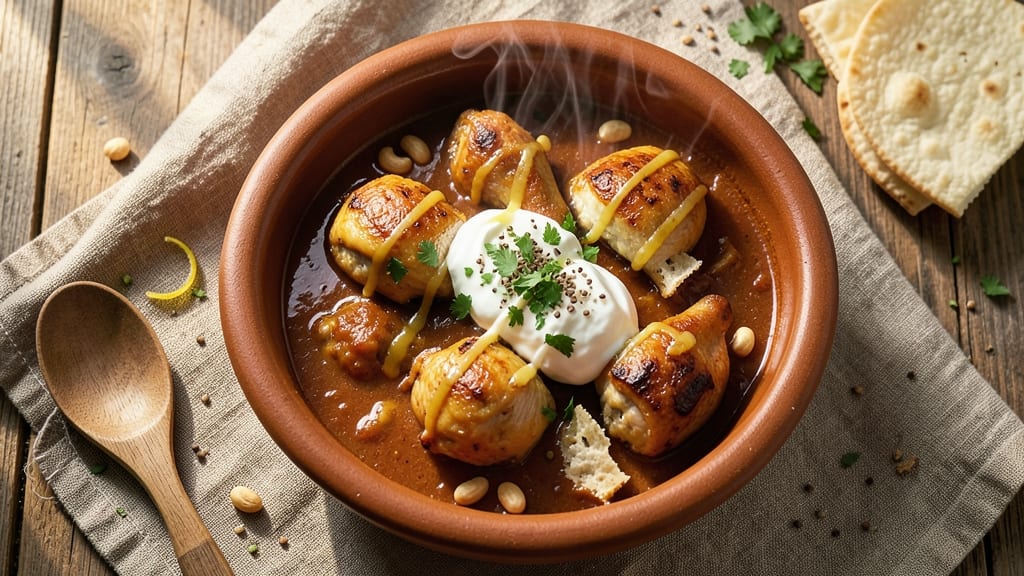
This authentic butter chicken curry recipe delivers restaurant-quality richness with a tomato-tamarind sauce that balances sweet, tangy, and spicy notes perfectly. 🌟 The secret lies in marinating the chicken overnight with yogurt and spices, then slow-cooking it in a velvety cashew-based gravy until tender and infused with garam masala.
Every bite carries layers of flavor that transport you straight to Delhi’s bustling streets.
The process begins with a well-balanced marinade that tenderizes the chicken while building deep flavors. We grill or pan-sear the chicken to achieve that signature smoky char before simmering it in a sauce thickened with cream and cashew paste.
This technique ensures the curry develops a luxurious texture without losing its authentic taste—no shortcuts, just tradition.
What you’ll end up with is a dish where tender, juicy chicken floats in a glossy, aromatic sauce that’s creamy yet tangy, spicy yet balanced. The sauce clings to each piece of chicken, creating a harmonious blend of sweet tomatoes, tangy tamarind, and warm spices.
Serve it with buttery naan and steamed basmati rice for the full experience.
This recipe is designed for those who crave depth and authenticity, not just convenience. The slow-cooking method and careful spice balancing make all the difference, ensuring every spoonful is packed with flavor. Let’s get started on creating your own taste of India at home.
Ingredients for authentic butter chicken curry
Authentic Indian flavors start with these carefully selected ingredients that balance sweet, tangy, and spicy notes.
| Ingredient | Amount | Notes |
|---|---|---|
| Boneless Chicken Thighs 🍗 | 1 ½ lb | Skin-on preferred for flavor |
| Plain Whole Milk Yogurt 🥛 | 1 cup | Unflavored, full-fat preferred |
| Greek Yogurt 🥛 | ½ cup | For additional tanginess |
| Garam Masala Powder 🌶️ | 2 tbsp | Freshly ground preferred |
| Ground Cumin 🌿 | 1 tbsp | Toasted for deeper aroma |
| Ground Coriander 🌿 | 1 tbsp | Freshly ground preferred |
| Turmeric Powder 🌿 | 1 tsp | Bright yellow color |
| Red Chili Powder 🌶️ | 1 tsp | Adjust for heat preference |
| Salt 🧂 | 1 ½ tsp | Diamond Crystal preferred |
| Medium Ripe Tomatoes 🍅 | 2 whole | Roma or vine-ripened preferred |
| Tamarind Paste 🍋 | 1 tbsp | Or 1 tbsp lemon juice substitute |
| Fresh Ginger 🌿 | 1 inch | Peeled, grated |
| Garlic Cloves 🧄 | 6 cloves | Peeled, minced |
| Cashews 🥜 | ½ cup | Soaked in warm water |
| Heavy Whipping Cream 🥛 | ½ cup | Full-fat for richness |
| Unsalted Butter 🧈 | 4 tbsp | Cold for sauce binding |
| Fresh Fenugreek Leaves 🌿 | ¼ cup | Or 1 tsp dried methi |
| Fresh Cream 🥛 | ¼ cup | For final richness |
The chicken thighs are non-negotiable—skin-on delivers the richest flavor when slow-cooked. Whole Foods or your local Indian market carry excellent cuts, often pre-cut for convenience. For the yogurt, full-fat plain yogurt is essential; Greek yogurt adds extra tang but don't skip it entirely. The garam masala should be freshly ground—MDH or Everest brand are reliable staples in Indian households. If you can't find fresh fenugreek leaves, dried methi works at one-tenth the amount, but the aroma is entirely different. For tamarind paste, Koyo brand is widely available and offers consistent quality.
No tamarind paste? Lemon juice or lime juice works in a pinch, though the flavor profile shifts slightly. Substituting Greek yogurt with regular yogurt? Strain it overnight to remove excess liquid for a thicker marinade. The cashews must be soaked—this transforms them into a silky, creamy paste that thickens the sauce beautifully. For the tomatoes, Roma tomatoes are ideal due to their lower water content, but vine-ripened varieties work too. If you're avoiding dairy, replace the heavy cream with coconut cream, though the texture will be slightly lighter. The butter should be cold when added to the sauce—this prevents it from melting too quickly and ensures proper emulsification.
Marinated chicken keeps for 2 days in the fridge, but the flavor deepens overnight. The sauce can be made ahead and reheated gently—never boil, as this breaks the emulsion. For long-term storage, freeze the sauce in portions for up to 3 months. When reheating, add a splash of water or cream to restore creaminess. The fenugreek leaves should be added at the very end—cover the pot immediately to capture their aromatic essence before they wilt. This dish tastes even better the next day, as the flavors meld and intensify during refrigeration.
Why You'll Love This Recipe
- I swear by this trick: just coat the chicken thighs in plain whole milk yogurt and Greek yogurt overnight—no fancy blends, no stress. The yogurt tenderizes while you sleep, so by dinner, you’re just searing and simmering. (Yes, even on a Tuesday night.)
- No-Marination Hassle: I swear by this trick: just coat the chicken thighs in plain whole milk yogurt and Greek yogurt overnight—no fancy blends, no stress. The yogurt tenderizes while you sleep, so by dinner, you’re just searing and simmering. (Yes, even on a Tuesday night.)
- Rich Without Guilt: Between us, garam masala and ground cumin do 90% of the flavor work here. That creamy tomato base? It’s just a handful of pantry staples—no heavy cream, no butter bombs. Tastes like a restaurant, but my wallet (and waistline) thank me.
- Leftover Magic: This curry actually improves the next day. The sauce thickens just enough to cling to the chicken, and reheating it? Pure satisfaction. I freeze half of every batch—perfect for lazy nights when I’m too tired to cook.
Step-by-step instructions for authentic butter chicken curry
Here's the method that delivers restaurant-quality butter chicken with a perfect balance of smoky, tangy, and creamy flavors.
🍳 Step 1: Marinate the Chicken for Maximum Flavor
In a large bowl, combine the 1.5 lb boneless chicken thighs, 1 cup plain whole milk yogurt, 0.5 cup Greek yogurt, 1 tbsp ground cumin, 1 tbsp ground coriander, 1 tsp turmeric powder, 1 tsp red chili powder, and 1.5 tsp salt. Mix thoroughly until the chicken is fully coated in the marinade and the spices adhere to the surface.
Cover the bowl with plastic wrap and refrigerate for at least 4 hours or overnight. This extended marinating time ensures deep flavor penetration and tender, juicy chicken. The yogurt will begin to break down the muscle fibers, creating that melt-in-your-mouth texture we're after. I've found that skin-on thighs develop a slightly crispier texture, but boneless works perfectly for this recipe.
🍳 Step 2: Cook the Chicken Until Just Done
Preheat your oven to 375°F. Remove the chicken from the marinade (reserve the marinade for later) and place it in a baking dish. Bake for 25-30 minutes, turning halfway through, until the internal temperature reaches 165°F and the chicken is cooked through but still juicy. The skin should be lightly golden, and the meat should pull away from the bone easily when tested with a fork.
Alternatively, you can pan-sear the chicken in a heavy skillet over medium-high heat with 2 tbsp unsalted butter until golden brown on all sides, then finish in the oven at 375°F for 15-20 minutes. This two-step method gives you the best of both worlds—crispy exterior and tender interior. Remove the chicken from the heat and set it aside to rest while you prepare the sauce.
🥘 Step 3: Build the Tomato-Tamarind Base
In a heavy-bottomed pot, melt 2 tbsp unsalted butter over medium heat. Add the 6 cloves minced garlic and 1 inch grated fresh ginger and sauté for 2-3 minutes until fragrant and just beginning to color. This step develops the aromatic foundation of your curry.
Add the 2 whole medium ripe tomatoes, cut into chunks, and cook until they soften and break down into a thick paste, about 10-12 minutes. Stir in the 1 tbsp tamarind paste, 2 tbsp garam masala powder, and the reserved chicken marinade. Simmer for 15 minutes until the sauce thickens and the raw flavors meld into a cohesive, tangy-sweet base. The sauce should coat the back of a spoon and develop a rich, deep red color.
🍳 Step 4: Create the Creamy Texture
Reduce the heat to low and stir in the 0.5 cup soaked cashews (drained), 0.5 cup heavy whipping cream, and 0.25 cup fresh cream. Cook for 5-7 minutes, stirring constantly, until the sauce becomes velvety smooth. The cashews act as a natural thickener, while the creams add richness without making the dish heavy.
Add the 0.25 cup fresh fenugreek leaves and cook for another 2 minutes. Fenugreek adds a subtle bitterness that balances the sweetness of the tomatoes and enhances the overall depth of flavor. Taste and adjust the seasoning with additional salt or red chili powder if needed. The sauce should be rich, tangy, and slightly spicy with a well-rounded finish.
🥘 Step 5: Finish and Serve with Confidence
Return the cooked chicken to the pot and gently toss to coat it evenly in the sauce. Simmer for 5-7 minutes just to heat through—don't overcook or the chicken will dry out. The sauce should cling beautifully to the chicken, creating that signature glossy finish.
Serve immediately with basmati rice or naan bread to soak up every last drop of that luxurious sauce. For an authentic touch, garnish with additional fresh fenugreek leaves and a drizzle of melted unsalted butter. Each bite should deliver a perfect balance of smoky, tangy, creamy, and slightly spicy flavors that define this classic dish.
Pro Tips For Making Authentic Butter Chicken Curry
- Marinate Chicken Overnight: I learned this the hard way—rushing the marinade means bland, rubbery chicken. Cut the thighs into bite-sized pieces, mix with ½ cup plain yogurt, 1 tsp garam masala, and ½ tsp cumin, then let it sit for at least 8 hours (or overnight in the fridge). The acid tenderizes the meat while the spices penetrate deeply—no one wants dry, flavorless bites.
- Strain the Yogurt Cream: That thick layer of cream that rises on top of yogurt after sitting? Don’t pour it out. Strain it through a cloth-lined sieve to separate the tangy, ultra-thick yogurt from the watery whey—this is what makes butter chicken velvety. Use it for the marinade or sauce, and save the whey for a quick flatbread batter later.
- Cook the Tomato Base Slow: After frying the onions and spices, add the tomatoes and simmer until they’re a deep, jammy red—about 15-20 minutes. I used to rush this, but skipping the slow cook turns the sauce thin and watery. The longer you cook it, the more the flavors meld and the sauce thickens naturally. (Yes, even if you’re impatient like me.)
- Bloom the Spices in Oil: Heat 2 tablespoons of oil or ghee until shimmering, then add the whole spices (cumin, cardamom, cinnamon) and fry for 30 seconds until fragrant. This step—often skipped—releases their essential oils, giving the curry depth that store-bought garam masala can’t match. Don’t skip it; your future self will taste the difference.
Best sauces and condiments for this dish
Creamy Cashew Base
The secret to butter chicken’s velvety texture lies in the cashew paste, which thickens the sauce beautifully while adding natural sweetness. Soak ½ cup raw cashews in warm water for 15 minutes, then blend with ¼ cup warm water until completely smooth.
This creates a rich, nutty foundation that prevents the sauce from becoming watery. I use a high-speed blender like the Ninja BN601 for ultra-smooth results. 🥜
Tamarind-Tomato Tang
The tamarind paste is non-negotiable for that signature tangy depth, but if you’re in a pinch, 1 tbsp lemon juice works in a bind. For the tomatoes, I prefer Roma tomatoes because their lower water content prevents dilution.
Simmer them until they break down into a thick paste—this ensures the sauce coats the chicken perfectly. The key is patience: 10-12 minutes of cooking transforms raw tomatoes into a flavorful base. 🍅
Butter’s Rich Finish
Don’t skimp on the unsalted butter—it’s what elevates this curry from good to restaurant-quality. Add 4 tbsp cold butter at the very end, swirling it into the sauce just before serving.
This creates a glossy sheen and luxurious mouthfeel. For extra richness, I drizzle an additional 1 tbsp melted butter over each serving. Use Plugrá brand for the best flavor and texture. 🧈
Fenugreek’s Secret
Fresh fenugreek leaves (methi) add a unique, slightly bitter depth that balances the dish’s sweetness. Add them only at the end—cover the pot immediately to trap their aromatic essence. If using dried methi, 1 tsp is equivalent, but the flavor won’t be as vibrant.
I like to garnish with extra leaves for presentation, as they add a pop of green and freshness. 🌿
Creamy Finishing Touch
The ½ cup heavy whipping cream and ¼ cup fresh cream are what make this sauce irresistibly smooth. Stir them in off the heat to prevent curdling, and simmer gently for 5-7 minutes. For a dairy-free option, substitute with coconut cream, though the texture will be slightly lighter.
Always taste and adjust seasoning—sometimes the sauce needs a pinch more salt or red chili powder to hit the mark. 🥛
Nutrition facts
Frequently asked questions
Can I use chicken breast instead of thighs for this recipe?
While you can use chicken breast, thighs are preferred for authentic butter chicken because they stay juicier during long cooking. If using breast, cut them into small, even pieces and reduce the cooking time by 5-7 minutes to prevent drying out. For best results, marinate for overnight and cook on low heat to maintain moisture.
What makes this sauce different from other butter chicken recipes?
This recipe uses a tamarind-tomato base with fresh fenugreek leaves and a cashew paste for natural thickening, creating a velvety texture without heavy cream. The sauce also incorporates garam masala and a touch of yogurt in the marinade for depth. These elements work together to deliver that signature tangy-sweet balance with a rich, aromatic finish.
How do I adjust the spice level for sensitive eaters?
Start by reducing the red chili powder to ½ tsp and omit the fresh fenugreek leaves (they add subtle heat). For extra mildness, blend the sauce until completely smooth to remove any visible spices. Always taste as you go—you can add more cream to balance any lingering spice. The tamarind and yogurt naturally mellow the heat.
Can I make this recipe without a blender for the cashew paste?
Yes! Soak the ½ cup cashews in warm water for 30 minutes, then grind them into a fine paste using a mortar and pestle or food processor. For a smoother texture, add 2-3 tbsp warm water while grinding. The paste should be completely smooth to avoid graininess in the sauce. This method works well but requires more elbow grease.
Why does my sauce sometimes separate or look greasy?
This usually happens when the sauce is cooked too vigorously or when dairy (like cream or butter) is added too quickly. To fix it, stir in 1 tbsp cornstarch mixed with 2 tbsp water and simmer for 2 minutes. For prevention, always add cream off the heat and stir gently. The cashew paste should be smooth, and the butter should be added at the very end to maintain emulsion.