
Main Courses
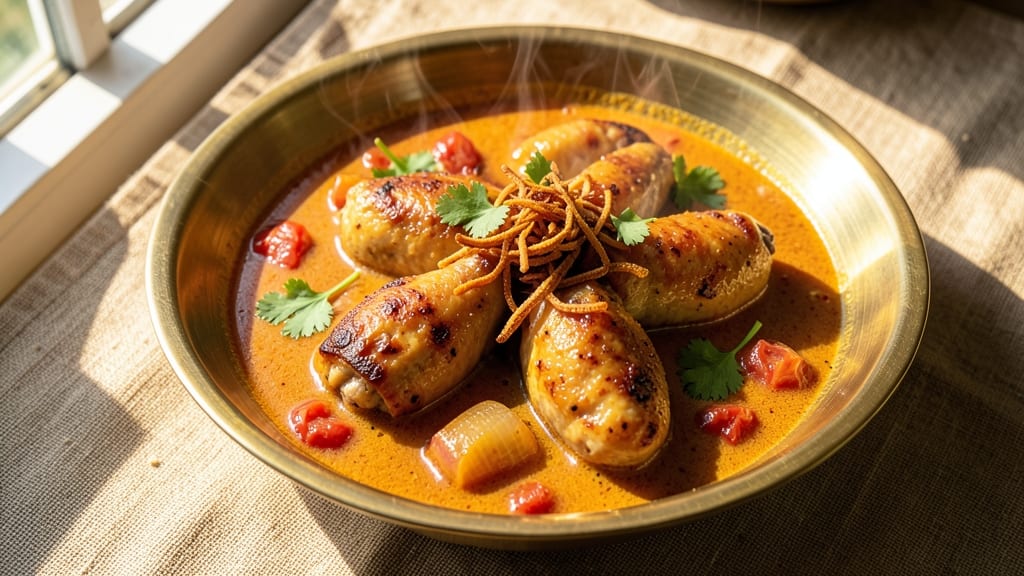
This authentic Indian butter chicken curry recipe transforms simple chicken into a restaurant-worthy masterpiece with its velvety tomato-tamarind sauce and aromatic spice blend. The secret lies in marinating the chicken overnight, allowing the yogurt and spices to tenderize and infuse every bite with depth.
This isn't just a dish—it's a sensory experience where smoky, sweet, and tangy flavors dance in perfect harmony.
The process begins with a vibrant tomato-tamarind base, where slow-cooking unlocks the sauce's complex character. We'll temper whole spices in hot ghee for that authentic depth, then simmer the chicken until it's melt-in-your-mouth tender while the sauce thickens to a luxurious consistency.
Every technique here—from the marinade to the final reduction—has been refined to deliver that signature buttery richness without compromise.
What you'll achieve is a dish that's both comforting and sophisticated: golden chicken pieces suspended in a creamy, slightly sweet sauce with just the right balance of heat and tang.
The aroma alone will have everyone gathering at your table, while the first bite delivers that perfect marriage of tender meat and velvety gravy. This is the butter chicken you've been craving—authentic, flavorful, and impossible to resist.
Serve it with steamed basmati rice and warm garlic naan to soak up every last drop of that decadent sauce. The recipe includes tips for adjusting spice levels and making it ahead, so you can focus on enjoying the results. Let's create this timeless classic together—step by step.
Ingredients for authentic indian butter chicken curry
Simple ingredients elevate to restaurant-quality butter chicken with this aromatic spice blend.
| Ingredient | Amount | Notes |
|---|---|---|
| Boneless Chicken Thighs 🍗 | 1 ½ lb | Skin-on preferred for flavor |
| Plain Yogurt 🥛 | 1 cup | Full-fat for richness |
| Ghee 🧈 | ½ cup | Clarified butter for authentic taste |
| Canned Crushed Tomatoes 🍅 | 1 can | San Marzano preferred |
| Tamarind Paste 🍯 | 2 tbsp | Adjust for tang preference |
| Garlic Cloves 🧄 | 6 cloves | Peeled and minced |
| Fresh Ginger 🌿 | 1 inch | Peeled and grated |
| Ground Cumin 🌶️ | 1 tbsp | Toasted for depth |
| Cassia Cinnamon 🌿 | 1 tsp | Ground for smooth texture |
| Ground Coriander 🌿 | 1 tsp | Freshly ground preferred |
| Turmeric Powder 🧂 | ½ tsp | Bright yellow color |
| Garam Masala 🌶️ | 1 tbsp | Homemade or store-bought |
| Heavy Cream 🥛 | ½ cup | Full-fat for creaminess |
| Fresh Fenugreek Leaves 🌿 | ¼ cup | Optional but traditional |
| Kasuri Methi 🌿 | 1 tbsp | Dried fenugreek powder |
The chicken thighs are key—skin-on gives that signature crispiness when cooked right. Look for bone-in, skin-on thighs at the meat counter for best flavor. The yogurt should be plain and full-fat (none of that non-fat stuff). Whole Foods or Trader Joe's carry good options, but any plain yogurt works. For the ghee, don't substitute butter—it burns. Gujarat brand is my go-to, but any clarified butter will do. The tamarind paste is what gives butter chicken its signature tang—look for blocks at Indian markets if you can find them, or use the paste from a tube. Fresh fenugreek leaves? Worth hunting down at a South Asian grocery for that authentic umami punch, but kasuri methi works in a pinch.
No tamarind paste? Lemon juice plus a pinch of sugar gets you close. Fresh ginger? Powdered works at half the amount, but fresh is always better. The garam masala is non-negotiable—store-bought blends like MDH are fine, but making your own (cumin, cardamom, cloves, etc.) takes it to the next level. For the tomatoes, San Marzano cans are worth the splurge—they're sweeter and less watery. The cream should be heavy, not light. And if you can't find kasuri methi, dried fenugreek seeds ground into a powder work in a bind. The spices? Toast them in the ghee first—that's where the magic happens. Don't skip it.
This sauce gets better the next day—make extra and freeze portions. The chicken reheats beautifully, but keep it covered to avoid drying out. Store leftovers for 4-5 days in the fridge or freeze for 3 months. I always make double batches because it disappears fast. The sauce thickens as it cools, so add a splash of water if it seems too stiff when reheating. And for the love of all things delicious, taste as you go—adjust the tamarind or cream to balance sweet, tangy, and rich.
Why You'll Love This Recipe
- One-Pot Magic: I swear by this—just chicken, yogurt, and a few pantry staples in one pot. No chopping mountains of veggies or dealing with multiple sauces. The tamarind paste does the heavy lifting while I sip chai and pretend I’m in Delhi.
- Rich Without Guilt: Ghee isn’t just fat—it’s flavor gold. That slow simmer with crushed tomatoes and yogurt turns tough thighs into melt-in-your-mouth perfection. Honestly, the first time I tasted it, I canceled my takeout order mid-call.
- Leftovers That Lie: Between us, this curry tastes better the next day. The flavors meld into this deep, velvety sauce that clings to every bite. I make a double batch on Sundays and pretend I’m feeding a crowd when it’s really just me and my lazy Tuesday.
- Budget Hero: Chicken thighs are forgiving, yogurt’s cheap, and canned tomatoes? Always on sale. This recipe feeds four for under $12, and the leftovers stretch into lunches or freezer meals. My wallet and I both approve.
Step-by-step instructions for authentic Indian butter chicken curry
Here's how to create that signature rich, tangy tomato-tamarind sauce that makes butter chicken unforgettable.
Marinate the Chicken for Maximum Flavor
In a large bowl, combine the 1.5 lb boneless chicken thighs, 1 cup plain yogurt, 1 tbsp ground cumin, 1 tsp cassia cinnamon, 1 tsp ground coriander, and 0.5 tsp turmeric powder. Mix gently but thoroughly so the yogurt coats every piece of chicken. This marinade not only tenderizes the meat but also infuses it with aromatic spices.
Cover the bowl and refrigerate for at least 4 hours, preferably overnight. The longer it marinates, the more flavorful your chicken will be. When ready to cook, you'll notice the chicken has absorbed the yogurt and spices, giving it a pale, marbled appearance. This is your signal that it's ready for the next step.
Cook the Chicken Until Tender
Heat 0.25 cup ghee in a heavy-bottomed pot over medium heat. Once the ghee is shimmering, add the marinated chicken in a single layer. Cook undisturbed for 5-6 minutes until the chicken develops a golden crust on one side. Flip and cook for another 5-6 minutes until the other side is also golden.
Reduce the heat to low and cover the pot. Let the chicken cook covered for 15-20 minutes, stirring occasionally. You want the chicken to cook through completely but remain tender and juicy. The chicken is done when it reaches an internal temperature of 165°F and the juices run clear when pierced with a knife.
Build the Tomato-Tamarind Base
Increase the heat to medium-high and add the remaining 0.25 cup ghee. Once the ghee is hot, add the 6 cloves minced garlic and 1 inch grated ginger. Sauté for 1-2 minutes until the raw aroma disappears and the garlic turns golden. This step is crucial for building the aromatic foundation of your curry.
Add the 1 can crushed tomatoes and 2 tbsp tamarind paste. Stir well and let the mixture cook for 8-10 minutes until it thickens slightly and the oil starts to separate on the surface. This is your signal that the tomatoes have broken down and the tamarind has melded into the sauce, creating a tangy, rich base.
Simmer the Sauce with Spices
Lower the heat to low and sprinkle in the 1 tbsp garam masala, 0.25 cup fresh fenugreek leaves, and 1 tbsp kasuri methi. Stir gently to combine, allowing the spices to bloom and infuse the sauce with their distinct flavors. Let the sauce simmer for 10-15 minutes until it thickens to a velvety consistency.
Here's the thing—don't rush this step. The longer the spices simmer, the deeper their flavors become. You'll know it's ready when the sauce coats the back of a spoon smoothly and the aroma is rich and inviting. If the sauce becomes too thick, add a splash of water to loosen it to your desired consistency.
Finish with Cream and Serve
Gently stir in the 0.5 cup heavy cream and the cooked chicken. Simmer together for 5-7 minutes on low heat, allowing the cream to meld into the sauce and coat the chicken evenly. The sauce should now be a luscious, creamy orange color with a perfect balance of tangy, spicy, and rich flavors.
Taste and adjust the seasoning if needed. Serve the butter chicken hot with steamed basmati rice or warm naan bread. The curry should be rich and velvety, with tender chicken that falls apart easily and a sauce that clings beautifully to each bite. Enjoy your authentic, restaurant-quality butter chicken!
Pro Tips For Making Authentic Indian Butter Chicken Curry
- MARINATE LONGER THAN YOU THINK: Skip the 30-minute shortcut—let the chicken soak in yogurt, tamarind, and spices for at least 4 hours (overnight is better). I used to rush this and wondered why my butter chicken never had that deep, tangy backbone. The acid in the yogurt needs time to tenderize, and the tamarind’s sour punch develops properly.
- COOK TOMATOES UNTIL THEY MELT: Simmer the crushed tomatoes on medium-low heat until they reduce to a thick, glossy paste—no chunks left. I learned this the hard way when my curry looked like a soup. This step builds the sauce’s richness, and skipping it means your butter chicken will taste thin and unbalanced.
- SAUTE SPICES IN GHEE, NOT OIL: Ghee’s higher smoke point and nutty flavor make all the difference here. Bloom your spices in it until fragrant (about 2 minutes), then add the tomatoes. Using oil will give you a flat, one-dimensional base—ghee adds depth that cuts through the richness of the butter chicken.
- DON’T OVERCOOK THE CHICKEN: Pull the chicken out of the sauce when it’s just barely tender—it’ll finish cooking in the residual heat. Overcooking turns it dry and chewy, and you’ll end up with a sad, rubbery mess. A quick check with tongs (no fork!) is the best way to test.
Dietary considerations for these flavors
Vegetarian Adaptations
Swap the chicken for extra-firm tofu or pan-seared paneer cubes. Press tofu to remove excess water, then marinate in the yogurt-spice blend for 2 hours before cooking. For paneer, cut into 1-inch cubes and pan-fry until golden before adding to the sauce.
Use ½ cup chickpeas for added protein—simmer them with the tomatoes until tender. 🌱
Gluten-Free Options
This recipe is naturally gluten-free, but check your garam masala label—some blends contain wheat flour. Opt for certified gluten-free garam masala like Patak's or make your own blend.
Also verify that your kasuri methi and tamarind paste are gluten-free. Use tamarind paste from a tube (often gluten-free) instead of blocks if unsure. 🌾
Dairy-Free Substitutions
Replace the yogurt with unsweetened coconut yogurt or a dairy-free alternative like Silk brand. For the cream, use full-fat coconut milk—add ½ cup at the end for richness. Substitute ghee with avocado oil or vegan butter (like Miyoko's), though the flavor will differ slightly. 🥥
Lower-Carb Versions
Skip the rice and serve with cauliflower rice or zucchini noodles to cut carbs. For thicker texture, reduce the tomatoes to ½ can and add ¼ cup tomato paste instead.
Use bone broth instead of water to thin the sauce if needed. The naan can be replaced with lettuce wraps or low-carb tortillas like Mission Carb Balance. 🥦
Spice-Level Control
For milder heat, reduce the garam masala to ½ tbsp and omit fresh fenugreek leaves (they add subtle bitterness). If you love heat, add ½ tsp cayenne pepper to the marinade or 1 tsp Kashmiri red chili powder to the sauce.
Always taste before serving—adjust with salt or sugar as needed. 🌶️
Allergen Considerations
For nut allergies, ensure all spices are processed in nut-free facilities. Check kasuri methi labels—some brands process near nuts. If soy is a concern, use tofu-free options like marinated eggplant or mushrooms.
For egg allergies, avoid substituting with eggs (they’re not typically in this dish but could appear in store-bought garam masala). Always verify ingredient sources when in doubt. 🚫🥜
Nutrition facts
Frequently asked questions
Why does authentic butter chicken need to marinate overnight?
The overnight marinade is key for two reasons: it tenderizes the chicken and lets the yogurt-spice blend penetrate deeply. The yogurt's acidity breaks down muscle fibers, while the spices infuse every bite. Skipping this step results in tougher meat and less flavorful sauce. For best results, marinate at least 4 hours, but overnight is ideal.
Can I make butter chicken without tamarind paste?
Yes, but the sauce will lose its signature tang. Substitute with 1 tbsp lemon juice plus ½ tsp sugar to mimic the tartness. For deeper flavor, add ½ tsp vinegar to the tomato base. The sauce will taste different but still delicious—just less authentic.
What's the secret to getting that perfect creamy texture?
Three things: simmer the sauce low and slow for 15-20 minutes to thicken naturally, use heavy cream (not light), and avoid stirring constantly. The sauce should coat the back of a spoon smoothly. For extra richness, add 1 tbsp ghee at the end.
How do I prevent the chicken from drying out?
Cook the chicken covered on low heat after searing, and don't overcrowd the pan. The sauce should be added before the chicken finishes cooking—this keeps it moist. If the sauce reduces too quickly, add 1-2 tbsp water to maintain balance.
Can I make this ahead of time?
The flavors improve overnight. Store the cooked curry in an airtight container in the fridge for 4-5 days or freeze for 3 months. Reheat gently on low heat, adding a splash of water if needed. The sauce will thicken further when chilled—adjust with water when reheating.