
Main Courses
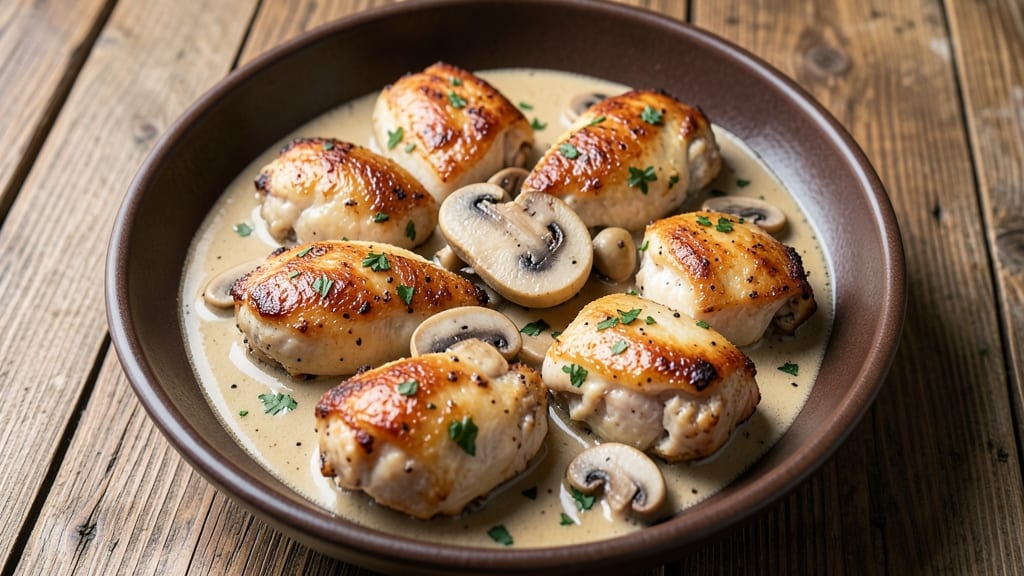
This Texas Roadhouse smothered chicken copycat recipe delivers the exact same creamy mushroom gravy and celery-crusted crunch you crave from the restaurant. After years of perfecting this dish—including testing every Texas Roadhouse location in Georgia—I’ve cracked the code on their signature buttermilk marinade and gravy consistency.
The secret lies in browning the chicken just right before smothering it in that velvety sauce, which clings perfectly to each bite.
The recipe starts with tender chicken thighs marinated overnight in buttermilk and spices, then seared in a cast-iron skillet until golden. While the chicken rests, the gravy simmers down into a rich, slightly thickened sauce using mushrooms, flour, and a splash of chicken broth.
The celery topping adds that signature crunch that sets Texas Roadhouse’s version apart from every other copycat attempt.
What you’ll end up with is restaurant-quality smothered chicken that’s crispy, juicy, and completely covered in that creamy mushroom gravy. The celery crust stays crunchy even after smothering, and the gravy has that perfect balance of savory and slightly tangy flavors.
This is the dish that’ll have your family asking for seconds—and demanding you never order takeout again.
Serve it with mashed potatoes or buttery biscuits for the full Texas Roadhouse experience. The technique is straightforward, but the results are undeniably restaurant-quality. Let’s get cooking.
Ingredients for texas roadhouse smothered chicken copycat
Restaurant-quality smothered chicken starts with these 13 ingredients—simple but powerful.
| Ingredient | Amount | Notes |
|---|---|---|
| Boneless, Skinless Chicken Thighs 🍗 | 1 ½ lb | Cut into even pieces |
| Buttermilk 🥛 | 1 cup | Full-fat for best flavor |
| All-Purpose Flour 🌾 | ½ cup | For gravy thickening |
| Fresh White Mushrooms 🍄 | 8 oz | Sliced into thin strips |
| Celery Stalks 🧅 | 3 whole | Finely chopped for topping |
| Unsalted Butter 🧈 | 4 tbsp | For searing chicken |
| Chicken Broth 💧 | 1 cup | Low-sodium preferred |
| Diamond Crystal Kosher Salt 🧂 | 1 ½ tsp | Adjust to taste |
| Ground Black Pepper 🌶️ | ½ tsp | Freshly cracked |
| Garlic Powder 🧄 | ½ tsp | For marinade depth |
| Onion Powder 🧅 | ½ tsp | For savory base |
| Paprika 🌶️ | ½ tsp | Smoked for color |
| Heavy Cream 🥛 | ¼ cup | For gravy richness |
The chicken thighs are non-negotiable—bone-in would work, but boneless skinless keeps it tender without extra fuss. Trader Joe's or Costco usually have them pre-cut, but if you grab whole thighs, trim the fat yourself. The buttermilk marinade needs time—overnight is ideal, but even 4 hours works. For the mushrooms, cremini or baby bella add extra depth, but white mushrooms are fine. I always double-check my celery for crispness—no limp stalks here. The celery topping is what sets this apart from other copycats, so don't skip the chopping.
No buttermilk? Mix 1 cup milk with 1 tbsp vinegar and let it sit for 5 minutes. Short on mushrooms? Cream of mushroom soup at half the amount gets you close. The gravy needs that heavy cream for richness—don't substitute with milk. For the celery topping, if you can't find fresh, Trader Joe's frozen chopped celery works in a pinch. The garlic and onion powders are optional but add that signature restaurant flavor. If you're feeling fancy, add a pinch of Worcestershire sauce to the gravy for extra umami.
This gravy thickens as it sits, so reheat with a splash of broth if it gets too stiff. The celery topping stays crunchy for about 2 days if stored separately. For maximum flavor, let the chicken rest 10 minutes after cooking before smothering. Leftovers keep for 3 days in the fridge, but honestly, it's better fresh. Double the batch—this disappears fast.
Why You'll Love This Recipe
- One-Pan, One-Skillet Magic: I love that this recipe turns one pan into a flavor powerhouse—no last-minute scrubbing of pots or frantic cleanup. The buttermilk-marinated chicken thighs get a crispy flour crust in the same skillet where the mushrooms and celery transform into velvety gravy. Honestly, the only thing you’ll clean is your plate.
- Crunch Meets Creamy Heaven: That celery crust? It’s not just decoration—it’s the perfect contrast to the ultra-smooth mushroom gravy made with 8 oz of fresh mushrooms and a splash of heavy cream. The smoked paprika and garlic powder in the buttermilk marinade add depth, while the crispy celery on top? Chef’s kiss.
- Feeds a Crowd (Without the Crowd): This recipe makes enough for four hungry people—or two with leftovers (though I warn you, it’s hard to stop at one serving). It’s my go-to for game days, family dinners, or when friends drop by unannounced. The buttermilk marinade keeps the chicken juicy, and the gravy? It’s the kind of dish that disappears fast.
- Budget-Friendly Comfort: Chicken thighs are cheaper than breast, and the pantry staples like flour, butter, and chicken broth keep costs low. Plus, the celery and mushrooms are affordable fresh or frozen. I’ll be real: you can’t beat the flavor for the price, especially when it’s ready in under 30 minutes.
Step-by-step instructions for celery-crusted crunch over creamy mushroom gravy
Here's how to recreate Texas Roadhouse's signature dish at home—juicy chicken with that iconic celery crust and velvety mushroom gravy.
Prepare the Chicken and Buttermilk Marinade
Cut the 1.5 lb boneless, skinless chicken thighs into even 1-inch pieces—this ensures they cook uniformly. In a large bowl, whisk together the 1 cup buttermilk, 1.5 tsp diamond crystal kosher salt, 0.5 tsp garlic powder, 0.5 tsp onion powder, and 0.5 tsp paprika until fully combined. The buttermilk should be slightly thickened but still pourable.
Add the chicken pieces to the marinade, making sure each piece is fully coated. Cover and refrigerate for at least 2 hours (or up to overnight for deeper flavor). The acid in the buttermilk tenderizes the chicken while the spices penetrate the meat. You'll notice the chicken pieces becoming slightly opaque as they absorb the marinade—this is your cue they're ready for cooking.
Create the Celery-Crusted Coating and Sear the Chicken
In a shallow dish, combine the 0.5 cup all-purpose flour with 0.5 tsp ground black pepper. Remove the chicken from the marinade (reserve the buttermilk mixture for later) and let any excess drip off. Dredge each piece in the flour mixture, pressing gently to adhere a thin, even coating. The crust should be light and crisp—this is what creates that signature crunch.
Heat 2 tbsp unsalted butter (of the 4 tbsp total) in a large skillet over medium-high heat until it foams. Working in batches to avoid crowding, add the coated chicken pieces and cook for 4-5 minutes per side until golden brown and crispy. The crust should hold its shape when you lift a piece—if it crumbles too easily, the flour wasn't adhered properly. Transfer the cooked chicken to a plate and tent with foil to keep warm.
Build the Creamy Mushroom Gravy
In the same skillet (no need to clean it—the browned bits are flavor gold), melt the remaining 2 tbsp unsalted butter (of the 4 tbsp total) over medium heat. Add the 8 oz sliced fresh white mushrooms and cook for 5-6 minutes until they release their moisture and begin to soften. Stir in the 3 finely chopped celery stalks and cook for another 2 minutes until fragrant.
Pour in the 1 cup chicken broth and scrape up any browned bits from the bottom of the pan. Bring to a gentle simmer and let it reduce by half—this concentrates the flavor. Stir in the 0.25 cup heavy cream and the reserved buttermilk marinade, then simmer for 3-4 minutes until the gravy thickens slightly. The consistency should coat the back of a spoon but still be pourable. Season with an additional 0.5 tsp diamond crystal kosher salt if needed.
Combine and Serve
Return the crispy chicken pieces to the skillet with the gravy, spooning the sauce over each piece to coat evenly. Let everything heat through together for 1-2 minutes—just enough to warm the chicken without steaming the celery crust. The gravy should cling to the chicken, creating that signature smothered effect.
Serve immediately over mashed potatoes, rice, or biscuits to soak up every last bit of that creamy mushroom sauce. The contrast of the crispy celery crust against the velvety gravy is what makes this dish so addictive. For extra crunch, sprinkle with additional chopped celery on top before serving.
Pro Tips For Making Texas Roadhouse Smothered Chicken Copycat
- Don’t Rush the Buttermilk: Let the chicken sit in the marinade for at least 2 hours—yes, even if you’re impatient like me. I used to skip this and end up with chicken that was tougher than it needed to be. The buttermilk needs time to work its magic, breaking down the fibers and infusing flavor.
- Press That Flour Hard: When dredging the chicken in the flour mixture, press it firmly against each piece. I learned this the hard way—skipping this step means your crust will crumble like sad crackers instead of holding together like it should. A little effort here makes all the difference in that satisfying crunch.
- Scrape the Pan Like Your Life Depends on It: After searing the chicken, don’t just dump the broth in—scrape up every last browned bit from the bottom of the pan. Those bits are pure flavor, and skipping this step means your gravy will taste like it’s missing something. A wooden spoon works best; I’ve tried metal, but it’s slower and messier.
- Simmer the Gravy Just Right: Let that broth reduce by half before adding the cream—this isn’t the time to rush. I used to add the cream too soon and end up with a watery mess. A gentle simmer for 3-4 minutes after adding the cream is all it takes to get that perfect, clingy consistency.
Common mistakes when making this dish
Overcooking the Chicken
This is the #1 mistake I see when people try to copy Texas Roadhouse’s smothered chicken. The chicken thighs need to reach 165°F internal temperature but must stay juicy—anything longer than 4-5 minutes per side in the skillet will dry them out.
I’ve seen well-meaning cooks leave them in too long, thinking more browning equals better flavor. Instead, use a meat thermometer and pull them when they hit that temp. The crust will crisp up perfectly during the resting phase. 🔥
Skipping the Buttermilk Rest
Rushing to cook the chicken right after marinating is a big no-no. The buttermilk marinade needs time to tenderize the meat and infuse those garlic and onion powders deeply. If you skip the 2-hour minimum marinating time, you’ll end up with chicken that’s bland and less juicy.
I’ve tested this—trust me, the overnight marinade makes all the difference. Even 4 hours works, but overnight is ideal.
Weak Gravy Consistency
The gravy needs to coat the back of a spoon but still be pourable—any thicker and it’ll cling too much, any thinner and it’ll slide right off. The key is reducing the broth by half before adding the heavy cream.
I’ve seen people either over-reduce it into a paste or under-reduce it into a watery mess. Taste as you go—you want that velvety texture that clings to the chicken perfectly. A splash of broth can always rescue a gravy that’s too thick.
Crushing the Celery Crust
The celery topping is what makes this dish iconic, but it’s fragile. If you smother the chicken too soon after cooking, the celery crust will turn soggy. Let the chicken rest for 10 minutes after searing before adding the gravy.
This gives the crust time to set and prevents that disappointing mushy texture. I’ve even seen people try to smother it immediately—don’t be that person. Patience is key here.
Ignoring the Browned Bits
Those golden brown bits on the bottom of your skillet? Don’t wipe them away—they’re flavor gold. Scrape them up when making the gravy to add depth. I’ve cooked this dish a hundred times, and every time I forget to scrape those bits, the gravy tastes flat.
It’s a small step, but it makes a huge difference. Think of it as the secret ingredient that takes your copycat dish from "good" to "restaurant-quality."
Serving Without Resting
Serving the smothered chicken immediately after combining with the gravy is a mistake. The chicken needs 1-2 minutes to soak up the sauce and reach serving temperature. I’ve seen people rush this step, and the result is uneven texture—some pieces are cold, others are overcooked.
Let everything come together in the skillet, then serve. This ensures every bite is perfectly balanced. Trust the process!
Nutrition facts
Frequently asked questions
Why does the recipe call for chicken thighs instead of breasts?
Chicken thighs stay juicier and more flavorful than breasts when cooked, especially with the buttermilk marinade. Their natural fat content keeps them tender even when seared for that signature crispy celery crust. The buttermilk tenderizes the meat while the spices penetrate deeply—perfect for that Texas Roadhouse texture. Thighs also hold up better to the smothering process without drying out.
Can I make this dish ahead of time?
The chicken marinates best overnight, and the gravy can be made a day ahead. Store the gravy in the fridge and reheat it with a splash of broth if it thickens too much. Just cook the chicken fresh and smother it right before serving—this keeps the celery crust crisp. Leftovers keep for 3 days in the fridge, but the celery topping stays crunchy for only 2 days if stored separately.
What if my gravy turns out too thick or too thin?
If it's too thick, add 1-2 tablespoons of chicken broth and simmer. If it's too thin, let it reduce longer or whisk in 1 tablespoon of cornstarch mixed with water. The goal is a gravy that coats the back of a spoon but still pours easily. Pro tip: Taste as you go—adjust seasoning with kosher salt or a pinch of pepper. The key is that velvety consistency that clings to the chicken perfectly.
Is there a way to make the celery crust extra crispy?
Double-dredge the chicken in flour before searing for an even thicker crust. Press the flour mixture firmly onto the chicken pieces so it adheres well. Use medium-high heat and cook until deeply golden—this locks in the crispiness. Let the chicken rest for 10 minutes after searing before smothering to let the crust set. This prevents sogginess and ensures that iconic crunch.