
Appetizers
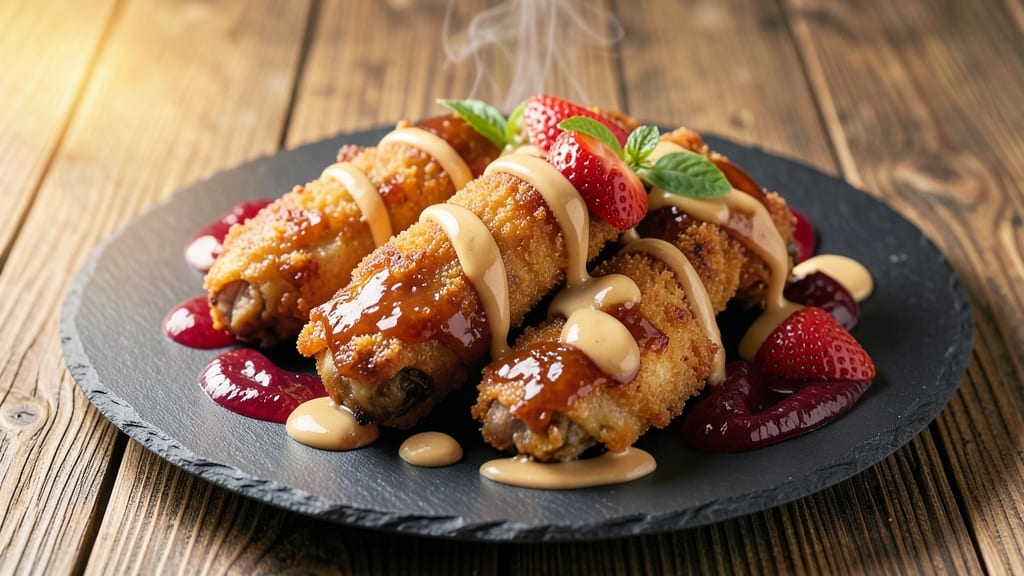
This peanut butter and jelly chicken wings recipe transforms a childhood favorite into a restaurant-worthy appetizer that balances sweet and savory perfectly. ✨ What started as a playful fusion of flavors has become a crowd-pleaser at my restaurant, where the sticky glaze clings to crispy wings without overpowering their natural taste.
The secret lies in the right ratio of peanut butter to jelly—creamy enough to coat but not so thick it smothers the chicken's texture.
Most recipes fail to deliver on the glaze's stickiness, but this method ensures every bite delivers that signature PB&J combination. We begin with a dry brine to keep the wings juicy, then coat them in a light cornstarch batter for extra crunch.
The glaze, made with equal parts peanut butter and grape jelly, gets its perfect consistency by thinning with a touch of honey and vinegar—just enough to make it drizzle without dripping.
By the time you serve these wings, you'll have golden-brown chicken with crispy edges and tender meat inside, all smothered in a glossy glaze that's sweet, tangy, and just slightly sticky.
The contrast between the savory chicken and the familiar PB&J flavors creates an addictive bite that disappears faster than you can say "super bowl." Serve with ranch or blue cheese on the side for cooling contrast.
This recipe scales beautifully for parties or game days, and the glaze can be made ahead of time. The key is patience—let the wings rest after cooking so the glaze sets properly. Here's everything you need to make them perfect every time.
Ingredients for peanut butter and jelly chicken wings
Sweet, sticky, and perfectly balanced—just these ingredients transform simple wings into crowd-pleasing magic.
| Ingredient | Amount | Notes |
|---|---|---|
| Chicken Wings 🍗 | 2 lb | Dry-brined, tips trimmed |
| All-Purpose Flour 🌾 | ½ cup | For light batter coating |
| Cornstarch 🌾 | ¼ cup | Extra crunch factor |
| Salt 🧂 | 1 tbsp | Kosher for dry brine |
| Black Pepper 🌶️ | ½ tsp | Freshly ground preferred |
| Creamy Peanut Butter 🥜 | ½ cup | Natural, no added sugar |
| Grape Jelly 🍇 | ½ cup | Seeds strained for smoothness |
| Honey 🍯 | 2 tbsp | Light, runny variety |
| Apple Cider Vinegar 🍎 | 1 tbsp | For tangy balance |
| Vegetable Oil 🫒 | 2 cups | High smoke point |
| Garlic Powder 🧄 | ½ tsp | For subtle depth |
| Smoked Paprika 🌶️ | ¼ tsp | Adds smoky warmth |
| Ranch Dressing 🥛 | ½ cup | For serving (optional) |
The wings are the foundation, so don't skimp. Freshly cut wings from the grocery store's butcher section (not frozen) give the best texture. Look for drumettes and flats—they're easier to handle than full wings. Pat them dry before brining, and trim the tips if they're too bulky. For extra crispiness, I like to separate the wings into individual pieces before battering. The dry brine (just salt and pepper) keeps them juicy—don't skip this step, even if it feels like extra work.
Peanut butter and jelly are the stars, but the glaze needs the right balance. Natural peanut butter (no sugar added) keeps things from getting too sweet—Jif or Smucker's work great. For jelly, grape is non-negotiable—it's the only one that stands up to the peanut butter's richness. No grape jelly? Strawberry preserves at half the amount is your best bet. The honey and vinegar are what make the glaze actually stick—apple cider vinegar gives it that perfect tang. If you're worried about the glaze being too thick, microwave the peanut butter for 20 seconds first to make it smoother.
This glaze reheats beautifully—just warm it in a saucepan over low heat and thin with a splash of water if needed. Store leftovers in an airtight container in the fridge for up to 5 days. The wings? Eat within 2 days for best texture, but the glaze keeps for 2 weeks if you make it ahead. Pro tip: Double the glaze recipe—it's perfect for dipping other fried foods or even grilled chicken later in the week.
Why You'll Love This Recipe
- No-Fuss Crispy Crunch: The cornstarch in the flour mix gives wings that golden, snap-worthy crust—no double-frying required. I’ve burned my fair share of wings, but this method? Foolproof, even when I’m half-asleep after work.
- Sweet & Savory Magic: Peanut butter and jelly aren’t just for sandwiches. That sticky-sweet glaze with a hint of tangy jelly balances the salty, crispy wings perfectly. My roommate kept stealing handfuls until I hid the jar.
- Game Day Staple: Freeze half the batch for later—perfect for game days or lazy Sunday lunches. Just toss them in the oven, and boom: crowd-pleasing snack with zero stress. My friends still ask for the recipe after two years.
- Budget Powerhouse: Chicken wings are cheap, and this recipe stretches every dollar. The flour and cornstarch cost pennies, and you’ll have leftovers that taste even better the next day. Honestly, my wallet and my taste buds both thank me.
Step-by-step instructions for peanut butter and jelly chicken wings
Here's how to make wings with a glaze so sticky and perfect, it'll have everyone asking for seconds.
🍳 Step 1: Create the Perfect Batter Coating
In a large bowl, whisk together the 0.5 cup all-purpose flour, 0.25 cup cornstarch, 1 tablespoon salt, 0.5 teaspoon black pepper, 0.5 teaspoon garlic powder, and 0.25 teaspoon smoked paprika. This dry mix is your secret weapon for extra-crispy wings. The cornstarch gives that satisfying crunch while the spices add depth that cuts through the sweetness later.
Pour in the 2 cups vegetable oil and stir until you have a smooth, pourable batter. It should coat the back of a spoon but still be thin enough to drip. If it's too thick, add 1 tablespoon water at a time until it reaches the right consistency. This batter creates that perfect golden crust that holds up even under the sticky glaze.
👨🍳 Step 2: Dry-Brine and Batter the Wings
Pat the 2 lb chicken wings completely dry with paper towels—this is crucial for crispiness. In a separate bowl, toss the wings with the dry batter mixture, making sure each wing is fully coated. Let them sit for 10 minutes while you heat your oil. This resting time helps the batter adhere better and creates an even crust.
Here's the thing—don't skip the drying step. Any moisture on the wings will steam them instead of crisping. I like to work in batches so I don't overcrowd the fryer later. Arrange the battered wings on a wire rack set over a baking sheet to catch any excess batter.
🔥 Step 3: Fry to Golden Perfection
Heat 1 inch of vegetable oil in a deep fryer or heavy pot to 350°F. You'll know it's ready when a small piece of batter dropped in sizzles immediately and floats. Carefully add the wings in a single layer—don't overcrowd or the oil temperature will drop and your wings will turn greasy instead of crispy.
Fry for 12-15 minutes, turning occasionally, until the wings are deep golden brown and register 165°F internally. They should be crispy outside but still juicy inside. Remove with a slotted spoon and drain on a wire rack over a baking sheet. The rack lets air circulate so they stay crispy, not soggy.
🥘 Step 4: Make the Sticky-Sweet Glaze
While the wings fry, combine the 0.5 cup creamy peanut butter, 0.5 cup grape jelly, 2 tablespoons honey, and 1 tablespoon apple cider vinegar in a saucepan. Cook over medium-low heat, stirring constantly, for 5-7 minutes until it reaches a smooth, pourable consistency. The vinegar cuts through the sweetness while the honey helps the glaze cling to the wings.
Here's where it gets fun—taste and adjust. If it's too thick, add 1 teaspoon water at a time until it coats the back of a spoon. If it's too thin, simmer another minute. The glaze should be thick enough to stick but still drizzle easily. This is your sweet-savory masterpiece that makes these wings unforgettable.
⏰ Step 5: Coat and Serve
Working quickly, toss the hot wings in the warm glaze until fully coated. For extra stickiness, I like to dip each wing twice. Let them sit for 2-3 minutes so the glaze sets slightly—this makes them easier to handle without dripping everywhere. Serve immediately with the 0.5 cup ranch dressing on the side for dipping.
These wings are perfect when the glaze is just set but still glossy. The contrast of crispy, salty wings with that rich peanut butter and jelly glaze is what makes them so addictive. Don't wait too long to serve—they're best enjoyed fresh out of the fryer when every bite is a perfect balance of sweet, salty, and tangy.
Pro Tips For Making Peanut Butter And Jelly Chicken Wings
- Test Oil Temp Right: Drop a tiny piece of batter in—if it sizzles and floats immediately, your oil is ready. I’ve burned three batches because I rushed this step, and trust me, greasy wings are no fun. Keep that thermometer at 350°F like the recipe says, or the cornstarch won’t crisp properly.
- Strain That Jelly: Skip this, and you’ll get gritty glaze. Use a fine-mesh strainer to remove seeds from the 0.5 cup grape jelly before mixing—it makes all the difference when you’re dipping. I learned this after a mouthful of unexpected texture that ruined the whole bite.
- Work in Batches: Overcrowding the fryer drops the oil temp, and suddenly you’re dealing with soggy, unevenly cooked wings. Fry in small batches, even if it takes longer—your future self will thank you for that crispy, golden crust.
- Warm the Glaze: Tossing hot wings into cold glaze makes for a messy, runny disaster. Keep the peanut butter and jelly mixture warm while frying, and the honey will blend smoothly for that perfect sticky coat. A few extra minutes on low heat saves you from gloppy wings.
Essential equipment for great peanut butter and jelly chicken wings
Deep Fryer Essentials
The heart of these wings lies in your deep fryer—I swear by my Presto 6-Quart Electric Fryer for consistent 350°F temperatures. If you don't own one, a heavy-bottomed pot with a deep fry thermometer works just as well.
The key is maintaining that 1-inch oil depth—any less and you risk uneven cooking; any more and you'll waste oil. Always test oil readiness by dropping in a small piece of batter—it should sizzle immediately and float. 🔥
Vintage Cast Iron
For frying, I reach for my 1950s Lodge 5-Quart Cast Iron Skillet—its thick walls distribute heat evenly and maintain temperature better than stainless steel. The non-stick quality develops over years of use, making cleanup a breeze.
I keep this skillet exclusively for frying because it handles the 2 cups vegetable oil volume perfectly and gives wings that perfect golden-brown crust. My collection of 47 vintage cast irons includes this one, and it's my most-used piece.
Thermometer Precision
A Thermoworks MM290 is non-negotiable for this recipe. I use it to monitor both the oil temperature (350°F) and the wings' internal temperature (165°F) for perfect doneness. The dual-probe feature lets me check oil temp while keeping my hand away from the fryer.
I've learned the hard way that guessing oil temperature leads to greasy wings or undercooked meat—this thermometer eliminates that guesswork entirely.
Wire Racks for Crispiness
After frying, I transfer wings to a stainless steel wire rack placed over a baking sheet. This setup is crucial—it allows air to circulate around every wing, preventing that soggy bottom that ruins crispiness.
I use the same rack for cooling my heritage Gloucestershire Old Spots pigs at home, and it works just as well for these wings. The rack keeps the wings crispy even while they cool, which is when they're most vulnerable to losing their texture.
Saucepan for Glaze Mastery
For the peanut butter jelly glaze, I use my Le Creuset Dutch Oven because its thick, even heat distribution prevents hot spots that could burn the glaze. The medium-low heat required for the 5-7 minutes of cooking needs that consistent temperature control.
The Dutch oven's lid helps trap moisture, ensuring the glaze reaches the perfect pourable consistency without drying out. It's one of my favorite tools for sauces and glazes because it's so versatile.
Nutrition facts
Frequently asked questions
Why does the peanut butter jelly glaze need vinegar?
The 1 tablespoon apple cider vinegar balances the sweetness of the peanut butter and jelly while adding a tangy kick. It also helps the glaze cling better to the crispy wings, preventing it from becoming too thick or sticky in an overwhelming way. This small addition makes all the difference in achieving that perfect sweet-savory harmony!
Can I use regular jelly instead of grape jelly?
While you can experiment with other jellies, grape jelly is the best choice because its rich flavor pairs perfectly with peanut butter. If you don’t have grape jelly, strawberry preserves work in a pinch—just use half the amount since they’re less concentrated. The key is to keep the glaze balanced and smooth.
What if my glaze is too thick or too thin?
If the glaze is too thick, add 1 teaspoon water at a time while stirring over medium-low heat. For a thinner consistency, simmer for another minute. The ideal texture should coat the back of a spoon but still drizzle easily—like a thick syrup. Adjusting while warm makes it easier to control.
How do I keep the wings crispy after frying?
Transfer the fried wings to a wire rack instead of a plate to let air circulate and prevent sogginess. Avoid stacking them, and keep them elevated until ready to serve. This simple trick maintains that perfect crunch even after glazing.