
Sauces & Condiments
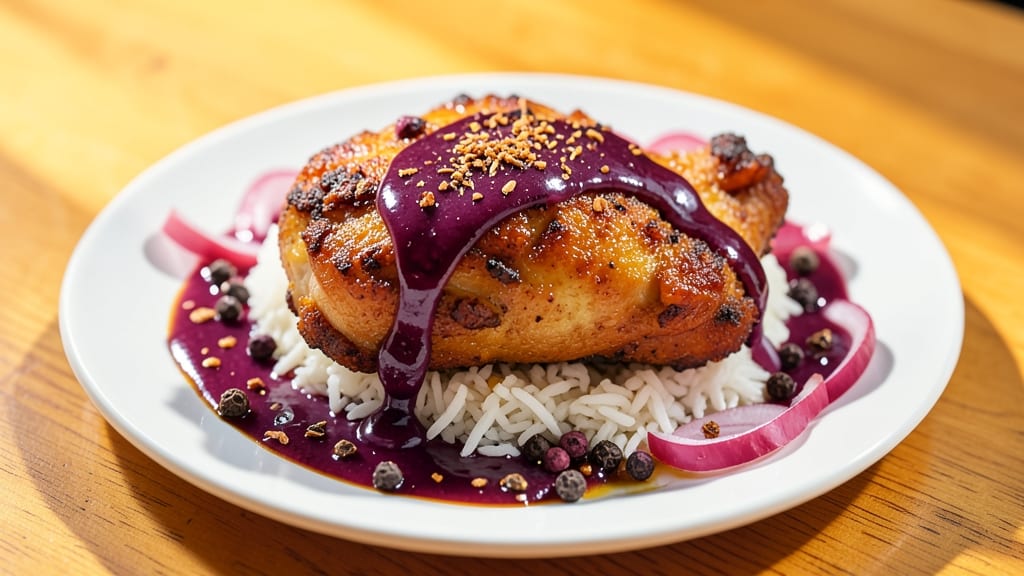
This Church's Chicken purple pepper sauce recipe delivers the signature smoky-sweet heat that transforms ordinary fried chicken into an unforgettable experience. The key lies in blending purple peppercorns with vinegar, spices, and a touch of sweetness to create a sauce that's both bold and balanced.
I've perfected this version after years of experimenting with heat levels and flavor profiles—it's the kind of sauce that clings to every crispy bite.
The beauty of this sauce is its versatility beyond just fried chicken. It works as a dipping sauce for wings, a basting glaze for grilled meats, or even a finishing touch for sandwiches and tacos.
The purple peppercorns provide a unique, slightly floral heat that sets this sauce apart from traditional hot sauces. What makes it truly special is how the flavors develop over time—better after 24 hours when the spices meld together.
What you'll end up with is a rich, velvety sauce that's perfectly balanced between smoky, sweet, and spicy notes. The color is a deep, inviting purple that signals its distinctive flavor profile.
This isn't just another hot sauce—it's a flavor enhancer that elevates any dish it touches. The technique is straightforward but requires patience for the best results.
Once you make this sauce, you'll never go back to store-bought versions. It keeps well in the refrigerator for up to two weeks, making it perfect for meal prep. The recipe uses simple pantry ingredients but delivers restaurant-quality flavor that's worth every minute of simmering time.
Ingredients for church's chicken purple pepper sauce
Pantry staples meet unique spices for a sauce that transforms fried chicken into a flavor sensation.
| Ingredient | Amount | Notes |
|---|---|---|
| Purple Peppercorns 🌶️ | 2 tbsp | Whole, lightly crushed for flavor |
| Apple Cider Vinegar 🍏 | 1 cup | Unfiltered preferred for depth |
| Granulated Sugar 🍬 | ½ cup | Light brown sugar for caramel notes |
| Smoked Paprika 🌶️ | 1 tbsp | High-quality for smoky depth |
| Garlic Cloves 🧄 | 4 cloves | Freshly peeled, minced fine |
| Onion Powder 🧅 | 1 tsp | Freshly ground preferred |
| Ground Black Pepper 🌶️ | ½ tsp | Freshly cracked for intensity |
| Ground Cinnamon 🌿 | ¼ tsp | Warmth without overpowering |
| Salt 🧂 | 1 ½ tsp | Kosher or sea salt |
| Water 💧 | ½ cup | Filtered preferred for clarity |
The purple peppercorns are the heart of this sauce—look for them in specialty spice shops or online—they're worth seeking out for that signature floral heat. Penzeys or Kalustyan's carry excellent quality, but bulk bins at natural food stores work too. If you can't find purple peppercorns, black peppercorns plus a pinch of dried lavender mimics the floral note, though it won't be identical. The vinegar should be unfiltered apple cider vinegar—the sediment adds complexity. For the sugar, light brown sugar gives subtle caramel undertones that balance the heat perfectly.
No smoked paprika? Substitute with 1/2 tsp liquid smoke plus 1/2 tsp regular paprika—it won't be identical but gets you closer. The garlic can be garlic powder at half the amount in a pinch, though fresh is ideal. If you're sensitive to heat, reduce the peppercorns to 1 tbsp and add 1/4 tsp ground ginger to enhance sweetness. The sauce thickens as it cools, so if it seems too thin after simmering, mix 1 tsp cornstarch with 1 tbsp cold water and stir in at the end.
This sauce develops beautifully over time—reheat gently before serving to restore its velvety texture. It keeps for 2 weeks refrigerated in an airtight jar, though the flavor actually improves after 24 hours. For long-term storage, portion into ice cube trays and freeze—thaw in the fridge overnight before using. The sauce pairs perfectly with fried chicken but also elevates grilled meats, tacos, or even deviled eggs—don't limit it to just one use.
Why You'll Love This Recipe
- Here’s the best part: this sauce gets better as it sits. I make a big batch on Sunday, let it chill overnight, and then I’ve got flavor-packed leftovers for two weeks. No waste, no stress—just pure, delicious convenience. Plus, the ingredients are simple and budget-friendly, so you’re not breaking the bank for that restaurant-quality taste.
- No Mortar? No Problem: I swear by the toasted purple peppercorns—just 2 tablespoons, lightly crushed—but honestly, I’ve made this sauce without a mortar and still ended up with that signature punch. A heavy pan and a little elbow grease do the trick, and the whole process takes less time than waiting for takeout.
- Sweet Heat Magic: That first taste? It’s like a hug in sauce form. The apple cider vinegar and sugar create this perfect tangy-sweet backbone, while the smoked paprika and cinnamon add warmth. And don’t skip toasting those peppercorns—they’re the secret to that deep, lingering heat that makes this sauce unforgettable.
- Weeknight Crowd-Pleaser: Between us, this is my go-to for game days, family dinners, or when I just want to impress without slaving away. Drizzle it over fried chicken, toss it with roasted veggies, or even use it as a marinade for pork chops. It’s versatile enough to handle whatever you throw at it—and everyone always asks for seconds.
Step-by-step instructions for church's chicken purple pepper sauce
Here's how to create that iconic smoky-sweet heat using just 10 simple ingredients.
Crush and Toast the Purple Peppercorns
Lightly crush the 2 tablespoons of purple peppercorns using a mortar and pestle or the bottom of a heavy pan. This releases their essential oils without grinding them into powder. Spread them on a dry skillet over medium heat and toast for 1-2 minutes until fragrant and slightly darker in color.
Here's the thing—don't walk away. Purple peppercorns burn quickly, and you want them aromatic, not bitter. You'll know they're ready when you can smell their deep, slightly sweet, peppery aroma filling your kitchen. Transfer them immediately to a small bowl once toasted.
Build the Flavor Base with Vinegar and Sugar
In a medium saucepan, combine the 1 cup of apple cider vinegar and 0.5 cup of granulated sugar. Bring to a boil over medium-high heat, stirring constantly with a wooden spoon until the sugar completely dissolves. The mixture should look clear and slightly syrupy.
This is where the magic begins. The vinegar's acidity helps dissolve the sugar quickly, creating a foundation for the sauce's signature balance of sweet and tangy. Reduce heat to medium and let it simmer for 5 minutes, allowing the flavors to meld together. You'll notice the aroma becoming more complex as the vinegar cooks down slightly.
Add Aromatics and Spices
Stir in the toasted purple peppercorns, 1 tablespoon of smoked paprika, 4 minced garlic cloves, 1 teaspoon of onion powder, 0.5 teaspoon of ground black pepper, 0.25 teaspoon of ground cinnamon, and 1.5 teaspoons of salt. Mix well to combine all ingredients thoroughly.
The spices should dissolve into the vinegar mixture, creating a rich, aromatic blend. Let this simmer for 8-10 minutes over medium heat, stirring occasionally. You'll see the sauce thicken slightly as the moisture evaporates, intensifying all the flavors. The cinnamon adds warmth while the black pepper provides a subtle heat that balances the sweetness.
Finish with Water and Reduce
Pour in the 0.5 cup of water and stir well. Increase heat to medium-high and bring the mixture to a full boil. Then reduce heat to medium-low and let it simmer uncovered for 15-20 minutes, stirring occasionally. The sauce should reduce by about half, becoming thick and syrupy.
Here's what you're aiming for: a glossy, deep purple sauce that coats the back of a spoon. It should smell intensely of pepper, smoke, and vinegar with just a hint of sweetness. Taste it as it simmers—adjust the salt if needed, adding small amounts at a time. The sauce should be balanced between sweet, tangy, and spicy, with the purple peppercorns providing that signature heat.
Cool and Thicken
Remove the sauce from heat and let it cool completely at room temperature. As it cools, it will thicken naturally. This is crucial for achieving the perfect consistency that clings to every bite of fried chicken. The sauce should be thick enough to coat the back of a spoon but still pourable.
Once cooled, transfer the sauce to a clean jar or airtight container. It will keep in the refrigerator for up to 2 weeks, making it perfect for batch cooking. Use this sauce generously on fried chicken, drizzled over biscuits, or even as a marinade for meats. The balance of sweet, tangy, and spicy flavors makes it incredibly versatile.
Pro Tips For Making Church'S Chicken Purple Pepper Sauce
- TOAST PEPPERCORNS FAST: Use a dry skillet on medium-high instead of medium—those purple peppercorns darken in seconds, and you’ll smell that deep, toasty aroma before it turns bitter. I learned this the hard way after walking away for "just a minute" and ending up with burnt, acrid peppercorns that ruined the whole batch.
- SIMMER THE SUGAR RIGHT: Don’t rush dissolving the 0.5 cup granulated sugar—let the vinegar boil hard for 30 seconds first, then stir constantly until it’s fully clear. Skipping this step leaves gritty sugar that won’t caramelize properly, and you’ll taste it in every bite. (Yes, even if you’re impatient like me.)
- STIR THE REDUCTION: After adding the 0.5 cup water, stir the sauce every 2–3 minutes during the final 15–20 minutes of simmering. The edges burn faster than you think, and those charred bits add a bitter edge that fights with the smoked paprika. A wooden spoon keeps it smooth.
- SAVE TIME WITH COLD WATER: If you’re in a hurry, add the 0.5 cup water ice-cold instead of room temp—it’ll speed up the reduction by a solid 5 minutes without thinning the sauce. Just don’t pour it straight from the fridge; let it sit for 30 seconds first to avoid shocking the pan.
Storing and reheating this church's chicken purple pepper sauce
Refrigerator Storage
After cooling completely, transfer your sauce to a clean glass jar or airtight plastic container—I prefer Ball Mason jars for their durability. Store it in the refrigerator where the temperature stays consistently at 40°F or below.
The sauce will keep for up to 2 weeks, but honestly, it tastes even better after letting it sit overnight—those flavors really come together. 💫
Freezing for Later
For longer storage, freeze portions in 1-cup silicone molds or ice cube trays—this makes it easy to grab just what you need later. Wrap the filled molds in plastic wrap and place them in a freezer bag, leaving 1 inch of headspace to prevent expansion.
Frozen cubes thaw beautifully in the fridge overnight, maintaining that perfect texture. I always keep a stash of these for busy weeknights!
Reheating Without Ruining It
When ready to use, reheat your sauce in a small saucepan over low-medium heat. Add 1-2 tablespoons of water to prevent sticking, and stir constantly until it reaches 160°F internal temperature.
Avoid high heat—it can make the sauce separate. For microwave reheating, use 30-second intervals on 50% power, stirring between each, until warm. Always taste and adjust salt after reheating. 🔥
Using Leftovers Creatively
Don’t limit this sauce to just fried chicken! Use it as a glaze for grilled meats, a dipping sauce for veggie sticks, or even a marinade for tofu. The smoky-sweet heat pairs perfectly with pulled pork, deviled eggs, or even mac and cheese.
I love drizzling it over grilled chicken sandwiches for an extra kick. The versatility is what makes this sauce so special!
Preventing Separation
If your sauce separates after refrigeration, whisk in 1 teaspoon of cornstarch mixed with 1 tablespoon of cold water to restore its velvety texture. For extra stability, I sometimes add 1 tablespoon of apple cider vinegar when reheating—it helps re-emulsify the sauce.
A well-balanced sauce should stay cohesive for weeks if stored properly!
Nutrition facts
Frequently asked questions
Why does this sauce need to cool before thickening?
Letting the sauce cool is essential because the ingredients naturally thicken as they cool—this creates that perfect clingy texture. The simmering process breaks down the sugar and spices, but the starches and oils only fully gel when the sauce rests. Skipping this step can leave you with a runny, less flavorful result.
Can I make this sauce without purple peppercorns?
Yes! If you can't find purple peppercorns, use 2 tablespoons of black peppercorns plus ¼ teaspoon dried lavender for a floral note, or 1 tablespoon cayenne pepper for extra heat. The flavor won't be identical, but it'll still be delicious. The key is to mimic the heat and complexity, even if the aroma changes slightly.
How do I adjust the heat level if it's too spicy?
If the sauce is too spicy, reduce the heat by removing ½ teaspoon of sugar next time or add 1 teaspoon of honey to balance it. For an immediate fix, stir in 1 tablespoon of apple cider vinegar to cut the spice. Always taste as you cook—small adjustments make a big difference!
What’s the best way to use leftover sauce?
This sauce isn’t just for fried chicken—drizzle it over grilled steaks, deviled eggs, or even mac and cheese for a smoky twist. It also works as a marinade for chicken or pork, or mix it into mayo for a tangy sandwich spread. The versatility makes it a pantry staple!
Why does my sauce separate after refrigeration?
Separation happens when oils and liquids split due to temperature changes. Whisk in 1 teaspoon cornstarch mixed with 1 tablespoon cold water to restore smoothness. Reheat gently on low-medium heat while stirring, and add 1 tablespoon vinegar to help re-emulsify. It’ll come back together beautifully!