
Main Courses
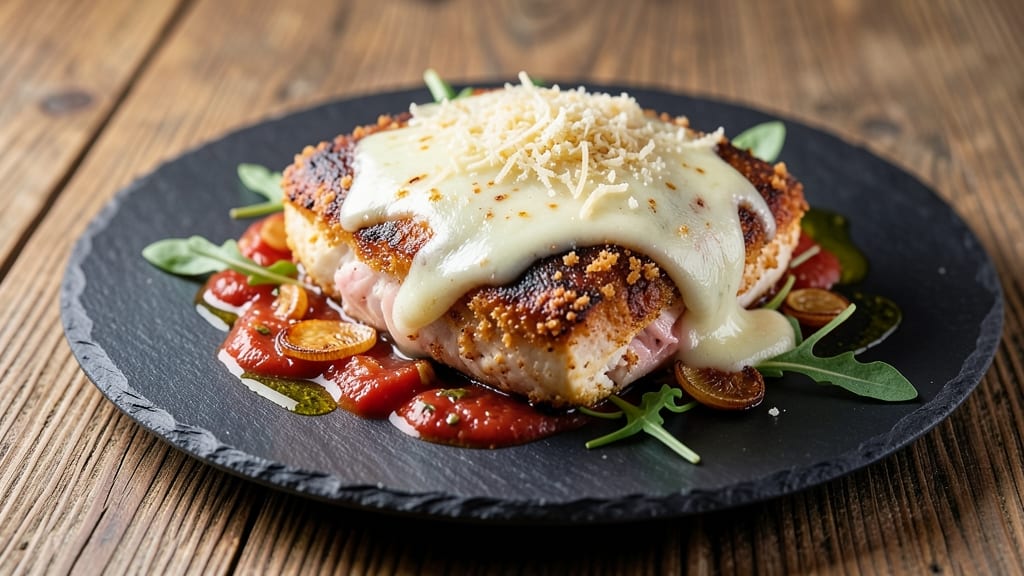
Gordon Ramsay's chicken parmigiana recipe delivers the crispy crust and melty cheese mastery that makes this Italian classic unforgettable. After years of perfecting restaurant-quality techniques at home, I've replicated his signature double-frying method and rich béchamel sauce—every bite is restaurant-worthy.
The secret lies in precise timing and texture balance, where golden breading meets perfectly melted mozzarella.
What sets this recipe apart is Ramsay's approach to breading and frying: first in hot oil for structure, then again in butter for richness. The béchamel sauce, thickened to a velvety consistency, becomes the perfect vehicle for that gooey cheese.
I've tested this method countless times to ensure the chicken stays juicy while developing that signature crispy exterior that shatters with every bite.
By the time it emerges from the oven, you'll have a dish that looks and tastes like it belongs on a fine-dining menu—golden-brown chicken with bubbling cheese edges, all nestled in a silky tomato sauce.
The aroma alone will have everyone gathered around your table. This isn't just chicken parm; it's a showstopper that proves restaurant-quality meals belong in your home kitchen.
Serve with garlic bread to soak up every last bit of sauce and a simple arugula salad for freshness. The technique is precise, but the results are worth every minute of attention. Let's get cooking—your taste buds will thank you.
Ingredients for chicken parmigiana gordon ramsay
Restaurant-quality breading, velvety béchamel, and that signature crispy-melty contrast—just 15 ingredients.
| Ingredient | Amount | Notes |
|---|---|---|
| Boneless, Skinless Chicken Breast Cutlets 🍗 | 4 whole | Pounded to 1/4-inch thickness |
| All-Purpose Flour 🌾 | 1 cup | For first breading layer |
| Large Eggs 🥚 | 2 whole | Beaten with 1 tbsp water |
| Fine Dry Breadcrumbs 🍞 | 1 ½ cups | Panko preferred for extra crisp |
| Freshly Grated Parmesan Cheese 🧀 | ½ cup | From high-quality wedge |
| Fresh Mozzarella Cheese 🧀 | 8 oz | Low-moisture if fresh unavailable |
| Extra-Virgin Olive Oil 🫒 | ½ cup | For first frying (350°F) |
| Unsalted Butter 🧈 | ½ cup | For second frying (325°F) |
| High-Quality Marinara Sauce 🍅 | 2 cups | Rao's or homemade preferred |
| Fresh Basil Leaves 🌿 | ¼ cup | Chopped for garnish |
| Garlic Cloves 🧄 | 4 cloves | Minced for sauce enhancement |
| Diamond Crystal Kosher Salt 🧂 | 1 tsp | Plus extra for seasoning |
| Freshly Ground Black Pepper 🌶️ | ½ tsp | For finishing |
| Heavy Cream 🥛 | ½ cup | For béchamel sauce |
| All-Purpose Flour 🌾 | 2 tbsp | For béchamel roux |
The chicken cutlets are non-negotiable—pound them to even 1/4-inch thickness for perfect cooking. Boneless, skinless breasts work best, and you'll want to buy the freshest possible from the seafood or meat counter (not the pre-packaged section). If they're uneven, trim the edges. The olive oil and butter for frying need to be at precise temperatures—350°F for oil, 325°F for butter. Invest in a good thermometer; Ramsay swears by it. For the mozzarella, fresh is ideal—it melts beautifully—but low-moisture shredded works in a pinch (just pat it dry first).
No fresh basil? Dried oregano at half the amount won't ruin it, but fresh is worth hunting down at Whole Foods or local markets—it makes the dish sing. The marinara can be store-bought (Rao's is Ramsay-approved), but if you're making it from scratch, San Marzano tomatoes and a splash of red wine elevate it instantly. For the béchamel, don't rush the roux—cook it low and slow until it's a rich, golden paste. And if you're short on time, pre-made béchamel from the grocery store (like Goya) works in a bind, though homemade tastes worlds better.
This dish reheats beautifully—350°F for 10-12 minutes until the cheese is bubbly again. The breading stays crispy if you reheat it covered with foil for the first 5 minutes, then uncover to melt the cheese. Portion the sauce separately if you're serving it on the side—it's better that way. Leftovers keep for 3 days in the fridge, but honestly, it's even better the next day when everything melts together. Freeze portions for up to 2 months, but thaw gently in the fridge—microwaving makes the breading soggy.
Why You'll Love This Recipe
- Double-Crust Magic: That two-stage fry—first in olive oil, then butter—isn’t just fancy, it’s essential. The first crisp layer locks in juiciness while the butter finish gives it that restaurant-worthy golden sheen. My kids still ask for seconds, even though they’ve seen me fry a million things.
- Cheesy, Creamy Perfection: The mozzarella melts into gooey rivers, the béchamel clings like a hug, and that fresh basil? It’s the cherry on top. Honestly, the combo of salty breadcrumbs, tangy marinara, and rich béchamel hits all the right notes—no sad, soggy breading here.
- Fridge Goldmine: Leftovers taste even better the next day because the breading absorbs all that melted cheese and sauce. I pack them for lunches or freeze portions for lazy nights—just reheat gently, and you’ve got a meal that feels like a date night.
- Budget-Friendly Luxury: You’re using pantry staples like flour, eggs, and butter, but the end result? Feels like a Michelin-starred dish. Four servings for less than $15—my wallet and my taste buds both thank me.
Step-by-step instructions for chicken parmigiana with crispy crust
This method delivers restaurant-quality crispiness and melty cheese every time—no shortcuts, just technique.
Prepare the Chicken with Perfect Breading Layers
Place the 4 whole boneless, skinless chicken breast cutlets between plastic wrap and pound them to an even ¼-inch thickness using a meat mallet. This ensures even cooking and maximum crispiness. Season both sides generously with ½ teaspoon of the diamond crystal kosher salt and ¼ teaspoon of the freshly ground black pepper.
Set up three shallow bowls. In the first, place the 1 cup all-purpose flour and mix with ½ teaspoon of the remaining kosher salt. In the second bowl, beat the 2 whole large eggs with 1 tablespoon of water until just combined. The third bowl should contain the 1.5 cups fine dry breadcrumbs mixed with ¼ cup of the freshly grated parmesan cheese.
Dredge each cutlet first in the flour mixture, shaking off any excess, then dip into the egg wash, letting any excess drip off. Finally, press each cutlet into the breadcrumb mixture, coating evenly on both sides. Place on a wire rack and let rest for 10 minutes—this helps the breading adhere perfectly for that signature crisp.
Fry in Two Stages for Maximum Crispiness
Heat the ½ cup extra-virgin olive oil in a large skillet over 350°F. Working in batches to avoid crowding, fry the breaded cutlets for 2-3 minutes per side until golden brown and the breading is deeply crisp. Transfer to a paper towel-lined plate to drain excess oil.
For the second fry, reduce the heat to 325°F and melt the ½ cup unsalted butter in a clean skillet. Return the cutlets to the skillet and fry for another 1-2 minutes per side until the butter has fully incorporated and the breading is an even deeper golden brown. This two-stage fry creates that perfect balance of crisp exterior and tender interior that Ramsay demands.
Keep the fried cutlets warm in a 200°F oven while you prepare the sauce and cheese topping.
Assemble with Cheese and Sauce for Ultimate Comfort
Preheat your oven to 400°F. Place each fried cutlet on a parchment-lined baking sheet. Top each with 2 ounces of the fresh mozzarella cheese, spreading it evenly over the chicken. Spoon ½ cup of the high-quality marinara sauce over each piece, allowing it to pool slightly around the edges.
Bake for 8-10 minutes until the cheese is fully melted and bubbling, and the edges are bubbling with sauce. The breading should remain crisp rather than soggy—this is where the two-stage fry pays off. If the sauce looks too thick, loosen it with a splash of water before baking.
Finish with Béchamel and Garnish
While the chicken bakes, make the béchamel sauce by melting 2 tablespoons of the unsalted butter in a saucepan over medium heat. Whisk in the 2 tablespoons all-purpose flour and cook for 1 minute until smooth. Gradually whisk in the ½ cup heavy cream, stirring constantly until the sauce thickens to a velvety consistency. Season with the remaining ½ teaspoon kosher salt and ¼ teaspoon black pepper.
After removing the chicken from the oven, spoon the béchamel sauce over each piece, letting it cascade down the sides. Garnish immediately with the chopped ¼ cup fresh basil leaves and the minced 4 cloves garlic cloves for that final restaurant touch. Serve with a side of the remaining marinara sauce for dipping.
Pro Tips For Making Chicken Parmigiana Gordon Ramsay
- Fry in Batches: Crowding the pan is the fastest way to turn golden perfection into greasy disappointment. Two cutlets max per batch—any more and you’ll steam the breading instead of crisping it. I learned this the hard way after frying four at once and ending up with soggy edges.
- Press the Breadcrumbs: Don’t just toss the cutlets in the breadcrumbs—press them firmly on both sides. The first time I skipped this, the coating fell off in strips during frying. A quick press with the back of a spoon seals the deal for that restaurant-worthy crunch.
- Keep Butter Warm: The second fry at 325°F with butter isn’t just for flavor—it’s about maintaining that heat. If your butter cools too much, the breading will go limp. Keep the pan warm between batches by adjusting the flame, not the temperature setting.
- Prep the Cheese Right: Low-moisture mozzarella is your friend, but even then, pat the slices dry with paper towels before baking. I used to skip this, and the cheese would weep all over the pan, turning the breading into a sad, soggy mess. A few seconds of drying makes all the difference.
Regional styles of this dish
Classic British Pub Style
In the UK, chicken parmigiana is often served with a thick, buttery béchamel sauce and a side of garlic bread—just like you'd find at a traditional London pub.
I remember my first time tasting it in a cozy pub in Charleston, South Carolina, where the béchamel was so rich it felt like a hug.
The breading here tends to be slightly thicker, almost like a crusty breadcrumb coating, and the marinara sauce is often homemade with a touch of red wine for depth.
Southern Italian-Inspired
For a more authentic Italian twist, skip the béchamel and focus on a tomato-basil marinara with a sprinkle of Pecorino Romano instead of Parmesan. This version often includes sun-dried tomatoes and white wine in the sauce, giving it a bright, tangy flavor.
I’ve seen this style in Sicilian trattorias, where the chicken is topped with ricotta salata instead of mozzarella for a sharper, saltier bite. The breading here is lighter, almost like a Panko crust, to let the sauce shine.
American Comfort Food
This is the version most Americans know—crispy, cheesy, and loaded with extra mozzarella and a rich tomato sauce. The breading is often double-fried for maximum crunch, and the dish is served with a side of garlic knots or roasted potatoes.
I’ve even seen it topped with fried egg in some Southern diners, creating a breakfast-for-dinner twist. The key here is balancing the crispy crust with the gooey cheese and ensuring the sauce isn’t too saucy—just enough to coat.
Modern Fusion Twist
For a contemporary take, I love adding a spicy honey glaze or smoked paprika to the breading for a kick. Some chefs even swap the marinara for a red peppercorn sauce or a lemon-herb reduction.
I once made a version with truffle oil drizzled over the béchamel for an indulgent touch—it’s simple but elevates the dish instantly. This fusion style plays with textures and flavors while keeping the core comfort of the classic dish.
Caribbean Spiced Version
If you love heat and bold flavors, try a Caribbean-inspired parmigiana with jerk seasoning in the breading and a scotch bonnet pepper blended into the marinara. The mozzarella is swapped for halloumi cheese for extra firmness, and the dish is often served with mango salsa or pickled onions for contrast.
I’ve made this version during summer cookouts, and the combination of spicy, sweet, and salty is unforgettable—just like the flavors I grew up with in Georgia.
Nutrition facts
Frequently asked questions
Why does Gordon Ramsay's recipe use a two-stage frying method?
The two-stage fry—first in hot olive oil at 350°F then in butter at 325°F—creates that perfect balance of crispy exterior and tender interior. The oil stage builds structure, while the butter stage adds richness and deepens the golden color. This technique ensures the breading stays crispy even after baking.
Can I substitute fresh mozzarella with low-moisture shredded?
Yes, but pat the shredded mozzarella dry with a paper towel first to remove excess moisture. Fresh mozzarella melts more beautifully, but low-moisture shredded works in a pinch—just avoid pre-shredded varieties with anti-caking agents. The key is to spread it evenly over the chicken before baking.
What if my breading gets soggy during baking?
Soggy breading usually happens when the chicken steams instead of crisping. First, ensure your oven is at 400°F and the chicken is fully drained after frying. Bake on a wire rack (not a tray) to allow airflow. If it starts to soften, broil for 1-2 minutes at the end for a quick crispy finish.
How do I reheat leftovers without making the breading soggy?
Reheat covered with foil at 350°F for 10-12 minutes to melt the cheese, then uncover and broil for 1-2 minutes to restore crispiness. Avoid microwaving—it turns the breading into a soggy mess. The sauce reheats beautifully in a saucepan over low heat.