
Sauces & Condiments
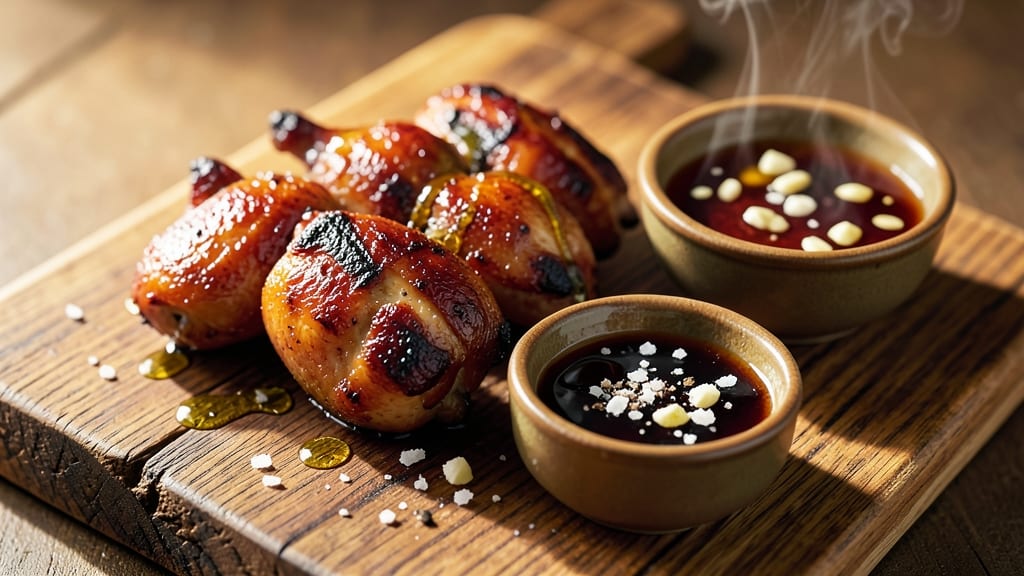
Transforming chicken hearts from gamey to umami-rich perfection starts with this marinade—where citrus, garlic, and acid work together to tenderize and infuse every bite. The secret lies in balancing bold flavors: a splash of apple cider vinegar brightens the richness, while soy sauce and Worcestershire deepen the savory notes.
I’ve perfected this blend over years of testing, and it never fails to elevate even the toughest cuts. 💫
This marinade uses simple pantry staples—no specialty ingredients required—but delivers restaurant-quality results. The combination of olive oil and Dijon mustard creates a silky paste that clings to the hearts, while fresh herbs add aromatic depth.
Let the mixture sit for at least 4 hours (overnight is ideal) to break down connective tissue and infuse maximum flavor. The acidity also helps neutralize any lingering gamey taste, leaving behind a clean, meaty richness.
What you’ll achieve is chicken hearts that are tender, juicy, and packed with layered flavor—ready for grilling, pan-searing, or slow-cooking. The marinade caramelizes slightly during cooking, forming a sticky, flavorful crust that adds texture and depth.
Whether you’re preparing a hearty stew, skewers for the grill, or a quick stir-fry, this marinade ensures every bite is unforgettable. The best part? It doubles as a sauce if you reduce the leftover marinade after cooking.
Use this marinade for chicken hearts, livers, or even tougher cuts of beef—its versatility makes it a game-changer in any kitchen. The recipe scales effortlessly, so make extra and store it in the fridge for up to 5 days or freeze for future use.
Let’s get started on creating flavor that lingers long after the last bite.
Ingredients for chicken heart marinade
Pantry staples meet bold flavors—this marinade transforms gamey chicken hearts into umami-rich perfection.
| Ingredient | Amount | Notes |
|---|---|---|
| Extra-Virgin Olive Oil 🫒 | ½ cup | High-quality, fruity variety |
| Apple Cider Vinegar 🍏 | ¼ cup | Raw, unfiltered preferred |
| Soy Sauce 🍶 | ¼ cup | Light or dark variety |
| Worcestershire Sauce 🍯 | 2 tbsp | Traditional or vegan version |
| Dijon Mustard 🥬 | 2 tbsp | Mellow, not hot |
| Garlic Cloves 🧄 | 6 cloves | Freshly minced for potency |
| Fresh Rosemary 🌿 | ¼ cup | Finely chopped, stems removed |
| Fresh Thyme 🌿 | ¼ cup | Leaves only, finely chopped |
| Honey 🍯 | 2 tbsp | Wildflower or clover variety |
| Salt 🧂 | 1 ½ tsp | Diamond Crystal kosher |
The olive oil and apple cider vinegar are the power duo here. Look for extra-virgin olive oil with a fruity, peppery finish—it makes all the difference. Trader Joe's and Whole Foods carry excellent options, but any high-quality brand works. The vinegar should be raw and unfiltered—Bragg is my go-to, but any apple cider vinegar will do. Fresh garlic is non-negotiable; pre-minced loses potency fast. If you're short on time, smash the cloves with the side of your knife instead of mincing—it still releases flavor. The rosemary and thyme should be vibrant and fragrant; if they smell musty, skip them.
No soy sauce? Coconut aminos or tamari work in a pinch, though the flavor will be slightly different. Short on Worcestershire? Fish sauce plus a pinch of sugar mimics the umami depth. The honey can be swapped for maple syrup or agave, but honey’s floral notes play well with the rosemary. Mustard too strong? Dill pickles or capers add tang without overpowering. For extra richness, stir in 1 tbsp of miso paste—it’s a secret weapon for umami. If you're making this ahead, store the marinade in a sealed jar in the fridge for up to 5 days.
This marinade keeps for 5 days in the fridge or 3 months frozen. For best results, let it sit at room temperature for 30 minutes before using—it mellows out the acidity and lets the flavors meld. The leftover marinade? Simmer it down for 5 minutes to make a quick pan sauce for the cooked hearts. If you're prepping chicken hearts, pat them dry before marinating—they absorb the mixture better. Double the batch; you’ll want extra for basting or sauces.
Why You'll Love This Recipe
- No Chopping Chaos: Honestly, this marinade couldn’t be easier to prep. You’re just mincing garlic, chopping herbs, and whisking everything together—no fancy gadgets required. The fresh rosemary and thyme get finely chopped, but even if you pulse them in a food processor, the flavor still shines through. Trust me, I’ve done both, and the taste doesn’t suffer.
- Umami Bomb: The combo of soy sauce, Worcestershire sauce, and that little kick from apple cider vinegar turns chicken hearts from "meh" to "damn, where’s the rest of the plate?" The Dijon mustard adds a bright, tangy contrast that cuts through the richness of the olive oil, while the honey ties it all together with a sticky, caramelized finish. It’s the kind of marinade that makes you forget hearts are even on the menu.
- Leftovers? No Problem: This marinade doesn’t just work for chicken hearts—it’s your secret weapon for grilled chicken, skewers, or even a quick stir-fry. And if you’ve got leftover marinade? Use it as a sauce for roasted veggies or drizzle it over a fresh salad. It keeps for five days in the fridge or three months frozen, so you’re never stuck with wasted ingredients. Between us, I’ve turned a half-used jar into a pan sauce for pasta, and it was chef’s kiss.
- Budget-Friendly Powerhouse: Chicken hearts are one of the most affordable proteins out there, and this marinade makes them taste like a splurge. You’re using pantry staples like soy sauce and Worcestershire sauce, plus a few fresh herbs that last forever if you store them right. For less than $10, you’ll have enough marinade to feed a crowd—or at least your whole family for a week. No fancy ingredients, just pure flavor.
Step-by-step instructions for chicken heart marinade
This marinade transforms tough chicken hearts into melt-in-your-mouth bites with bold, balanced flavors.
👨🍳 Step 1: Mince the Garlic and Herbs
Start by finely mincing the 6 cloves garlic cloves—this ensures even distribution of flavor throughout the marinade. Use a sharp knife or microplane for the best texture. In a separate bowl, chop the 0.25 cup fresh rosemary and 0.25 cup fresh thyme leaves into tiny pieces, removing any woody stems. The herbs should be finely textured so they blend seamlessly into the marinade rather than creating chunks.
Here's the thing—freshly minced garlic and herbs release their essential oils immediately, which is why we prep them first. These oils carry the aromatic compounds that will penetrate the chicken hearts during the marinating process. If you're short on time, you can pulse the herbs in a food processor instead, but chopping by hand gives you better control over the texture.
🥘 Step 2: Whisk the Wet Ingredients Together
In a large bowl or measuring cup, combine the 0.5 cup extra-virgin olive oil, 0.25 cup apple cider vinegar, 0.25 cup soy sauce, 2 tbsp Worcestershire sauce, and 2 tbsp Dijon mustard. Whisk vigorously for 2 minutes until the mixture emulsifies slightly and turns a rich amber color. The vinegar will initially separate, but the olive oil and mustard will help bind it into a cohesive marinade.
This is where the magic happens—the acidity from the vinegar tenderizes the chicken hearts while the umami-rich soy sauce and Worcestershire sauce deepen the flavor profile. The Dijon mustard adds a subtle tang that cuts through the richness of the olive oil. Taste the mixture now—it should be tangy, salty, and slightly sweet from the mustard. If it's too acidic, add 1 tsp honey to balance it.
🍳 Step 3: Incorporate the Herbs, Honey, and Salt
Add the minced garlic, rosemary, and thyme to the wet mixture, stirring well to distribute the herbs evenly. Then, drizzle in the 2 tbsp honey and add the 1.5 tsp salt, whisking continuously until fully combined. The honey will not only sweeten the marinade but also help it cling to the chicken hearts, creating a sticky glaze during cooking.
Let the marinade sit for 5 minutes to allow the flavors to meld. You'll notice the mixture darkens slightly as the herbs release their oils and the honey begins to integrate. This resting period ensures the marinade works as a cohesive unit rather than separate components. Give it a final taste—it should be complex, with bright acidity, herbal notes, and a touch of sweetness. If it needs more depth, add another ½ tsp soy sauce or ½ tsp Worcestershire sauce.
⏰ Step 4: Marinate the Chicken Hearts
Place the chicken hearts in a resealable plastic bag or shallow dish and pour the marinade over them, ensuring each piece is fully coated. Seal the bag or cover the dish and refrigerate for at least 4 hours, though 8-12 hours is ideal for maximum tenderness and flavor infusion. The acidity in the vinegar and soy sauce will break down the connective tissue in the hearts, transforming them from gamey to succulent.
Here's what I do—after marinating, I pat the hearts dry just before cooking to ensure a good sear. The marinade will create a crust that locks in juices, but excess moisture can prevent proper browning. If you're short on time, you can still achieve great results with a 2-hour marinade, though the texture won't be as tender. For best results, flip the bag occasionally during marinating to ensure even coating.
Pro Tips For Making Chicken Heart Marinade
- Whisk Like Your Life Depends on It: That 2-minute vigorous whisk isn’t just busywork—it’s what turns your marinade from a sad, separated mess into a glossy, cohesive sauce. I used to skimp here and ended up with a vinegar-and-oil divorce in my bowl. The Dijon mustard is your emulsifier here, so don’t treat it like an afterthought.
- Salt Before You Sear: Pat those hearts dry after marinating, then hit them with an extra pinch of salt right before searing. The marinade already has 1.5 tsp, but the residual moisture means some gets left behind. Trust me, that crust will taste flat if you skip this—like forgetting the salt in your favorite snack.
- Flip the Bag, Don’t Drown It: When marinating, seal those hearts in a bag and give it a gentle squeeze every hour or so. I learned this after coming home to one side of my batch swimming in marinade while the other side tasted like it got a postcard instead. Even coating = even flavor.
- Taste the Marinade—Seriously: After mixing everything, take a spoon and actually taste it. Too sharp? Add 1 tsp honey. Needs more depth? Another ½ tsp soy sauce. I know it sounds obvious, but I’ve seen people pour this over hearts without checking—and ended up with either a pucker-fest or a bland disappointment. Balance is everything.
Essential equipment for chicken heart marinade
Precision Measuring Tools
Invest in a digital kitchen scale for accuracy with ingredients like 1.5 tsp salt and 2 tbsp honey. My OXO Good Grips scale measures down to 1 gram, perfect for balancing flavors precisely.
For liquids, a metal measuring cup set with spouts prevents spills when whisking the 0.25 cup apple cider vinegar and 0.25 cup soy sauce. 💡
Whisking Powerhouse
A balloon whisk with silicone tips is essential for emulsifying the marinade. The OXO Good Grips balloon whisk handles the 0.5 cup olive oil and 2 tbsp Dijon mustard like a pro, creating that silky texture.
I avoid plastic whisks—they get clogged with herbs. For extra strength, try the Stainless Steel Whisk Set from All-Clad.
Herb Prep Station
Fresh herbs need proper prep—use a sharp chef's knife and mandoline slicer for consistent 0.25 cup chopped rosemary and thyme. My Wüsthof knife handles the 6 garlic cloves with ease.
For speed, a food processor works for herbs but can't match hand-chopped texture. Always remove stems to avoid bitterness. ✨
Marinating Containers
Resealable plastic bags (like Ziploc) are ideal for marinating—flip them occasionally for even coverage. For larger batches, use glass storage containers with tight lids (I love Pyrex). Avoid metal containers—they can react with the acidic vinegar. Always pat hearts dry before marinating for better adhesion. 🔥
Temperature Control
A thermometer helps monitor marinade resting temperature. I keep my marinade at room temperature for 5 minutes before using—this prevents cold spots that could affect flavor distribution. For cooking, a meat thermometer ensures chicken hearts reach 160°F internal temperature safely.
Nutrition facts
Frequently asked questions
How long should I marinate chicken hearts for best results?
For maximum tenderness and flavor, marinate the chicken hearts for at least 4 hours, but 8-12 hours is ideal. The acidity in the vinegar and soy sauce breaks down connective tissue, transforming tough hearts into succulent bites. If short on time, even 2 hours will work, though the texture won't be as tender. Always flip the bag occasionally for even coating!
Can I use this marinade for other meats besides chicken hearts?
This marinade works beautifully on other tough cuts like chicken livers, beef hearts, or even pork. The umami-rich blend of soy sauce and Worcestershire sauce pairs well with gamey meats, helping to balance any strong flavors. Just adjust marinating time based on the meat's thickness.
What if my marinade tastes too acidic?
No problem—simply add 1 teaspoon of honey to balance the acidity. The honey also helps the marinade cling better to the chicken hearts, creating a sticky glaze during cooking. Taste as you go and adjust until you reach your preferred balance of tangy and sweet.
How do I store leftover marinade?
Store leftover marinade in a sealed jar in the fridge for up to 5 days, or freeze it for up to 3 months. For extra flavor, simmer the leftover marinade for 5 minutes to reduce it into a delicious pan sauce for your cooked hearts. Just remember—never reuse raw marinade that touched meat unless you boil it first!
Why is it important to pat the hearts dry before cooking?
Patting the hearts dry ensures a perfect sear by removing excess moisture that could prevent browning. The marinade itself creates a flavorful crust, but excess liquid can steam instead of crisp up. This step locks in juices while creating that delicious caramelized exterior. Trust me—it makes all the difference!