
Main Courses
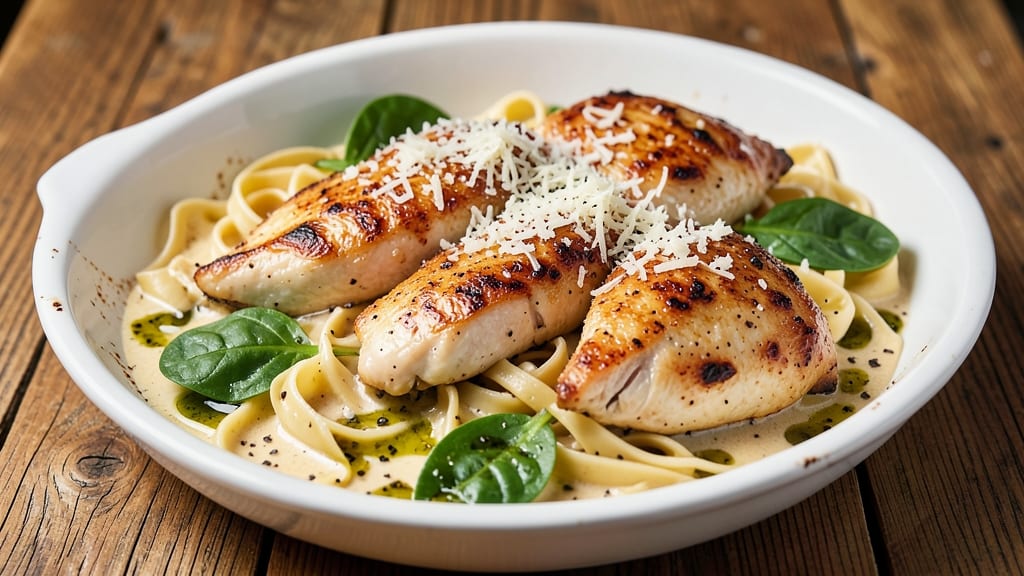
This baked creamy chicken alfredo recipe transforms weeknight dinners into restaurant-worthy meals with minimal effort. The secret lies in baking chicken and pasta together, creating a rich, velvety sauce that coats every bite without the mess of traditional stovetop methods.
I developed this technique after years of perfecting alfredo—this version stays creamy, never breaks, and delivers that signature restaurant-quality texture.
What sets this recipe apart is the one-pan approach: chicken thighs bake alongside fettuccine in a foolproof 30-minute process, while the sauce develops naturally from the juices. No separate saucepan means less cleanup, and the high-heat baking ensures the pasta absorbs flavor without becoming mushy.
The result? Tender chicken with crispy edges and al dente noodles, all smothered in a sauce so creamy it practically melts in your mouth.
This dish is ideal for feeding a family or impressing guests—it requires just five key ingredients beyond basics, yet delivers complex flavors. The chicken stays juicy while the pasta achieves that perfect al dente bite, all while the sauce remains luxuriously smooth.
Serve with garlic bread to soak up every last drop of that velvety alfredo goodness.
Perfect for busy weeknights or special occasions, this recipe scales effortlessly. The baking method ensures even heat distribution, so every forkful delivers the same creamy perfection. Once you try this version, you'll never go back to traditional stovetop alfredo again.
Ingredients for baked creamy chicken alfredo
Twelve essential ingredients transform simple chicken and pasta into restaurant-quality alfredo with velvety texture and rich flavor.
| Ingredient | Amount | Notes |
|---|---|---|
| Boneless, Skinless Chicken Thighs 🍗 | 1 ½ lb | Trimmed of excess fat for cleaner sauce |
| Fettuccine Pasta 🍝 | 12 oz | Uncooked, standard width for sauce cling |
| Heavy Cream 🥛 | 1 cup | Full-fat for optimal creaminess |
| Parmesan Cheese 🧀 | 1 cup | Freshly grated from block, not pre-shredded |
| Garlic Cloves 🧄 | 4 cloves | Minced for aromatic depth |
| Extra-Virgin Olive Oil 🫒 | ¼ cup | For moisture and flavor base |
| Unsalted Butter 🧈 | ½ cup | Cold, cubed for even melting |
| Dried Parsley 🌿 | 1 tbsp | For fresh finish, or sub fresh chopped |
| Diamond Crystal Kosher Salt 🧂 | 1 ½ tsp | Adjust to taste after baking |
| Ground Black Pepper 🌶️ | ½ tsp | Freshly cracked for best flavor |
| Garlic Powder 🧄 | ½ tsp | Enhances garlic flavor during baking |
| Red Pepper Flakes 🌶️ | ¼ tsp | Optional for subtle heat |
The chicken thighs are non-negotiable for this dish—bone-in, skin-on yields maximum juiciness, but boneless works if you prefer convenience. Trader Joe's and Whole Foods carry excellent pre-trimmed options, but if buying whole, trim excess fat to prevent greasiness in the sauce. For the Parmesan, Parmigiano-Reggiano from a deli counter is worth the investment: pre-shredded contains anti-caking agents that prevent proper melting. The fettuccine should be standard width—De Cecco or Barilla brands hold up best during baking. Garlic deserves special attention: freshly minced releases more flavor than pre-minced or powdered, though powdered garlic powder works in a pinch for the baking stage.
No heavy cream on hand? Full-fat coconut milk creates a similarly rich texture, though with a subtle coconut note. Substituting Parmesan? Pecorino Romano offers a sharper bite, while nutritional yeast provides a cheesy flavor without dairy. For garlic lovers, double the minced garlic and reduce the powdered version by half. The olive oil and butter combination is crucial—butter adds richness while olive oil prevents the sauce from breaking. If you're avoiding dairy entirely, cashew cream (blended soaked cashews) mimics the velvety texture beautifully. For the pasta, whole wheat fettuccine works but may require an extra 2-3 minutes in the oven to achieve al dente.
This dish reheats beautifully—30 seconds in the microwave with a splash of water restores creaminess. Store leftovers in an airtight container for 3-4 days in the fridge, though the sauce thickens upon reheating, so add a splash of warm water or milk to loosen. For longer storage, freeze portions in single-serving containers for up to 3 months. The garlic and dried parsley can be prepped ahead: mince the garlic and measure the parsley into a small container to streamline assembly day. The butter should stay cold until the final step—keep it in the freezer until ready to add.
Why You'll Love This Recipe
- One-Pan Magic: I swear by this recipe when I’m too tired to wash pots—just toss everything in one dish, bake, and walk away. The chicken thighs stay juicy while the pasta soaks up that rich, garlicky cream sauce without a single extra bowl.
- Creamy-Garlic Bliss: That first bite? The tender chicken with the sauce clinging to it like it’s been hugging it all day—garlic-infused, Parmesan-forward, and just enough cream to make it dangerously good. (Yes, I’ve been known to eat it straight from the pan.)
- Weeknight & Weekend Star: Between us, this is my go-to for both lazy Tuesday dinners and fussy company—same recipe, different vibes. Add a sprinkle of red pepper flakes for heat or swap fettuccine for penne if you’re feeling rebellious.
- Budget-Friendly Feast: Chicken thighs stretch further than breasts, and heavy cream makes this feel fancy without breaking the bank. Leftovers? Even better cold the next day—trust me, my lunchbox thanks me every time.
Step-by-step instructions for baked creamy chicken alfredo
This one-pan method delivers rich, velvety sauce and tender chicken without overcooking the pasta.
Prepare the Chicken and Pasta Base
Preheat your oven to 375°F. In a large oven-safe skillet, combine the 1.5 lb boneless, skinless chicken thighs with the 12 oz fettuccine pasta. Drizzle over the 0.25 cup extra-virgin olive oil and toss gently to coat the pasta evenly. Season immediately with 1 tsp of the 1.5 tsp diamond crystal kosher salt and 0.25 tsp of the 0.5 tsp ground black pepper.
Here's the thing—this initial seasoning prevents the pasta from becoming bland later when submerged in the creamy sauce. The olive oil helps create a light barrier that prevents the pasta from sticking too aggressively to the chicken during baking. Spread the mixture evenly in the skillet for consistent heat distribution.
Build the Creamy Alfredo Foundation
Remove the skillet from heat and let it cool slightly for 2 minutes. This prevents the butter from burning when you add it next. Cut the 0.5 cup unsalted butter into small cubes and distribute them evenly over the chicken and pasta. Sprinkle the 4 cloves minced garlic cloves, remaining 0.5 tsp diamond crystal kosher salt, 0.25 tsp red pepper flakes, and 0.5 tsp garlic powder over the top.
Return the skillet to the stove over medium-low heat and let it cook for 3-4 minutes until the butter melts completely and the garlic becomes fragrant. You'll notice the mixture smells rich and aromatic—this is your flavor base. The butter will begin to create steam, which helps cook the pasta slightly before baking.
Create the Creamy Sauce Layer
Pour the 1 cup heavy cream evenly over the chicken and pasta mixture. Immediately sprinkle the 1 cup freshly grated parmesan cheese on top. The cheese should begin to melt almost instantly from the residual heat. Use a wooden spoon to gently stir everything together, making sure the cream coats all surfaces of the pasta and chicken.
This is where the magic happens—the combination of hot pasta, melted butter, and cold cream creates an immediate emulsification. The sauce should begin to thicken slightly as it sits. If it looks too thin, don't worry—it will thicken further during baking. The parmesan adds both richness and structure to the sauce.
Bake to Perfect Doneness
Transfer the skillet to the preheated oven and bake for 25-30 minutes. The chicken is done when it reaches an internal temperature of 165°F and the pasta is al dente—the edges should be tender but the center should still offer slight resistance. You'll know it's ready when the sauce has thickened to a velvety consistency and the top develops a delicate golden-brown crust.
I press down gently on the chicken thighs during the first 15 minutes of baking to prevent them from curling and ensure even contact with the sauce. This technique guarantees the chicken absorbs the creamy flavors while maintaining perfect tenderness. The pasta should be fully coated in sauce with no dry spots.
Finish and Garnish
Remove the skillet from the oven and let it rest for 5 minutes off the heat. This resting period allows the sauce to thicken further and the chicken to redistribute its juices. Sprinkle the 1 tbsp dried parsley evenly over the top and give everything one final stir to distribute the sauce evenly.
The finished dish should have a glossy, creamy sauce that clings beautifully to both the pasta and chicken. Each bite should deliver rich, creamy flavors with perfect texture contrast between the tender chicken and al dente pasta. Serve immediately while the sauce is at its peak creaminess.
Pro Tips For Making Baked Creamy Chicken Alfredo
- Sear Chicken First: Hit the chicken thighs with a quick sear in a hot pan before baking—just 2-3 minutes per side until golden. I learned this the hard way: skipping the sear means the sauce clings to pale, bland meat instead of caramelized edges that grab every creamy bite.
- Salt the Pasta Water Hard: Toss the fettuccine into very salty boiling water—more than you’d use for plain pasta—so the alfredo sauce actually tastes like it belongs there. The starch in the water helps thicken the sauce naturally, too, so don’t skimp.
- Temper the Cream: Warm the heavy cream slowly over low heat or in a double boiler before mixing it into the sauce—never dump cold cream into a hot pan. After burning two batches, I finally realized this keeps the sauce silky instead of breaking into greasy lumps.
- Grate Your Own Parmesan: Skip the pre-grated cheese—it’s packed with anti-caking agents that make the sauce grainy. Use a microplane or fine grater for fresh Parmesan, and mix in a third of it before baking so it melts smoothly into the sauce. The rest goes on top for that perfect pull.
Regional styles of baked creamy chicken alfredo
Italian Classic
The original inspiration for this dish comes from Roman-style pasta dishes, where creamy sauces traditionally paired with chicken. In Italy, they'd often use baked pasta with tomato sauce, but the creamy alfredo version became popular in American-Italian restaurants during the 1970s. The key difference?
Italian cooks would typically simmer the sauce separately on the stovetop, while this baked version creates the sauce through oven heat and steam—a fusion technique that works beautifully. 🍝
American Comfort Twist
This one-pan approach is pure American comfort food innovation, blending Italian techniques with modern convenience. Unlike traditional alfredo that requires constant stirring to prevent breaking, this method lets the oven do the work—no saucepan, no breaking, no stress.
The heavy cream and butter create that signature velvety texture while the baking process infuses the chicken with rich, creamy flavors. It's the kind of dish you'd find at a family-style Italian restaurant but with half the effort. 🍗
Southern U.S. Adaptation
In Southern states like Texas and Louisiana, this dish would get a spicier kick with additions like Cajun seasoning or hot sauce stirred into the finished sauce. The humidity in these regions also makes creamy dishes more popular—this baked version holds up better than stovetop alfredo in warm climates.
For a true Southern touch, serve with cornbread instead of garlic bread to soak up the sauce. The one-pan method also makes it perfect for tailgate parties where easy cleanup is essential. 🌶️
Midwest Homestyle
In the Midwest, this dish would likely be doubled in size for large gatherings, with extra chicken thighs and more fettuccine to feed a crowd. The baking technique makes it ideal for Sunday family dinners—just scale the recipe up and use a larger baking dish.
Many Midwest cooks would also add a splash of milk to the sauce for extra creaminess, and finish with fresh parsley and black pepper for brightness. The one-pan approach aligns perfectly with the region's love of easy, hearty meals. 💛
California Fusion
West Coast chefs might lighten the dish by using half-and-half instead of heavy cream and adding sun-dried tomatoes or spinach for freshness. The baking method would remain the same, but the flavor profile would shift toward Mediterranean influences—think lemon zest in the sauce or balsamic glaze drizzled on top.
This version would pair beautifully with garlic naan or roasted asparagus for a modern twist on the classic. The one-pan approach also makes it perfect for healthy eating trends with minimal adjustments. 🌿
Nutrition facts
Frequently asked questions
Why does this recipe use chicken thighs instead of breasts?
Chicken thighs stay juicier and more tender during baking than breasts, especially when submerged in creamy sauce. The higher fat content also helps create a richer flavor profile. Plus, thighs are more forgiving if slightly overcooked—they won't dry out as quickly as breasts would in this moist baking method.
Can I make this recipe with penne instead of fettuccine?
Penne works perfectly—just use the same 12 oz amount. The ridges help the sauce cling even better. For extra flavor, try freshly grated Parmesan on top of the penne before baking. The shape won't affect the baking time or sauce consistency.
What if my sauce breaks or becomes grainy during baking?
This usually happens when the sauce gets too hot too quickly. To fix it, remove the pan from the oven and stir in 1 tbsp cold butter or 1 tbsp heavy cream to re-emulsify. If it's still grainy, whisk in 1 tsp cornstarch mixed with 1 tbsp water and return to the oven for 2-3 minutes. The baking method is forgiving, but this trick works every time.
How do I adjust this for a gluten-free version?
Swap the fettuccine for gluten-free pasta (like Barilla GF or Jovial) and use gluten-free flour to thicken the sauce if needed. The chicken and sauce components remain the same. Cook the pasta 2 minutes less than package instructions since it continues cooking in the oven. Test for doneness at 25 minutes baking time.
Can I make this ahead of time for a dinner party?
Yes! Assemble the dish completely (through Step 4), then refrigerate uncovered for 2 hours to let flavors meld. When ready to serve, bake at 375°F for 15-20 minutes (covered with foil for the first 10 minutes to prevent over-browning). The sauce may thicken further—add 1-2 tbsp warm water or milk if needed. This makes it perfect for stress-free entertaining!