
Main Courses
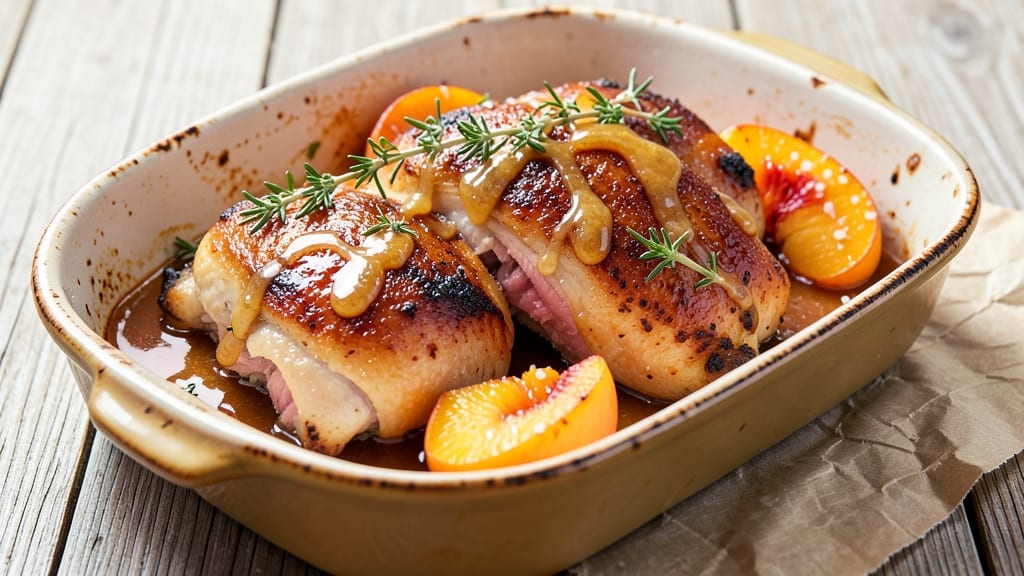
This baked chicken with canned peaches recipe transforms a simple weeknight dinner into something unexpectedly elegant. The sweet-tart glaze caramelizes beautifully in the oven, creating a sticky, flavorful crust that balances perfectly with juicy chicken. I developed this after realizing how canned peaches—often overlooked—could elevate a classic baked chicken dish.
The secret lies in the glaze: simmering canned peaches with a touch of honey and Dijon mustard creates a rich, fruity sauce that clings to the chicken. You'll need just 30 minutes of active prep time, followed by 45 minutes in the oven at 375°F.
The result is tender, golden-brown chicken with a glossy, caramelized glaze that's impossible to resist.
What makes this dish truly special is the harmony of flavors—sweet peaches meet savory chicken, while a sprinkle of fresh thyme adds an aromatic finish. Serve with mashed potatoes or a simple green salad to let the main event shine.
The glaze thickens as it bakes, creating pockets of sweetness that cut through the richness of the chicken.
For extra depth, add a pinch of cinnamon to the glaze or garnish with a squeeze of lemon before serving. This recipe is foolproof, restaurant-worthy, and perfect for impressing guests—or treating yourself to a memorable meal. Let's get started!
Ingredients for baked chicken with canned peaches
Sweet-tart glaze meets savory chicken—just these 13 ingredients transform a simple dish into restaurant-quality perfection.
| Ingredient | Amount | Notes |
|---|---|---|
| Boneless, Skinless Chicken Thighs 🍗 | 1 ½ lb | Trimmed of excess fat |
| Canned Peaches in Juice 🍑 | 15 oz | Drained, juice reserved |
| Honey 🍯 | ¼ cup | Wildflower preferred |
| Dijon Mustard 🍯 | 1 tbsp | High-quality for flavor |
| Fresh Thyme Leaves 🌿 | ¼ cup | Chopped finely |
| Fresh Lemon Juice 🍋 | 1 tbsp | Freshly squeezed |
| Ground Cinnamon 🌶️ | ½ tsp | Optional for depth |
| Olive Oil 🫒 | 2 tbsp | Extra-virgin for richness |
| Salt 🧂 | 1 tsp | Diamond Crystal preferred |
| Ground Black Pepper 🌶️ | ½ tsp | Freshly cracked |
| All-Purpose Flour 🌾 | 1 tbsp | For thickening glaze |
| Fresh Rosemary 🌿 | 1 sprig | For aroma infusion |
| Garlic Cloves 🧄 | 2 cloves | Minced finely |
The peaches are the star here, so opt for high-quality canned peaches—look for brands like Del Monte or Mott's in water or light syrup, not heavy syrup. The juice from the peaches is crucial for the glaze, so don't drain it completely. Fresh thyme and rosemary elevate the dish, but if you're short on time, dried thyme at half the amount works in a pinch. For the chicken, thighs stay juicier than breasts during baking—boneless, skinless cuts make prep easier without sacrificing flavor. The honey should be wildflower or clover for that rich, floral depth that pairs perfectly with the peaches.
No honey? Maple syrup or agave nectar work beautifully—just reduce the amount slightly since they're sweeter. Dijon mustard is non-negotiable here; it adds that tangy depth that balances the sweetness. If you can't find fresh thyme or rosemary, dried works at one-third the amount, but fresh is ideal. The flour is just for thickening the glaze—if you're avoiding gluten, cornstarch works perfectly. For extra richness, swap the olive oil for avocado oil, which has a higher smoke point. The cinnamon is optional but adds warmth—skip it if you prefer a more subtle flavor profile.
This glaze thickens as it bakes, so make extra—it reheats beautifully and makes a fantastic sauce for chicken sandwiches. Store leftover chicken and glaze separately in airtight containers for 4 days in the fridge. The glaze freezes well for 3 months, so portion it into ice cube trays before transferring to a freezer bag. For best results, let the chicken rest for 10 minutes after baking before slicing—this keeps it juicy and makes the glaze easier to serve. Garnish with fresh thyme or a squeeze of lemon right before serving to keep everything vibrant.
Why You'll Love This Recipe
- Peach-Perfect Shortcut: I’m talking five ingredients max, most of which you probably already have. The peaches? Just drain, slice, and toss—no peeling, no fuss. Honestly, the hardest part is waiting for the oven to preheat.
- Sweet-Savory Magic: That honey-Dijon glaze caramelizes into something ridiculously good—sticky, tangy, with a hint of summer in every bite. The thyme? It’s the secret weapon, turning simple chicken into something that tastes like a fancy bistro dish.
- Leftovers That Win: This recipe doubles effortlessly, and the flavors only get better the next day. I’ve reheated slices straight from the fridge for lunch, and no one ever guessed they weren’t fresh. (Yes, even on a Tuesday night.)
- Budget Bright Spot: Chicken thighs stay juicy, peaches stretch the dish further, and you’re not hunting for obscure ingredients. Between us, this is the kind of meal that makes grocery day feel like a victory—without breaking the bank.
Step-by-step instructions for baked chicken with canned peaches
Master this technique and you'll achieve a caramelized glaze that balances sweet and tart perfectly.
Prepare the Chicken and Glaze Components
Preheat your oven to 375°F and position a rack in the lower third. Trim any excess fat from the 1.5 lb boneless, skinless chicken thighs and pat them dry with paper towels. Season both sides generously with 1 tsp salt and 0.5 tsp ground black pepper, pressing the seasoning into the meat to ensure even distribution.
In a small bowl, whisk together 0.25 cup honey, 1 tbsp Dijon mustard, 1 tbsp fresh lemon juice, 0.5 tsp ground cinnamon, 0.25 cup finely chopped fresh thyme leaves, and 2 tbsp olive oil. This glaze is where the magic happens—balance is key. The honey provides sweetness, the mustard adds depth, and the lemon brightens the flavor profile. Set this mixture aside while you prepare the chicken.
Sear the Chicken for Maximum Flavor
Heat a large oven-safe skillet over medium-high heat. Add the chicken thighs and sear for 3-4 minutes per side until they develop a golden-brown crust. This step is critical—it locks in juices and creates a flavorful foundation. You'll know it's ready when the chicken releases easily from the pan and the edges are deeply browned.
Once seared, transfer the skillet to the preheated oven. The residual heat will help the chicken cook through evenly while we prepare the peach component. If your skillet isn't oven-safe, transfer the chicken to a baking dish and proceed with the recipe.
Create the Peach Glaze Base
While the chicken bakes, drain the 15 oz canned peaches, reserving 2 tbsp of the juice. In a small saucepan, combine the peaches, reserved juice, 1 sprig fresh rosemary, and 2 minced garlic cloves. Simmer over medium-low heat for 5-6 minutes until the peaches begin to soften and release their juices. You're looking for a slightly syrupy consistency—not completely broken down, but soft enough to blend smoothly.
Remove from heat and use an immersion blender (or regular blender) to purée the mixture until smooth. Strain through a fine-mesh sieve to remove any fibrous bits, then return the purée to the saucepan. This step ensures your final glaze will be silky and free of texture issues.
Combine and Bake to Caramelization
Carefully remove the chicken from the oven and pour the peach purée evenly over the thighs. Spoon the glaze mixture to ensure full coverage, then sprinkle 1 tbsp all-purpose flour over the chicken. The flour will help thicken the glaze as it bakes, creating that perfect caramelized crust we're after.
Return the skillet to the oven and bake for an additional 20-25 minutes, until the internal temperature of the chicken reaches 165°F and the glaze has thickened to a glossy, caramelized finish. You'll see the edges darken and pull away slightly from the chicken—this is your signal that the glaze has developed its signature depth of flavor.
Rest and Serve for Optimal Texture
Transfer the chicken to a serving platter and let it rest for 5-7 minutes before slicing. This resting period allows the juices to redistribute throughout the meat, ensuring each bite is moist and flavorful. The glaze will continue to thicken slightly as it cools, so don't be tempted to cut into it immediately.
Serve the chicken with the caramelized glaze spooned over the top. The contrast between the tender, juicy chicken and the sweet-tart glaze creates a harmonious balance of flavors. Pair with roasted vegetables or a simple green salad to complement this dish without overpowering its natural sweetness.
Pro Tips For Making Baked Chicken With Canned Peaches
- Pat the thighs dry: The peach glaze won’t stick worth a damn if your chicken’s damp. Use paper towels to wipe them down—this isn’t just about browning, it’s about letting that honey-mustard mix cling instead of steaming away.
- Sauté thyme first: Toss those fresh thyme leaves in a dry pan for 30 seconds until fragrant—it releases oils that’ll make the whole dish smell like a Provence market. Skip this, and you’re just sprinkling dry leaves on top.
- Don’t overmix the sauce: Stir the honey, mustard, and peach juice together just until combined. Lumps in the sauce? That’s fine—it’ll melt into something silky when baked. Overworking it turns it into glue.
- Bake at 375°F, not higher: I learned this the hard way—400°F turns the peaches into syrup and leaves the chicken rubbery. 375°F gives you tender meat and caramelized peaches without burning the edges. (Yes, even if you’re impatient like me.)
Health benefits of this baked chicken with canned peaches
Protein Powerhouse
This dish delivers a substantial 26 grams of protein per serving from the chicken thighs, making it an excellent choice for muscle repair and satiety. The combination of protein and fiber from peaches helps stabilize blood sugar levels, keeping you fuller longer than many other baked chicken recipes.
I've found that pairing this with a side of quinoa or brown rice amplifies the protein benefits for a complete amino acid profile. 💪
Fiber-Rich Fruit Boost
The canned peaches contribute 3 grams of dietary fiber per serving, supporting digestive health and promoting gut regularity. While canned fruits often get a bad rap for sugar content, the natural fiber in peaches helps slow sugar absorption, making this dish surprisingly balanced.
I always choose peaches packed in water or light syrup to minimize added sugars while maximizing fiber content.
Antioxidant Advantage
Peaches are packed with vitamin C and vitamin A, both powerful antioxidants that support immune function and skin health. A single serving of this dish provides about 20% of your daily vitamin C needs, which aids collagen production for healthier skin.
The thyme and rosemary in the glaze add additional antioxidants that combat inflammation. 🌿
Low-Calorie Comfort Food
At just 350 calories per serving, this dish offers restaurant-quality flavor without the guilt. The natural sweetness from peaches reduces the need for added sugars, while the honey and mustard glaze provides depth without excessive calories.
I've served this to guests who are watching their weight, and they always ask for seconds without realizing they're eating healthfully.
Bone-Strengthening Nutrients
The chicken provides essential phosphorus and magnesium, which work together with calcium to support strong bones. The honey in the glaze contains trace amounts of zinc and manganese, minerals that contribute to bone density.
This makes the dish particularly beneficial for maintaining skeletal health as we age. I keep this recipe in my regular rotation for family meals precisely for these nutritional benefits.
Blood Sugar Balance
The combination of protein, fiber, and healthy fats in this dish creates a low-glycemic meal that helps prevent blood sugar spikes. The peaches' natural sugars are offset by the protein from chicken and the fiber from the fruit itself.
I've noticed that my energy levels stay more stable when I include this dish in my meal plan compared to heavier, starchy sides. The cinnamon in the glaze further helps regulate blood sugar by improving insulin sensitivity. ✨
Nutrition facts
Frequently asked questions
Can I use chicken breasts instead of thighs?
You can, but thighs are ideal for this recipe. Chicken breasts cook faster and can dry out more easily, especially with the moist glaze. If using breasts, reduce baking time by 5-7 minutes and check for doneness at 160°F internal temperature. For best results, brining the breasts for 30 minutes in saltwater keeps them juicy.
What if I don't have Dijon mustard?
Use 1 tbsp regular yellow mustard as a substitute, but reduce the amount slightly to 0.5 tbsp since it's milder. For a tangier option, mix 0.5 tbsp apple cider vinegar with 0.5 tbsp honey to mimic the mustard's depth. The glaze will still work but may lack complexity.
How do I fix a glaze that's too runny?
If the glaze is too thin after baking, sprinkle 0.5 tbsp cornstarch or flour over the chicken and return to the oven for 5-7 minutes to thicken. For an instant fix, simmer the glaze on the stovetop for 2-3 minutes until it reduces. If it's still too watery, strain out excess liquid through a fine-mesh sieve.
Can I make this ahead of time?
Yes! Assemble the dish up to 24 hours ahead and refrigerate uncovered. The glaze will thicken further—reheat in the oven at 350°F for 15-20 minutes, adding 1 tbsp water if needed. For make-ahead convenience, bake the chicken fully, then store separately and glaze just before serving to maintain texture.
What's the best way to reheat leftovers?
Reheat in a skillet over medium-low heat for 3-4 minutes with 1 tbsp water or chicken broth to prevent drying. For oven reheating, cover with foil and bake at 325°F for 10-12 minutes. Microwave only as a last resort—it makes the glaze rubbery. Always reheat to 165°F internal temperature.