
Sauces & Condiments
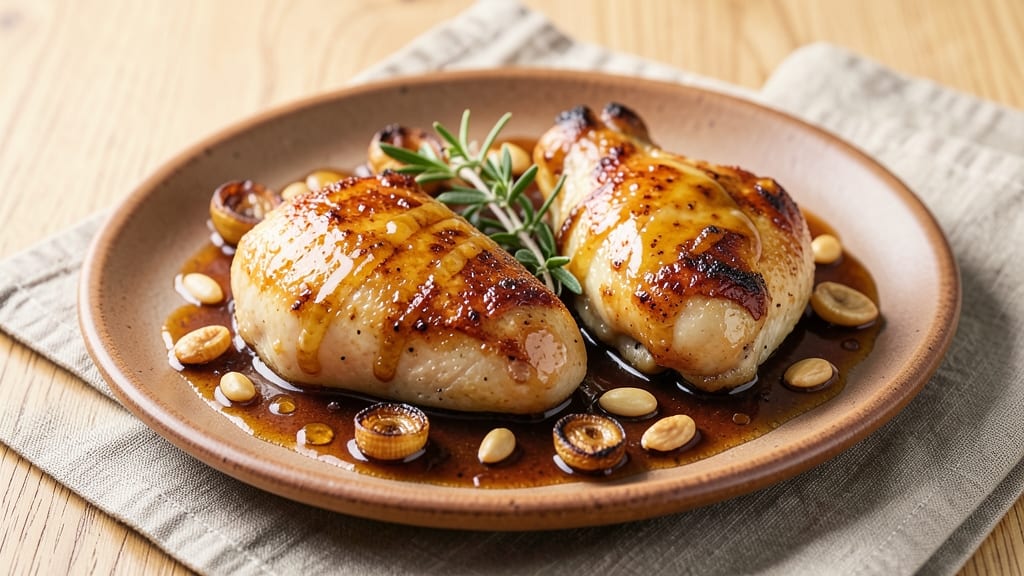
This baked chicken thigh sauce recipe transforms ordinary baked chicken thighs into a showstopping dish with its deep caramelized richness and perfect balance of sweet and tangy flavors. 🌟 The secret lies in simmering honey, Dijon mustard, and a touch of apple cider vinegar until it thickens into a glossy, sticky perfection that clings beautifully to crispy skin and tender meat.
What sets this sauce apart is its versatility—it works equally well as a finishing glaze for roasted chicken or as a dipping sauce for leftovers.
The recipe calls for simple pantry staples like honey, mustard, and broth, but the magic happens when those ingredients meld together over 10 minutes of gentle simmering on the stovetop. No fancy techniques required, just patience to let the flavors develop.
The result is a sauce that's perfectly balanced—sweet from the honey, tangy from the mustard, and just a hint of acidity from the vinegar. It caramelizes into a glossy sheen that adds visual appeal and depth of flavor to every bite.
This isn't just a sauce; it's the finishing touch that elevates your chicken thighs from ordinary to extraordinary.
Once made, this glaze keeps well in the refrigerator for up to 5 days, making it ideal for meal prep. Simply reheat gently before using to restore its silky texture.
Whether you're serving it alongside roasted chicken or drizzling it over a fresh salad, this sauce delivers restaurant-quality flavor with minimal effort.
Ingredients for baked chicken thigh sauce
Simple pantry staples that transform into a restaurant-worthy honey-mustard glaze for crispy chicken thighs.
| Ingredient | Amount | Notes |
|---|---|---|
| Honey 🍯 | ½ cup | High-quality, liquid preferred |
| Dijon Mustard 🌶️ | ¼ cup | Whole grain for texture |
| Apple Cider Vinegar 🍏 | ¼ cup | Raw, unfiltered preferred |
| Chicken Broth 🍲 | ½ cup | Low-sodium, homemade or quality store-bought |
| Brown Sugar 🍚 | 2 tbsp | Light or dark, packed |
| Extra-Virgin Olive Oil 🫒 | 1 tbsp | For richness and balance |
| Garlic Cloves 🧄 | 2 cloves | Minced for depth of flavor |
| Fresh Thyme Leaves 🌿 | ¼ tsp | Or 1/8 tsp dried thyme |
| Salt 🧂 | ½ tsp | Kosher or sea salt |
| Black Pepper 🌶️ | ¼ tsp | Freshly ground for best flavor |
The honey is the star here—local raw honey has the most complex flavor, but any high-quality liquid honey works. For the mustard, Maille Dijon is my go-to, but any whole-grain Dijon will do. Apple cider vinegar adds the perfect tang, so Bragg or local orchard brands are ideal. The chicken broth should be low-sodium; homemade is best, but Pacific Foods or Swanson are solid store-bought options. Brown sugar enhances the caramelization, so don't skip it—Light or dark, packed works equally well. For the garlic, freshly minced releases more flavor than pre-minced.
No Dijon mustard? Whole-grain mustard works, though it may be slightly grainier. Running out of chicken broth? Vegetable broth or even water in a pinch, though the flavor won't be as rich. If you prefer less sweetness, reduce the brown sugar to 1 tbsp. For a smokier profile, swap half the olive oil for smoked paprika. Fresh thyme is ideal, but dried at one-quarter the amount works if you're in a bind. The vinegar can be swapped for lemon juice if you don't have apple cider vinegar, though the flavor will be slightly brighter.
This sauce keeps beautifully in an airtight container in the fridge for 5 days, though it tastes best within the first 2 days. For longer storage, freeze in 1-tbsp portions—just thaw in the microwave for 20 seconds before using. Reheat gently on the stovetop over low heat, stirring occasionally, until warmed through. The sauce thickens as it cools, so if it seems too thick when reheating, add a splash of water or broth. Perfect for drizzling, dipping, or finishing—use within 1 week for best results.
Why You'll Love This Recipe
- One-Pan Magic: Honestly, I dump everything on a sheet pan—no chopping, no fuss—and the oven does the rest. The sauce caramelizes right on the thighs, so you’re not stuck with a separate glaze to make.
- Sweet-Savory Balance: That honey and apple cider vinegar combo? It’s like a hug for your taste buds—sticky, tangy, and just enough brown sugar to make it feel special. The Dijon mustard adds depth without overpowering, and the chicken broth keeps it rich but not heavy.
- Leftovers for Days: Between us, this recipe makes enough for lunch the next day (trust me, it reheats beautifully). The sauce clings to the chicken, so you’re not left with dry, sad leftovers—just flavor-packed bites that taste like you made them fresh.
- Budget Dinner Hero: Chicken thighs are forgiving and cheap, and this sauce uses pantry staples you already own. I’ve fed four people for under $15, and no one ever guesses it’s not a restaurant dish. Plus, the broth stretches the flavor further—no waste here.
Step-by-step instructions for honey-mustard glaze
Here's how to create a perfectly balanced, caramelized sauce that transforms simple baked chicken thighs into a showstopping dish.
🍳 Step 1: Combine Wet Ingredients in a Saucepan
In a medium saucepan, combine the 0.5 cup honey, 0.25 cup Dijon mustard, 0.25 cup apple cider vinegar, and 0.5 cup chicken broth. I always use a saucepan with sloped sides here—it helps prevent spattering when the mixture heats up.
Place the saucepan over medium heat and bring the mixture to a gentle simmer. You'll see small bubbles forming at the edges and hear a soft, steady hum. Let it simmer for 5 minutes while you prepare the remaining ingredients. This initial simmer helps blend the flavors and reduce the mixture slightly before adding the other components.
🍳 Step 2: Add Sugar, Oil, and Aromatics
Reduce the heat to low and stir in the 2 tablespoons brown sugar, 1 tablespoon extra-virgin olive oil, 2 minced garlic cloves, and 0.25 teaspoon fresh thyme leaves. The sugar will begin to dissolve almost immediately, creating a smoother base for the sauce.
Let the mixture simmer gently for another 3-4 minutes until it thickens slightly and the garlic becomes fragrant. You'll notice the sauce will become more syrupy and start to coat the back of a spoon. This is when the magic happens—the flavors meld together and the sauce develops its signature depth.
🔥 Step 3: Season and Simmer to Caramelized Perfection
Add the 0.5 teaspoon salt and 0.25 teaspoon black pepper, stirring well to distribute the seasoning evenly. Increase the heat to medium-low and let the sauce simmer uncovered for 8-10 minutes, stirring occasionally.
Here's the thing—you want the sauce to reduce by about 25% and develop a glossy, caramelized consistency. Watch for it to turn a beautiful amber color with small bubbles forming around the edges. This is your signal that the sauce has reached its perfect balance of sweetness, tang, and depth. If it reduces too quickly, you can add 1 tablespoon water to adjust the consistency.
⏰ Step 4: Cool and Thicken for Application
Remove the sauce from heat and let it cool for 5 minutes. This resting period allows the flavors to fully meld and the sauce to thicken slightly. You'll notice it becomes even more syrupy and cohesive as it cools.
Before using, give the sauce a final taste and adjust the seasoning if needed. I often add a pinch more salt or a splash of apple cider vinegar to balance the flavors. The sauce should be thick enough to coat the back of a spoon but still flow smoothly. If it's too thick, thin it with 1 teaspoon water or chicken broth. This sauce is now ready to elevate your baked chicken thighs to restaurant-quality perfection.
Pro Tips For Making Baked Chicken Thigh Sauce
- Simmer the Sauce: Start with a cold saucepan—just add the honey, Dijon, vinegar, and broth, then heat on medium-low. I learned this the hard way: rushing it on high heat turns the brown sugar into a sticky mess that burns before it caramelizes. Let it bubble gently for 8–10 minutes, stirring occasionally, until it thickens enough to coat the back of a spoon.
- Balance the Sweet-Sour: Taste the sauce before glazing the chicken—if it’s too sweet, splash in another tablespoon of vinegar; if it’s too sharp, add a pinch more brown sugar. The honey and vinegar are a team here, but one can easily overpower the other. My grandmother swore by this: "Sweet and sour should kiss, not fight."
- Pat Dry Before Baking: Skip the crowded pan—lay the chicken thighs skin-side up on a wire rack over a baking sheet. Pat them thoroughly dry with paper towels first, or the sauce will steam instead of caramelize. I was skeptical until I tried it: the skin crisps up like a dream, and the sauce clings instead of sliding off.
- Deglaze the Pan: After baking the chicken, don’t toss that juicy pan. Scrape up the browned bits with a wooden spoon, then add a splash of chicken broth and a teaspoon of Dijon to loosen them. Simmer for 2 minutes—this makes a richer sauce than starting fresh. It’s not the prettiest method, but it’s the tastiest.
Storing and reheating this dish
Fridge Storage Tips
Transfer your honey-mustard glaze to an airtight glass container—I use Pyrex with a silicone lid—and let it cool completely before sealing. Store it in the refrigerator for up to 5 days, though it reaches peak flavor within the first 2 days.
The sauce thickens as it chills, so give it a quick stir before using. For best results, use within the week to maintain its glossy texture. 🌟
Freezing for Later Use
Freeze the sauce in 1-tablespoon portions using silicone ice cube trays or small glass jars. Once frozen, transfer to a freezer bag with all air removed to prevent freezer burn. Thaw in the microwave for 20 seconds or at room temperature for 30 minutes before reheating.
The sauce may separate slightly when frozen, but a quick stir restores its smooth consistency. 🧊
Reheating Methods
For stovetop reheating, transfer the sauce to a small saucepan and warm over low heat for 3-5 minutes, stirring occasionally. If the sauce seems too thick after reheating, add 1 teaspoon water or chicken broth to restore its flow.
Avoid high heat—this can cause the honey to crystallize and ruin the silky texture. 🔥
Microwave Quick Fix
For a faster option, microwave the sauce in 15-second bursts on 50% power, stirring between each interval. This gentle approach prevents overheating while bringing it to the perfect serving temperature.
If the sauce thickens too much, thin it with a splash of apple cider vinegar or broth to maintain balance. 💡
Sauce Consistency Adjustments
If your sauce thickens too much after reheating, add ½ teaspoon water or broth at a time until it reaches the ideal syrupy consistency. For extra richness, stir in ½ teaspoon olive oil or a pinch of brown sugar to restore balance.
The goal is a sauce that clings beautifully to chicken thighs without being overly sticky. ✨
Leftovers Reinvention
Use leftover sauce to glaze roasted vegetables, drizzle over mashed potatoes, or toss with fresh greens for a tangy dressing. The honey-mustard combo works surprisingly well with grilled shrimp or as a dip for warm pita bread. Get creative—this versatile sauce deserves a second life! 🍽️
Nutrition facts
Frequently asked questions
Can I make this sauce without honey?
The honey is key for that signature caramelized sweetness, but you can substitute 1/4 cup maple syrup or 2 tbsp agave nectar for a vegan option. Just reduce the simmering time to 7 minutes since these alternatives don't caramelize as deeply. The sauce will be slightly less rich but still delicious!
How do I prevent the sauce from getting too thick?
If your sauce thickens too much during cooking, simply add 1 tbsp water or broth at a time while simmering. For a smoother texture, strain it through a fine-mesh sieve after cooking to remove any mustard seeds or thyme stems. The ideal consistency should coat the back of a spoon but still flow freely when drizzled.
What's the best way to use leftover sauce?
This versatile glaze works perfectly as a marinade for grilled shrimp or pork chops, a drizzle for roasted sweet potatoes, or even a dip for warm crusty bread. For extra flavor, add a pinch of smoked paprika or a dash of hot sauce to spice it up. The possibilities are endless!
Why did my sauce crystallize after reheating?
Honey can crystallize when overheated or stored improperly. To fix it, gently warm the sauce in a saucepan over low heat while stirring constantly until smooth. For prevention, always reheat on low-medium heat and avoid microwaving on high power. Store leftovers in an airtight container in the fridge.
Can I make this sauce ahead of time?
This sauce actually tastes better when made 1-2 days ahead as the flavors deepen. Store it in an airtight container in the fridge and stir before using. For longer storage, freeze in 1-tbsp portions—just thaw in the fridge overnight before reheating gently on the stovetop.