
Main Courses
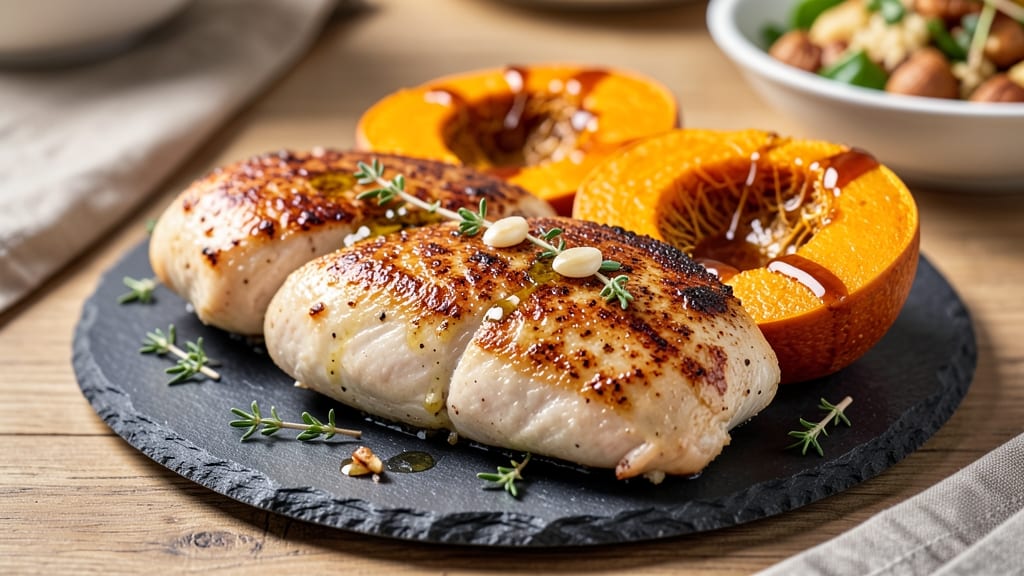
This baked chicken breast and acorn squash recipe transforms weeknight dinner into a restaurant-worthy meal with just one pan and 45 minutes.
The sweet maple glaze caramelizes beautifully on the squash while keeping the chicken juicy and tender, creating a perfect balance of savory and sweet flavors that will have everyone asking for seconds.
I've perfected this technique over years of testing, ensuring the chicken stays moist and the squash develops that irresistible caramelized crust.
The secret to success lies in the preparation: halving the acorn squash and scoring the flesh allows it to roast evenly, while a simple herb marinade on the chicken breast infuses flavor without overpowering the natural taste.
You'll need just six key ingredients beyond pantry staples, making this dish both impressive and accessible for home cooks of all skill levels. The maple glaze isn't just sweet—it adds depth that complements the savory chicken perfectly.
By the time this dish emerges from your oven, you'll have golden-brown chicken with crisp edges and tender centers, paired with acorn squash that's caramelized to perfection. The maple glaze creates beautiful glistening pools on the squash while adding a subtle sweetness that enhances rather than dominates.
This combination makes an elegant yet simple meal that feels special enough for company but easy enough for any night of the week.
Serve with a side of steamed green beans or a simple arugula salad to round out the meal, and consider adding a sprinkle of toasted pecans or fresh thyme for extra presentation.
The flavors develop beautifully as they sit, making this dish even more delicious when served family-style. Let's get cooking!
Ingredients for baked chicken breast and acorn squash
Six ingredients, two stars: juicy chicken and caramelized squash with maple magic.
| Ingredient | Amount | Notes |
|---|---|---|
| Boneless, Skinless Chicken Breast 🍗 | 2 whole | Pounded to even thickness |
| Medium Acorn Squash 🎃 | 1 whole | Halved and seeded |
| Pure Maple Syrup 🍯 | ¼ cup | Grade B preferred for depth |
| Olive Oil 🫒 | ½ cup | Extra-virgin for richness |
| Fresh Thyme Leaves 🌿 | ¼ cup | Or 1 tbsp dried thyme |
| Garlic Cloves 🧄 | 4 cloves | Minced for marinade |
| Salt 🧂 | 1 ½ tsp | Kosher or sea salt |
| Black Pepper 🌶️ | ½ tsp | Freshly ground preferred |
| Fresh Rosemary 🌿 | 1 tbsp | Chopped, for garnish |
The acorn squash is the showstopper here. Grab a medium one—Trader Joe's or Whole Foods usually have them pre-cleaned, but if you're picking your own, look for squash that feels heavy for its size (that means it's packed with sweetness). Halve it lengthwise and scoop out the seeds with a spoon. The flesh should be firm but not rock-hard—if it's soft, it's past its prime. Score the flesh in a crosshatch pattern before roasting; this lets the maple glaze seep in and creates those gorgeous caramelized pockets. Pro tip: Roast the squash cut-side down first so the flesh doesn't get watery.
No Grade B maple syrup? Grade A works too—just know it'll be slightly lighter in flavor. Fresh thyme is ideal, but dried works at one-third the amount if that's what you've got. The garlic can be minced with a knife or tossed through a press—whatever's faster. For the chicken, pounded to even thickness ensures it cooks perfectly without drying out. Olive oil is non-negotiable here—it's the vessel for the herb marinade. If you're short on time, skip the rosemary garnish, but trust me, that fresh herb finish takes it to the next level. The salt and pepper are simple but critical—don't skimp on the kosher salt, as it dissolves better than table salt.
This dish reheats beautifully—honestly, it tastes even better the next day once the flavors meld. Store leftovers in an airtight container for up to 4 days in the fridge. For longer storage, portion into freezer-safe containers and freeze for up to 3 months. The squash keeps well on the counter for a few days before cooking, but once roasted, it's best eaten within 3 days. I always make a double batch—one for dinner, one for lunches. The maple glaze hardens when chilled, so let it sit at room temperature for 10 minutes before serving if you're worried about presentation.
Why You'll Love This Recipe
- One-Pan Magic: I swear by this—just slice the squash, season the chicken, drizzle the maple syrup, and toss it all on one sheet. No pots, no pans, no stress. The squash caramelizes right alongside the chicken, and honestly? Cleanup takes less time than microwaving leftovers.
- Sweet-Savory Balance: That maple syrup isn’t just for show—it glazes the chicken into something tender and sticky, while the thyme adds an earthy punch. The squash soaks up the sweetness but stays subtly sweet, not cloying. It’s the kind of flavor combo that makes you pause mid-bite.
- Weeknight to Dinner Party: Between us, this recipe works for everything. Toss it together for a lazy Tuesday, double the batch for guests, or pack the leftovers for lunches. The squash holds up well, and the chicken stays juicy—no sad, dry slices here.
- Budget Meal, Big Payoff: Acorn squash is cheaper than you think, and chicken breast stretches further than you’d expect when braised in maple. I’ve fed four people for under $12, and they always ask for seconds. Plus, the leftovers reheat like a dream—no soggy squash in sight.
Step-by-step instructions for maple-glazed chicken and acorn squash
Here's how to create a perfectly balanced one-pan dish where sweet meets savory.
Prep the Chicken and Squash
Start by preheating your oven to 400°F. While it heats, pound the 2 whole boneless, skinless chicken breasts between two sheets of plastic wrap until they're an even ½-inch thickness. This ensures they cook evenly without drying out. Season both sides generously with 1 teaspoon salt and ¼ teaspoon black pepper—don't skimp on the seasoning.
Next, cut the 1 whole medium acorn squash in half lengthwise and scoop out the seeds with a spoon. Place the squash halves cut-side down on a baking sheet lined with parchment paper. Brush the inside of each squash half with 2 tablespoons olive oil and sprinkle with ½ teaspoon salt and ¼ teaspoon black pepper. The squash will roast while the chicken cooks, so we're getting a head start.
Create the Maple-Thyme Glaze
In a small bowl, whisk together ¼ cup pure maple syrup, ¼ cup fresh thyme leaves, and 2 cloves minced garlic cloves. This glaze is what ties the whole dish together—sweet, aromatic, and full of depth. Set it aside while you prepare the chicken marinade.
In another small bowl, mix ¼ cup olive oil, 1 tablespoon chopped fresh rosemary, ½ teaspoon salt, and ¼ teaspoon black pepper to create the chicken marinade. The rosemary adds a piney freshness that pairs beautifully with the maple and thyme.
Sear the Chicken and Assemble the Pan
Heat a large oven-safe skillet over medium-high heat. Add the 2 whole boneless, skinless chicken breasts and sear for 3-4 minutes per side until they develop golden-brown crusts. You'll know they're ready to flip when they release easily from the pan. Transfer the chicken to a plate and set aside.
In the same skillet, pour in the chicken marinade and let it bubble for 1 minute to infuse the pan with flavor. Carefully place the seared chicken breasts back into the skillet, then pour the maple-thyme glaze over the top. The chicken will finish cooking in the oven while the squash roasts.
Bake to Perfect Doneness
Carefully transfer the skillet with the chicken to the preheated oven. Place the baking sheet with the squash halves on the middle rack and the skillet with the chicken on the lower rack. Bake for 20-25 minutes until the chicken reaches an internal temperature of 165°F and the squash is tender when pierced with a fork.
Here's the thing—you want the squash to be fork-tender but not mushy. It should have a slight resistance when you pierce it, with the flesh pulling away from the skin easily. The chicken should be golden on the outside and juicy on the inside, with no pink remaining in the center.
Rest and Serve
Remove the chicken from the oven and let it rest on a cutting board for 5 minutes before slicing. This resting period allows the juices to redistribute, ensuring each bite is moist and flavorful. While it rests, carefully transfer the squash halves to serving plates, scooping out the flesh with a spoon.
Slice the chicken into ½-inch thick pieces and arrange it alongside the squash. Drizzle any remaining maple-thyme glaze from the skillet over the top for extra flavor. Garnish with additional chopped fresh rosemary if desired. Serve immediately while everything is warm and the squash is still slightly caramelized from the oven's heat.
Pro Tips For Making Baked Chicken Breast And Acorn Squash
- Pound Chicken Evenly: Grab a meat mallet or rolling pin and tap each breast to a uniform ½-inch thickness—no thick spots, no thin ones. I learned this the hard way when my chicken came out dry in the middle and rubbery at the edges; consistency is everything when baking.
- Roast Squash Cut-Side Down: Slice the acorn squash in half, scoop out seeds, then place cut-side down on the baking sheet before adding oil and seasoning. This keeps the flesh from drying out while it roasts, and the caramelization happens on the underside where you can’t see it—trust me, it makes a difference.
- Salt Chicken Before Syrup: Season the chicken breasts with salt and pepper before brushing on the maple syrup. The syrup will cling better, and the salt will penetrate the meat while it bakes, not just sit on top. (Yes, even if you’re impatient like me—wait the 10 minutes.)
- Bake Chicken Separately: Pop the chicken on the baking sheet first, roast it alone at 400°F for 12–15 minutes, then add the squash to the same pan. The chicken gets a head start on crisping up, and the squash benefits from the residual heat without overcooking. Less fuss, same great results.
Wine and beer pairings for this recipe
White Wine Pairings
The maple-thyme glaze and herb-infused chicken shine with a crisp, aromatic white wine like Sauvignon Blanc from New Zealand or Viognier from California. The bright acidity and citrus notes of Sauvignon Blanc cut through the sweetness of the maple while complementing the savory thyme and rosemary.
I always reach for a Kim Crawford Sauvignon Blanc—its zesty grapefruit and herbal undertones mirror the dish’s flavors perfectly. 🍷
Red Wine Options
For a red wine lover, a light-bodied Pinot Noir from Oregon or Beaujolais from France works beautifully. The earthy, red fruit notes in Pinot Noir won’t overpower the dish, while Beaujolais’ juicy cherry flavors enhance the maple’s sweetness.
A Domaine Serene Pinot Noir is my go-to—it’s elegant enough for the occasion but approachable for everyday dinners.
Beer Pairings
A honey wheat beer like Blue Moon or Allagash White balances the maple’s sweetness with its subtle honeyed maltiness. The light effervescence also cleanses the palate between bites.
If you prefer something bolder, a German Hefeweizen with its banana and clove notes adds a delightful contrast to the dish’s herbal and sweet elements. 🍺
Non-Alcoholic Choices
For a refreshing non-alcoholic option, try a sparkling apple cider like Martinelli’s Sparkling or a ginger beer like BrewDog Ginger Beer. The effervescence and slight tartness enhance the maple’s sweetness without overpowering the savory chicken.
A splash of lime juice in sparkling water with a pinch of salt also works wonderfully—simple but effective.
Seasonal Adaptations
In fall, when acorn squash is at its peak, I love pairing this dish with a dry Riesling from Germany. The wine’s stone fruit and mineral notes complement the squash’s natural sweetness.
During summer, switch to a chilled Chardonnay with a touch of oak—its buttery richness pairs surprisingly well with the maple glaze’s depth. Always let the wine breathe for 10-15 minutes before serving to enhance its aromas. ✨
Nutrition facts
Frequently asked questions
Can I use frozen acorn squash for this recipe?
Fresh acorn squash is ideal for best texture and flavor, but you can use frozen squash in a pinch. Thaw it completely in the fridge overnight first. The flesh may be slightly softer after cooking, so reduce oven time by about 5 minutes to prevent overcooking. Just be sure to score the flesh before roasting to help the maple glaze penetrate.
How do I know when the chicken is fully cooked?
Use a meat thermometer to check for doneness—insert it into the thickest part of the chicken breast. It's safe to eat when the internal temperature reaches 165°F. The chicken should also have no pink in the center and should pull away from the bone easily when pierced with a fork. Never rely on color alone as it can be misleading.
Can I make this recipe in a slow cooker?
While this dish is designed for the oven, you can adapt it to a slow cooker with some adjustments. Sear the chicken first, then place it in the slow cooker with the maple-thyme glaze and ¼ cup water or broth. Cook on low for 3-4 hours until the chicken reaches 165°F. The squash would need to be roasted separately on a baking sheet placed on top of the slow cooker for the last 30 minutes.
What's the best way to reheat leftovers?
Reheat leftovers gently to prevent drying out. Place chicken and squash pieces in a skillet over low heat with a splash of water or broth, covering with a lid. Heat for 3-5 minutes until warmed through. Alternatively, microwave on 50% power for 1-2 minutes, stirring halfway. The squash reheats best when warmed gently to maintain its texture.
Can I substitute another type of squash?
Acorn squash is perfect for this recipe due to its sweet flavor and firm texture, but you can try butternut or kabocha squash as substitutes. Halve them lengthwise and follow the same roasting method. However, the flavor profile will differ slightly—acorn squash has a nuttier taste that pairs especially well with the maple glaze. Butternut squash will be slightly sweeter and more tender.