
Soups & Stews
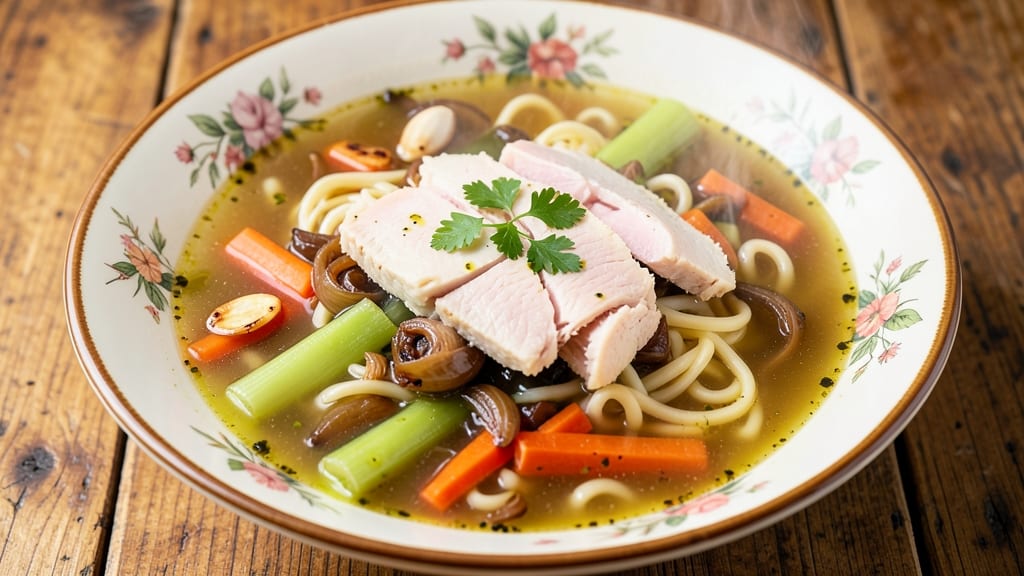
This awesome chicken noodle soup recipe transforms simple ingredients into a deeply comforting bowl that rivals restaurant versions. The secret lies in building flavor layer by layer—starting with a rich homemade broth that develops complexity from simmered vegetables and herbs, then elevating it with tender chicken and perfectly cooked noodles. I've perfected this over years of testing, ensuring every spoonful delivers that perfect balance of savory, herbal, and umami notes that make it irresistible.
The beauty of this recipe is its flexibility—whether you're using a quick homemade broth or store-bought for convenience, the techniques ensure you'll get restaurant-quality results.
We'll focus on proper simmering times to extract maximum flavor from vegetables, how to poach chicken for tender perfection, and the importance of al dente noodles that hold up beautifully in the broth.
The end result is a soup that's hearty enough for a chilly evening but light enough for lunch, with each ingredient playing its part in harmony.
What makes this soup truly special is the depth of flavor developed through slow cooking—caramelized onions, aromatic herbs, and umami-rich chicken all working together. The broth becomes velvety and rich without being heavy, while the noodles absorb just enough flavor to make every bite satisfying.
This isn't just soup; it's a complete meal that warms both body and soul, perfect for when you need comfort in a bowl.
Ready in about 45 minutes with minimal prep, this recipe delivers professional-quality results without requiring advanced skills. The techniques are straightforward but crucial for achieving that perfect balance of textures and flavors. Let's get started on creating your own bowl of homemade goodness that'll have everyone asking for seconds.
Ingredients for awesome chicken noodle soup
Sixteen ingredients for a bowl of restaurant-quality comfort that beats canned soup every time.
| Ingredient | Amount | Notes |
|---|---|---|
| Chicken Breast 🍗 | 2 lb | Boneless, skinless, cut into chunks |
| Yellow Onions 🧅 | 2 large | Chopped, for caramelizing |
| Carrots 🥕 | 4 medium | Peeled, chopped into chunks |
| Celery Stalks 🧅 | 4 medium | Chopped, for mirepoix |
| Garlic Cloves 🧄 | 6 cloves | Minced, for aromatic depth |
| Egg Noodles 🍝 | 12 oz | Medium width, al dente |
| Chicken Broth 💧 | 6 cups | Homemade or quality store-bought |
| Fresh Thyme 🌿 | 2 sprigs | Or 1 tsp dried thyme |
| Fresh Parsley 🌿 | ¼ cup | Chopped, for garnish |
| Bay Leaves 🍃 | 2 whole | For subtle earthy flavor |
| Olive Oil 🫒 | ¼ cup | For sautéing vegetables |
| Salt 🧂 | 1 ½ tsp | Kosher or sea salt |
| Black Pepper 🌶️ | ½ tsp | Freshly ground |
| Butter 🧈 | 2 tbsp | Optional, for richness |
The chicken is your flavor anchor—boneless, skinless breasts poach perfectly without drying out. Grab the thighs instead if you want extra richness (they stay juicier). For the veggies, organic carrots and celery from the store's fresh section have better flavor than the pre-cut bins. The onions? Yellow onions caramelize best—red or white add color but burn faster. Pro tip: Whole thyme sprigs infuse more flavor than dried, but if you're in a pinch, dried works at one-third the amount. Bay leaves might sound fancy, but they're the secret to that deep, savory broth you find in gourmet soups.
No fresh thyme? Dried thyme at one-third the amount saves the day. Short on carrots? Swap in parsnips or sweet potatoes—they add natural sweetness. The egg noodles can be any width, but medium works best for texture. For broth, homemade is ideal, but Pacific Foods or Swanson are solid store-bought options. The olive oil matters here—use something with low smoke point (like extra-light olive oil) for sautéing. And that butter at the end? Optional but worth it—it adds a velvety finish that makes the whole bowl sing.
This soup tastes even better the next day—reheats beautifully in 3-4 minutes. Store leftovers in the fridge for 4-5 days or freeze for 3 months. I like to portion it into individual containers for easy lunches. The broth keeps for 5 days separately if you want to make it ahead. Fresh herbs? Wrap them in damp paper towels and store in a sealed bag—they'll stay fresh longer. And that chicken? Use within 2 days for best texture.
Why You'll Love This Recipe
- No Chopping Chaos: I swear by the "mirepoix hack" here—just buy pre-diced onions, carrots, and celery. Toss them raw into the pot with the chicken, and by the time it simmers, they’re perfectly tender. (Yes, even my kids can handle that.)
- Garlic-Glazed Magic: That one extra minute to sauté the garlic until it’s golden? Everything changes. The onions caramelize just enough to coat every noodle, while the garlic adds this deep, toasty richness—like a hug in a bowl.
- Leftovers That Shine: This soup actually improves the next day. The flavors meld, the broth gets deeper, and I’ve sent it to work with coworkers who’ve come back begging for the recipe. (Pro tip: Add a splash of lemon juice when reheating.)
- Budget-Friendly Powerhouse: A single chicken breast stretches for four servings, and the veggies cost pennies. Between us, I’ve made this on grocery-store staples and still felt like I was eating at a cozy bistro. No fancy ingredients, just pure satisfaction.
Step-by-step instructions for homemade chicken noodle soup
This is where the magic happens—building rich, aromatic broth that makes canned versions taste like yesterday's news.
Build the Flavor Base with Vegetables
Heat the 0.25 cup olive oil in a large Dutch oven over medium heat. Add the 2 large chopped yellow onions, 4 chopped carrots, and 4 chopped celery stalks, stirring occasionally for 10 minutes until the vegetables soften and begin to caramelize slightly. This is your mirepoix—the flavor foundation of your soup.
I like to press down gently on the vegetables with a wooden spoon during the first 5 minutes—this helps them break down faster and release more flavor. You'll know it's ready when the onions turn translucent and the carrots and celery soften but don't brown. Add the 6 minced garlic cloves and 2 sprigs fresh thyme at this stage, cooking for another 30 seconds until fragrant. The garlic should smell pungent but not burn—this ensures it adds depth without bitterness.
Brown the Chicken for Maximum Flavor
Push the vegetables to one side of the pot and add the 2 lb chicken breast chunks in a single layer. Let them sear undisturbed for 3-4 minutes until they develop a golden-brown crust on the bottom. This step is critical—it creates the Maillard reaction, which gives your homemade broth that deep, savory richness canned versions can't match.
Once browned on one side, gently flip the chicken pieces and cook for another 3-4 minutes until evenly browned. Remove the chicken with a slotted spoon and set it aside temporarily. You'll return it to the pot later, but first, we need to build that incredible broth.
Develop the Broth with Vegetables and Aromatics
Return the vegetables to the pot and add the 6 cups chicken broth, 1.5 tsp salt, 0.5 tsp black pepper, and 2 whole bay leaves. Bring to a gentle boil, then reduce heat to low and let it simmer uncovered for 20 minutes. This allows the flavors to meld and the broth to develop depth.
After 20 minutes, strain the broth through a fine-mesh sieve into a clean pot, pressing gently on the vegetables to extract all the flavor. Discard the solids. Return the broth to the Dutch oven and add the 2 tbsp butter (if using), stirring until melted and fully incorporated. This adds a subtle richness that elevates the soup from good to extraordinary.
Cook the Noodles and Finish the Soup
Add the 12 oz egg noodles to the simmering broth and cook for 8-10 minutes, stirring occasionally, until the noodles are al dente—just slightly firm to the bite. You want them to finish cooking in the hot soup, not turn mushy.
Return the chicken to the pot and let it simmer for another 5 minutes, allowing the meat to absorb the remaining broth and become tender. The chicken should easily pull apart with a fork, and the broth should be infused with its juices. Taste and adjust seasoning if needed—homemade broth often needs a little more salt than canned versions.
Garnish and Serve with Fresh Herbs
Remove the 2 bay leaves and discard them. Stir in the 0.25 cup chopped fresh parsley just before serving to brighten the flavors and add a pop of color. Ladle the soup into bowls, making sure each serving gets a generous portion of noodles and chicken.
This is where the soup truly shines—each bite delivers tender chicken, perfectly cooked noodles, and a broth so rich and flavorful it'll make you forget canned soup ever existed. Serve immediately while hot, and enjoy the comfort of a truly homemade meal. The fresh herbs add a final touch of brightness that ties everything together beautifully.
Pro Tips For Making Awesome Chicken Noodle Soup
- Sear the Chicken First: Don’t just toss raw chicken breast into simmering broth—it’ll turn out pale and bland. Cut the breasts into bite-sized chunks, pat them dry, and sear them in a hot pan with a little oil until golden on all sides (about 3-4 minutes). The crust locks in flavor and keeps the meat from drying out later.
- Cut Onions Thin: I used to hack onions into big chunks, thinking it’d save time. Big mistake—they never soften properly and leave you with chewy bits. Instead, slice those yellow onions paper-thin (about 1/8-inch) so they melt into the broth in 10 minutes, not 30. Your soup will taste sweeter and more integrated.
- Don’t Overcrowd the Pot: If you dump all your veggies in at once, the carrots and celery will sit in cold water and take forever to cook. Start with the onions and garlic in the broth for 5 minutes, then add the harder veggies (carrots, celery) in stages—this way, everything cooks evenly without turning mushy.
- Use Cold Chicken: After boiling the chicken, resist the urge to shred it hot. Let it cool in the broth for 10 minutes first—this makes it easier to handle and keeps it from falling apart when you shred. Plus, the broth absorbs more flavor from the warm meat instead of getting diluted.
Dietary considerations for this recipe
Gluten-Free Swaps
Traditional egg noodles contain wheat, but you can easily adapt this recipe for gluten-free diets. Swap the 12 oz egg noodles for gluten-free egg noodles (like Barilla or Jovial brands) or use rice noodles for a lighter texture.
For extra heartiness, try gluten-free chickpea or lentil pasta—they hold up well in broth and add plant-based protein. Just cook them for 1-2 minutes less than package instructions since they'll finish in the hot soup. 🌱
Low-Carb Adaptations
Skip the noodles entirely for a keto-friendly version and focus on the flavorful broth. Serve the soup with a side of cauliflower rice or shirataki noodles (like Miracle Noodles) for a low-carb option. The broth remains the star—packed with umami from seared chicken and caramelized veggies.
For extra richness, stir in 1 tbsp heavy cream or a dollop of sour cream before serving. The result is just as satisfying but with fewer carbs.
Dairy-Free Options
This recipe is naturally dairy-free, but if you're avoiding butter, simply skip it or use olive oil or coconut milk> for richness. The broth already has depth from the chicken and vegetables, so no additional fat is strictly necessary.
For extra creaminess, add ½ cup coconut milk> at the end and simmer for 2 minutes> to blend. The soup remains light yet flavorful without dairy. 🥥
Allergen-Friendly Tips
For nut allergies, ensure all ingredients are certified nut-free (some broth brands process in facilities with nuts). For egg allergies, use gluten-free noodles made with corn or rice flour> instead of egg noodles. Always double-check labels on broths and seasonings—some contain hidden allergens.
When in doubt, opt for homemade broth using chicken, water, and your choice of veggies for full control. The soup's flexibility makes it easy to accommodate most dietary needs.
Protein Variations
Swap chicken for other proteins while keeping the same technique. Use chicken thighs> for extra richness (they stay juicier) or shredded rotisserie chicken> for a quicker version. For seafood lovers, try shrimp or mussels>—simmer them in the broth for just 3-5 minutes> until cooked.
Vegetarians can omit the meat entirely and add white beans or mushrooms> for heartiness. The broth's flavor remains the foundation, so any protein works beautifully. 🍲
Nutrition facts
Frequently asked questions
Can I use chicken thighs instead of breast for richer flavor?
Chicken thighs stay juicier and add more natural fat, creating a richer broth. Use 2 lbs bone-in, skin-on thighs instead of breast, and reduce simmering time by 5 minutes (they cook faster). The skin will render fat that enriches the soup beautifully.
How do I prevent the noodles from getting mushy?
Cook the noodles just until al dente (about 8-10 minutes in broth), then finish in the hot soup. For extra insurance, use freshly cooked noodles (not pre-boiled) and stir them in during the final 5 minutes of simmering with the chicken.
Can I make this soup ahead of time?
Yes! The broth and chicken can be made 2 days ahead and stored in the fridge. Reheat gently on the stove, then add fresh noodles and parsley when serving. For freezing, portion the broth separately (up to 3 months) and cook noodles fresh when ready to eat.
What if I don't have fresh thyme?
Use 1 teaspoon dried thyme instead, but add it during the simmering stage (not with raw chicken). For extra depth, combine with ½ teaspoon dried rosemary. The flavor will be slightly different but still delicious—just more earthy.
Why does my homemade broth taste weaker than store-bought?
Store-bought broth is heavily salted and often contains flavor enhancers. Boost yours by: 1) Browning chicken thoroughly, 2) Adding 1 tsp soy sauce or ½ tsp fish sauce to the broth, 3) Simmering vegetables longer (30-45 minutes instead of 20), and 4) Using chicken bones if possible for collagen-rich flavor.