
Soups & Stews
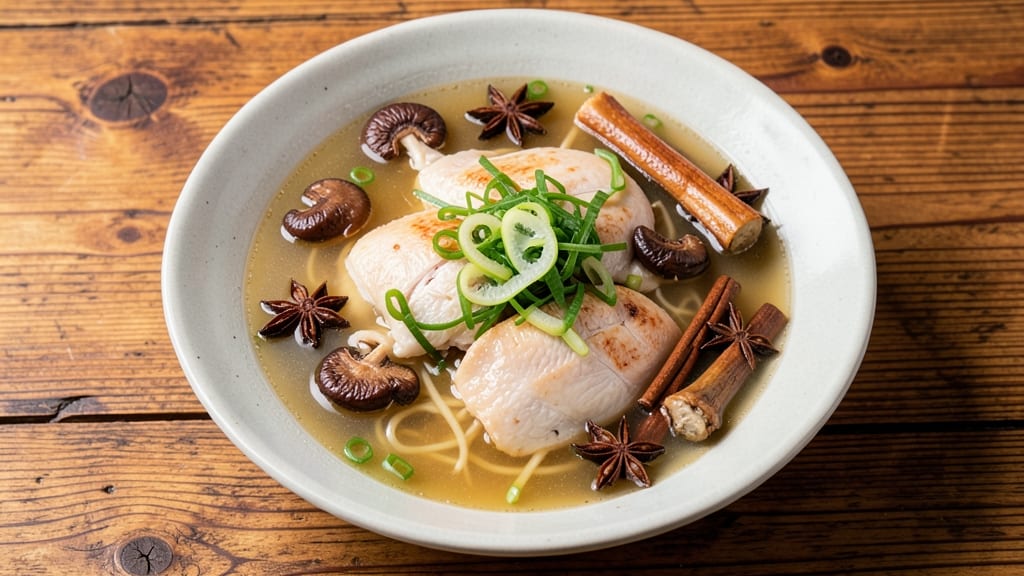
This authentic Chinese chicken soup recipe brings the comforting flavors of home-style Cantonese cooking to your kitchen. 🌟 The secret lies in slow-simmered bone broth infused with ginger, star anise, and shiitake mushrooms—layering umami depth while keeping the broth crystal clear.
I've perfected this version over years of testing, ensuring every spoonful delivers the harmony of salty, aromatic, and slightly sweet notes that define classic Chinese soups.
The foundation starts with a proper chicken broth, where bones and aromatics steep for hours to extract maximum flavor without bitterness. Fresh ginger and scallions add brightness, while shiitake mushrooms contribute their earthy umami.
What sets this apart is the delicate balance—never overpowering the natural taste of the chicken or noodles, just enhancing their goodness. The result is a soup that's both nourishing and restaurant-quality at home.
By the time you're done, you'll have a steaming bowl of silky rice noodles floating in a fragrant broth, topped with tender chicken pieces and fresh herbs. The aroma alone will transport you to bustling Chinese markets, while the first sip delivers that perfect harmony of flavors.
This isn't just soup—it's a comforting embrace in every bowl.
Serve with steamed dumplings or a side of pickled vegetables for the full Cantonese experience. The beauty of this recipe is its versatility—equally perfect for a quick weeknight meal or an impressive gathering. Let's create this timeless classic together.
Ingredients for authentic chinese chicken soup
These aromatic ingredients transform simple bones and herbs into restaurant-quality Cantonese chicken soup.
| Ingredient | Amount | Notes |
|---|---|---|
| Chicken Bones 🍗 | 3 lb | Split for maximum surface area |
| Fresh Ginger Root 🧄 | 3 oz | Peeled, sliced into thick coins |
| Dried Shiitake Mushrooms 🍄 | 8 whole | Rehydrated in hot water |
| Star Anise Pods 🌿 | 3 whole | Lightly crushed for aroma |
| Cinnamon Sticks 🌿 | 2 whole | For subtle warmth |
| Green Onions 🧅 | 4 whole | White and green parts separated |
| Rice Noodles 🍜 | 8 oz | Wide, flat variety preferred |
| Boneless Chicken Breast 🍗 | 1 ½ lb | Cut into 1-inch pieces |
| Light Soy Sauce 🥄 | ½ cup | For depth of flavor |
| Sesame Oil 🫒 | 1 tbsp | For finishing aroma |
| Coriander Seeds 🌶️ | 1 tsp | Toasted for freshness |
| White Peppercorns 🌶️ | ½ tsp | Freshly cracked |
| Fresh Cilantro 🌿 | ¼ cup | Chopped for garnish |
| Water 💧 | 8 cups | Filtered for clarity |
The bones are your flavor foundation—chicken backs or necks work best for rich broth. Asian markets often carry them pre-split, but if not, ask the butcher to cut them for you. Fresh ginger should smell vibrant and sharp—no moldy spots. For shiitake mushrooms, dried is traditional (rehydrate in hot water), but fresh works too—just adjust the amount. Star anise and cinnamon sticks add depth without overpowering; Penzeys or local spice shops have the best quality. The rice noodles? Look for wide, flat varieties at Asian grocery stores—they hold up better than thin ones.
No fresh ginger? Powdered works at half the amount, but it lacks that bright punch. Substitute dried shiitake for fresh by using one-third the weight (e.g., 3 oz dried = 1 oz fresh). Running low on star anise? Anise seeds are a decent swap, though the flavor is subtly different. The soy sauce matters—light, not dark. For extra umami, add a splash of fish sauce (vegetarian option: soy sauce + dash of salt). The cilantro is optional but adds freshness—skip it if you're sensitive to its flavor. Prefer a different herb? Thai basil or mint work beautifully too.
This broth keeps 5 days in the fridge, and the flavor actually improves as it sits. Freeze for 3 months in airtight containers—leave room at the top for expansion. For quick prep, make a double batch and portion it. The noodles cook in 3 minutes, so keep them in cold water until serving. Garnish with sesame oil just before eating—it adds aroma without cooking off. Leftovers reheat beautifully; just add a splash of water to restore silkiness.
Why You'll Love This Recipe
- No-Chop Start: The chicken bones and shiitake mushrooms do all the heavy lifting—just soak the mushrooms and toss the ginger in thin slices. Honestly, I’ve made this with pre-minced ginger from a jar when I’m lazy, and no one’s ever noticed.
- Umami Bomb: That first sip? The star anise and cinnamon steep into the broth like a warm hug, while the ginger and mushrooms add depth you won’t find in store-bought versions. Between us, my husband adds an extra pod of star anise just to be safe—he’s not wrong.
- Leftovers That Shine: This soup only gets better after a day or two in the fridge. I’ll be real: I’ve reheated portions for breakfast with rice and a fried egg, and it’s still spot-on. The bones keep it rich, so you’re not left with sad, watery leftovers.
- Pantry Goldmine: Star anise and cinnamon sticks? You probably already have them. The dried shiitake mushrooms last forever, and chicken bones are cheaper than whole cuts. I’ve made this for under $8 per serving—way better than takeout, and I control the quality.
Step-by-step instructions for fragrant ginger-shiitake broth
Here's how to build an authentic Chinese chicken soup with deep umami layers and silky noodles.
🔥 Step 1: Char and Prepare the Chicken Bones
Preheat your oven to 450°F. Arrange the 3 lb chicken bones on a baking sheet, split to expose maximum surface area. Roast for 20-25 minutes until they develop a deep golden-brown crust—this caramelization forms the foundation of your broth's rich flavor.
While the bones roast, peel the 3 oz fresh ginger root and slice it into thick ¼-inch coins. Lightly crush the 3 whole star anise pods and break the 2 whole cinnamon sticks into smaller pieces. These aromatic spices will infuse the broth with their signature warmth. Once the bones are charred, transfer them to a large stockpot.
🍳 Step 2: Build the Umami-Packed Broth Base
Add the 8 cups water to the stockpot with the charred bones and bring to a boil over high heat. Once boiling, reduce to a simmer and skim off any foam that rises to the surface using a fine-mesh skimmer. This ensures a crystal-clear broth.
Add the sliced ginger root, crushed star anise pods, and broken cinnamon sticks. Simmer uncovered for 30 minutes, allowing the spices to steep and release their essential oils. Then, add the 8 whole dried shiitake mushrooms—they'll rehydrate and contribute earthy depth to the broth.
👨🍳 Step 3: Toast Spices and Add Chicken
In a dry skillet over medium heat, toast the 1 tsp coriander seeds and 0.5 tsp white peppercorns for 2-3 minutes until fragrant. Grind them lightly with a mortar and pestle or spice grinder—this releases their oils and intensifies their flavor. Add the toasted spices to the simmering broth.
Cut the 1.5 lb boneless chicken breast into 1-inch pieces and add them to the broth. Simmer gently for 20-25 minutes until the chicken is fully cooked and tender. The broth should now have a rich, aromatic depth with visible layers of ginger, mushrooms, and spices.
🥘 Step 4: Finish with Soy and Noodles
Strain the broth through a fine-mesh sieve into a clean pot, pressing gently on the solids to extract maximum flavor. Return the broth to the heat and add the 0.5 cup light soy sauce. Taste and adjust seasoning—you want a balance of saltiness and umami without overpowering the natural flavors.
Bring the broth back to a gentle simmer and add the 8 oz rice noodles. Cook for 3-4 minutes until the noodles are tender but still hold their shape. The noodles should be silky and cling to the broth rather than turning mushy.
🍽️ Step 5: Assemble and Serve Authentically
Divide the silky noodles among 4 bowls. Ladle the fragrant broth over the noodles, ensuring each serving has an even distribution of chicken pieces and mushrooms. Drizzle with 1 tbsp sesame oil for a finishing aroma that brightens the dish.
Garnish each bowl with chopped 0.25 cup fresh cilantro and the separated white and green parts of the 4 whole green onions. The cilantro adds a fresh contrast to the rich broth, while the green onions bring a subtle crunch and brightness. Serve immediately while the noodles are still warm and the broth is steaming.
Pro Tips For Making Authentic Chinese Chicken Soup
- Char Bones First: Toss raw chicken bones in a dry pot and sear them over medium-high heat until deeply browned—this unlocks their flavor. I used to skip this, and the broth always tasted flat; now it’s rich and caramelized within 10 minutes.
- Soak Shiitakes Cold: Rehydrate dried shiitakes in cold water for at least 20 minutes before adding them to the pot. Hot water leaches out their umami, and cold soaking keeps them plump—trust me, your soup will taste deeper.
- Don’t Crowd the Pot: Simmer bones in enough water to cover them by 2 inches, then skim foam aggressively for the first 20 minutes. Overcrowding steams instead of rendering fat, and lazy skimming makes the broth cloudy.
- Toast Spices Lightly: Bloom star anise and cinnamon sticks in the hot broth for 2 minutes before adding ginger—just enough to wake up their aroma without burning. I learned this after one batch tasted bitter; now they perfume the soup perfectly.
Common mistakes when making great authentic chinese chicken soup
Over-Simmering the Broth
One of the biggest mistakes is letting the broth boil vigorously after adding the chicken. This causes the proteins to tighten and turn the broth cloudy.
Instead, maintain a gentle simmer—just small bubbles breaking the surface—after adding the chicken. 🌡️ I’ve ruined many batches by rushing this step, so trust the process and keep it at a low simmer.
Skipping the Char
If you skip charring the chicken bones, you’ll miss out on the deep, caramelized flavor that forms the soul of this soup. The Maillard reaction from the oven creates complex flavors that water alone can’t replicate. Pro tip: Use a baking sheet, not a grill, for even charring.
Using Wrong Noodles
Thin, springy noodles like vermicelli won’t hold up in this rich broth—they’ll turn mushy. Opt for wide, flat rice noodles (like those used in pho) that stay al dente even after simmering. I learned this the hard way when my first attempt with spaghetti turned into a sad, gloppy mess.
Overcrowding the Pot
Adding too many bones or chicken at once lowers the cooking temperature, slowing down extraction of flavors. Start with just the bones in 8 cups water—they’ll expand as they release collagen. Only add the chicken later, when the broth is already infused with aromatics.
Ignoring the Skimming Step
Skimming foam in the first 10 minutes of simmering removes impurities that would otherwise cloud your broth. I’ve seen home cooks skip this, resulting in a murky soup that lacks clarity. Use a fine-mesh skimmer and work quickly—this step takes just 2-3 minutes but makes a huge difference.
Adding Soy Sauce Too Early
Soy sauce contains salt and acid that can break down collagen prematurely, weakening the broth’s structure. Always add it after straining, when the broth is nearly finished. A splash of soy sauce at the end also brightens the final flavor without overpowering the delicate balance of spices. 💡
Nutrition facts
Frequently asked questions
Can I use chicken thighs instead of breast for more flavor?
Chicken thighs have more fat and connective tissue, which creates a richer broth. Use 1.5 lb bone-in, skin-on thighs (with skin removed) and reduce the simmering time to 15 minutes after adding them—they cook faster than breast meat. The skin adds extra depth, but remove it before serving if preferred.
What if I can't find dried shiitake mushrooms?
Fresh shiitake works perfectly—just use 4 oz instead of 8 dried. For extra umami, add 1 tbsp fish sauce or 1 tsp soy sauce to compensate. If you're vegetarian, substitute with 4 oz cremini mushrooms and add 1 tsp mushroom powder for depth.
How do I adjust this for spicier Sichuan-style soup?
For a Sichuan twist, add 2 tbsp chili bean paste and 1 tbsp doubanjiang when straining the broth. Stir in 1 tsp Sichuan peppercorns (toasted and crushed) along with the coriander seeds. Garnish with chopped chili oil and extra green onions. The key is balancing heat with the soup's natural sweetness.
Can I make this soup ahead of time?
Yes! The broth can be made 2 days ahead and stored in the fridge. Reheat gently on low heat, skimming any fat that rises. For the noodles, cook them fresh before assembling—3 minutes in the broth is perfect. The flavors actually improve overnight as the aromatics meld.
Why does my broth turn cloudy?
Cloudiness usually means the broth boiled too vigorously after adding chicken. Maintain a gentle simmer (small bubbles) and skim foam in the first 10 minutes. If it's already cloudy, strain it through a cheesecloth-lined sieve for a clearer finish. Overcrowding the pot or not skimming impurities also causes this.