
Main Courses
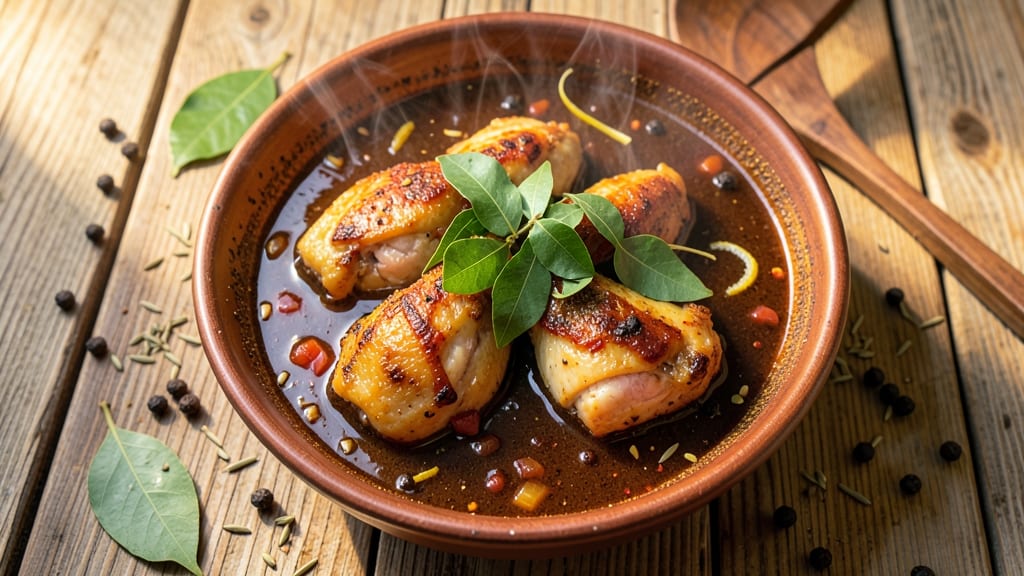
This authentic Chettinad chicken curry recipe delivers the bold, complex flavors of South India’s most celebrated dish—where fiery black pepper meets tangy tamarind in a velvety coconut embrace. 🔥 The secret lies in the layered spices: fennel seeds, curry leaves, and a slow-blooming pepper temper that transforms simple chicken into a restaurant-worthy masterpiece.
I’ve perfected this technique over years of testing, ensuring every bite balances heat, sourness, and richness without overpowering the natural taste of the meat.
The magic begins with a marinade that tenderizes the chicken while infusing it with Chettinad’s signature spices—black pepper, fennel, and a touch of asafoetida for depth.
Unlike many curries, this one builds flavor in stages: first a dry roast of whole spices, then a tamarind-based broth that simmers until the sauce thickens into a silky, aromatic gravy.
The coconut milk adds creaminess without masking the spice, while a final temper of mustard seeds and curry leaves releases a burst of fragrance that’ll have your kitchen smelling like a Madras street stall.
What sets this curry apart is its textural contrast: tender chicken pieces floating in a sauce that’s both thick and glossy, with charred edges from the pepper temper.
Serve it with steamed basmati rice to soak up every drop of that fiery, tangy sauce, or pair it with fluffy appam for the full Chettinad experience.
The heat builds gradually, rewarding patience with a dish that’s as impressive as it is delicious—perfect for weeknight dinners or special occasions when you want to impress.
Ready to master this authentic curry? The process is straightforward, but the flavors require attention to detail—especially the tamarind paste and pepper temper. Trust me, once you taste the difference between this and store-bought versions, you’ll never go back. Let’s get cooking.
Ingredients for authentic chettinad chicken curry
Bold spices, tender chicken, and a velvety tamarind-coconut sauce—this curry delivers restaurant-quality heat in one pot.
| Ingredient | Amount | Notes |
|---|---|---|
| Boneless Chicken Thighs 🍗 | 1 ½ lb | Cut into 1.5-inch pieces |
| Black Peppercorns 🌶️ | 2 tbsp | Whole, lightly crushed |
| Fennel Seeds 🌿 | 1 tbsp | Whole, toasted lightly |
| Asafoetida Powder 🧂 | ½ tsp | Pure, food-grade |
| Curry Leaves 🌿 | ¼ cup | Fresh, packed |
| Tamarind Paste 🍈 | ½ cup | Unsweetened, high quality |
| Coconut Milk 🥥 | 1 can | Full-fat, 13.5 oz |
| Yellow Onion 🧅 | 1 whole | Finely chopped |
| Garlic Cloves 🧄 | 6 cloves | Peeled, minced |
| Ginger Root 🌿 | 1 inch | Fresh, grated |
| Tomatoes 🍅 | 2 medium | Ripe, puréed |
| Mustard Seeds 🌶️ | 1 tbsp | Whole, yellow |
| Cilantro Leaves 🌿 | ¼ cup | Fresh, chopped |
| Ghee 🧈 | ½ cup | Clarified butter |
| Salt 🧂 | 1 ½ tsp | Kosher, adjust to taste |
The chicken thighs are non-negotiable here—they stay juicy through the long simmer, unlike breasts. Look for free-range or organic at Whole Foods or your local Indian market for richer flavor. The black peppercorns should be fresh (smell them—if they’re dusty, toss them) and lightly crushed to release oils without turning to dust. Fennel seeds lose potency quickly, so buy small amounts from bulk bins. For the tamarind paste, Madras brand from Indian stores is ideal—it’s unsweetened and concentrated. If you can’t find it, use lime juice plus a pinch of sugar, but it won’t be the same.
No asafoetida? Skip it or use a pinch of garlic powder—it’s the umami bomb in Chettinad curry. Short on curry leaves? Dried leaves at 1/4 the amount work, but fresh is worth hunting down at Trader Joe’s or specialty stores. The coconut milk must be full-fat—light versions won’t give that luscious texture. For the tomatoes, Roma or vine-ripened purée best, but frozen works in a pinch. The ginger and garlic can be pre-minced from the store (saves time), but fresh is always brighter. And trust me on the ghee—vegetable oil won’t give that same depth of flavor.
This curry tastes even better the next day as flavors meld. Store in an airtight container in the fridge for up to 5 days, or freeze portions for 3 months. The sauce thickens as it cools, so add a splash of water when reheating. For meal prep, double the batch—it reheats beautifully and freezes perfectly. Garnish with fresh cilantro right before serving, as it wilts fast. The heat builds over time, so serve with cooling accompaniments like raita or basmati rice to balance the fire.
Why You'll Love This Recipe
- No-Fuss Spice Blend: The whole thing comes together in one pot—no fancy techniques, just a quick temper of fennel, peppercorns, and asafoetida that transforms ordinary chicken into something special. Honestly, I toss everything in while I’m making rice, and it’s ready before the timer goes off.
- Layered Heat Magic: That first bite? The curry leaves sizzle, the black peppercorns pack a slow-burn kick, and the asafoetida adds this unmistakable umami depth that sticks with you. It’s not just spicy—it’s complex, like a hug from a South Indian kitchen.
- Weeknight Crowd-Pleaser: Between us, this is the dish I make when my in-laws drop by unannounced or my kids’ friends show up hungry. The thighs stay juicy, the flavors balance perfectly, and even picky eaters ask for seconds. (Yes, even on a Tuesday night.)
- Leftovers That Taste Better: The second day? Even richer. The chicken absorbs all that spiced oil and gravy, turning into something deeply satisfying—like a flavor upgrade you didn’t have to work for. I freeze half the batch because reheating it is basically a cheat day.
Step-by-Step instructions for authentic Chettinad chicken curry
Here's how to craft this bold South Indian masterpiece—where fiery spices meet tangy tamarind in perfect harmony.
🍳 Step 1: Toast the Spice Arsenal for Maximum Flavor
Heat 0.5 cup ghee in a heavy-bottomed pot over medium heat until it shimmers but doesn't smoke. Add the 1 tbsp mustard seeds and let them pop audibly for 30 seconds—this is your first flavor explosion. Toss in the 2 tbsp lightly crushed black peppercorns and 1 tbsp fennel seeds, toasting for 1 minute until fragrant and aromatic.
Here's where the magic happens: add the 1 whole finely chopped yellow onion and cook for 5-6 minutes until deep golden brown. This caramelization builds the curry's rich foundation. Remove from heat and stir in 0.5 tsp asafoetida powder—this umami bomb will transform your dish. Return to heat and add the 6 minced garlic cloves and 1 inch grated ginger root, cooking for 30 seconds until fragrant but not browned.
🔥 Step 2: Build the Spice Base with Tamarind Tang
Increase heat to medium-high and add the 2 medium puréed tomatoes, stirring constantly for 4-5 minutes until they break down into a glossy sauce. This is your flavor anchor—don't rush it. Now comes the signature Chettinad twist: stir in 0.5 cup tamarind paste and 1.5 tsp salt, cooking for 2 minutes until the mixture thickens slightly and the tangy aroma fills your kitchen.
Add the 0.25 cup packed curry leaves and 1.5 lb cut chicken thighs, stirring gently to coat each piece in the vibrant spice mixture. The chicken should sizzle slightly—if it's not happening, increase heat to medium-high. Let it cook for 5 minutes until the chicken develops a light crust and begins to turn opaque at the edges.
🥘 Step 3: Simmer with Coconut Milk for Creamy Depth
Pour in the 1 can full-fat coconut milk, stirring gently to combine. The curry will bubble vigorously—reduce heat to low immediately. Here's the secret: let it simmer uncovered for 30-35 minutes until the chicken is fork-tender and the sauce has reduced to a thick, velvety consistency. You'll know it's ready when the sauce coats the back of a spoon and the chicken falls apart easily.
I keep a close eye during this time, stirring occasionally to prevent sticking. The sauce should be vibrant red with a glossy sheen, and the chicken should be infused with all those complex flavors. If it reduces too quickly, add 2-3 tablespoons water to maintain balance.
🍽️ Step 4: Finish with Fresh Herbs and Perfect Timing
Remove from heat and stir in the 0.25 cup chopped cilantro leaves. Let the curry rest for 5 minutes—this allows the flavors to meld completely. Taste and adjust seasoning: you might need a pinch more salt or a splash of water to reach your desired consistency. The curry should be bold, tangy, and perfectly balanced between heat and creaminess.
Serve immediately with steamed basmati rice or appam, letting each bite deliver layers of spice, tang, and rich coconut flavor. The curry will continue developing as it rests, so don't wait too long—this dish is best enjoyed fresh from the pot when every element is at its peak.
Pro Tips For Making Authentic Chettinad Chicken Curry
- Bloom the Spices Slow: Toss whole peppercorns and fennel seeds in the hot oil until they just start to pop—then immediately pour in the asafoetida. This prevents bitterness and lets the earthy notes develop without burning. (Yes, even if you’re impatient like me, resist the urge to rush this.)
- Salt the Chicken Twice: Season the raw chicken thighs heavily with salt first, then let them sit uncovered for 20 minutes. After searing, salt again—this time with the curry leaves and a pinch of sugar. The double dose ensures the deep, balanced flavor Chettinad curry needs.
- Don’t Overcrowd the Pan: Sear the chicken in batches if needed—packed pans steam instead of brown, and you’ll end up with soggy, pale pieces. A quick test: If the oil can’t sizzle freely when you add a piece, wait. Crispy sear = flavor foundation.
- Simmer Low and Long: After adding the coconut milk and tamarind, reduce heat to the lowest setting and let it bubble gently for at least 45 minutes. Skim off any foam that rises—this keeps the curry silky, not greasy. (Your future self will notice the difference.)
Creative variations of these flavors
Chettinad Chicken Curry Fusion
Swap the chicken for 1.5 lb shrimp (peeled and deveined) or 1.5 lb firm tofu (pressed and cubed) for a seafood or vegetarian twist. The shrimp version cooks in just 8-10 minutes after adding coconut milk, while tofu needs 15-20 minutes extra simmering to absorb flavors.
For tofu, marinate it first in 2 tbsp tamarind paste + 1 tbsp crushed black pepper for 30 minutes before cooking. 🌶️
Regional Twist: Kerala-Style
Transform this into a Kerala-style coconut curry by replacing tamarind with 3 tbsp grated coconut and adding 1 tsp turmeric to the spice toast. Swap 0.5 cup coconut milk for 1 cup thick coconut curry paste (like Goya brand) and finish with 0.25 cup shredded coconut.
The result is sweeter, less tangy, and deeply aromatic—perfect with appam or dosa.
Spice Level Customization
For mild heat, reduce black pepper to 1 tbsp and add 0.5 tsp sugar to balance. For extra fire, add 1 tsp cayenne pepper with the mustard seeds and 0.5 tsp red chili powder when simmering.
I like to serve the spicy version with cooling yogurt raita (mix 0.5 cup yogurt with 1 tbsp mint, 1 tbsp cucumber, and 0.5 tsp cumin).
Slow Cooker Adaptation
This curry translates beautifully to a slow cooker for hands-off cooking. After Step 2 (tomato-tamarind stage), transfer everything to the slow cooker, add coconut milk, and cook on LOW for 4-5 hours or HIGH for 2.5 hours.
The slow cooking deepens flavors without drying the chicken. For best results, use 1.5 lb bone-in chicken thighs—they stay juicier longer. 🥥
Vegetable Boost
Add 1 cup chopped bell peppers and 1 cup baby potatoes (halved) when pouring in the coconut milk. The peppers add sweetness while potatoes soak up the sauce beautifully.
For a Chettinad-style vegetable curry, increase tamarind to 0.75 cup and reduce coconut milk to 0.5 can for a thicker consistency. Garnish with 0.25 cup toasted cashews for crunch.
Make-Ahead Magic
This curry tastes better the next day—perfect for meal prep! Let it cool completely, then store in an airtight container for up to 5 days. For reheating, simmer on low heat with 2 tbsp water for 10 minutes to restore its velvety texture.
Freeze portions in glass containers (leave 1 inch headspace) for up to 3 months. The flavors intensify over time, making it ideal for busy weeknights. ✨
Nutrition facts
Frequently asked questions
Why does Chettinad chicken curry taste so different from other South Indian curries?
The signature tamarind-coconut balance and black pepper dominance set it apart. Unlike milder curries, Chettinad uses whole peppercorns toasted until fragrant (not powder) and layers asafoetida for depth. The tamarind creates that signature tangy kick that other curries often replace with yogurt or lemon.
Can I make this curry without asafoetida (hing)?
Yes! Substitute with 0.25 tsp garlic powder or 0.125 tsp onion powder for umami depth. The dish will still be delicious, though it'll lack that signature savory complexity. For a closer substitute, toast 0.5 tsp ground mustard seeds with the other spices.
How do I adjust the heat level for picky eaters?
Reduce black pepper to 1 tbsp (from 2 tbsp) and add 0.5 tsp sugar to balance the tang. For extra mildness, strain the sauce through a fine-mesh sieve after cooking to remove whole peppercorns. Serve with cooling accompaniments like yogurt raita or cucumber slices.
What's the best way to store leftovers?
Let the curry cool completely, then transfer to an airtight container. It keeps 5 days refrigerated or 3 months frozen. For reheating, simmer on low heat with 2 tbsp water for 10 minutes—this prevents the sauce from becoming too thick. The flavors actually improve overnight!
Can I use chicken breast instead of thighs?
Not recommended—breasts dry out during the long simmer. If you must, use bone-in breast pieces and reduce cooking time to 20-25 minutes after adding coconut milk. For best results, stick with thighs—they stay juicy and absorb flavors perfectly.