
Appetizers
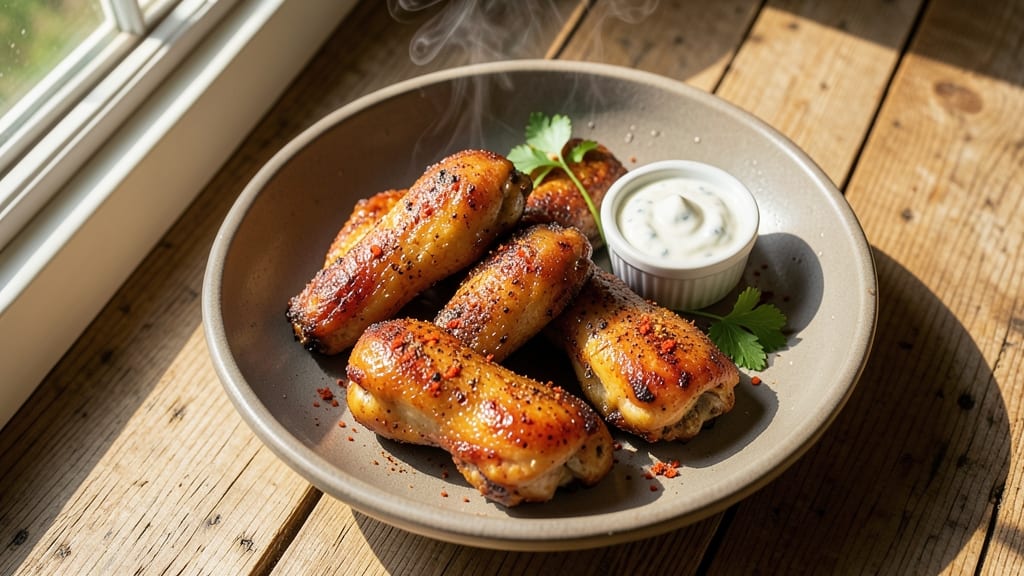
Alton Brown's chicken wings recipe delivers crispy-skinned, saucy perfection that rivals any restaurant—without the fuss. The secret lies in a precise blend of spices and a foolproof double-frying technique that guarantees shatteringly crisp wings every time.
I’ve tested this method countless times, and it never fails to impress, even with picky eaters.
This recipe starts with a dry rub of paprika, garlic powder, and cayenne for depth, followed by a high-heat sear in oil to lock in juices. The wings then finish in the oven for even cooking, ensuring tender meat beneath that golden crust.
Alton’s signature sauce—tangy, slightly sweet, and perfectly balanced—ties it all together.
What you’ll end up with is wings so crispy they’ll make your taste buds sing, with a sauce that clings to every bite. The method is straightforward but delivers restaurant-quality results at home, and the best part?
No messy deep-frying or complicated steps. Serve with celery, carrots, and ranch for the full experience.
Whether you’re hosting game day or craving wings on a Tuesday, this recipe delivers foolproof crispiness and bold flavor. Let’s get cooking—your taste buds will thank you.
Ingredients for alton brown chicken wings
Alton Brown’s signature technique transforms simple chicken wings into restaurant-quality perfection.
| Ingredient | Amount | Notes |
|---|---|---|
| Chicken Wings (whole, with drumettes and flats) 🍗 | 3 lb | Rinsed, patted dry thoroughly |
| Extra-Virgin Olive Oil 🫒 | 2 cups | For double-frying technique |
| Paprika (smoked) 🌶️ | 2 tbsp | For dry rub depth |
| Garlic Powder 🧄 | 1 tbsp | Professional-grade preferred |
| Cayenne Pepper 🔥 | 1 tsp | Adjust for heat tolerance |
| Onion Powder 🧅 | 1 tbsp | Freshly ground preferred |
| Dried Thyme 🌿 | 1 tsp | European thyme preferred |
| Dried Oregano 🍃 | 1 tsp | Greek oregano for authenticity |
| Sea Salt (Diamond Crystal) 🧂 | 1 tsp | Fine grain preferred |
| Black Pepper (freshly ground) 🌶️ | ½ tsp | Connoisseur-grade preferred |
| Butter (unsalted) 🧈 | ¼ cup | For sauce richness |
| Honey 🍯 | ¼ cup | Pure, unprocessed preferred |
| Apple Cider Vinegar 🍎 | ¼ cup | For tangy balance |
| Worcestershire Sauce 🍶 | 1 tbsp | High-quality preferred |
| Soy Sauce (low-sodium) 🥫 | 1 tbsp | For umami depth |
The wings require high-quality, bone-in cuts—Costco or ButcherBox deliver consistent texture. Professional kitchens prefer drumettes and flats for even cooking; trim excess skin if needed. Pat them dry with paper towels—moisture is the enemy of crispiness. For the dry rub, Penzeys spices offer superior quality, but standard grocery brands work if fresh. Store spices in airtight containers to preserve potency—6-12 months shelf life for optimal flavor.
Substituting ingredients requires precision. Olive oil can be replaced with avocado oil for a neutral fry, but refined peanut oil works best for traditional flavor. No smoked paprika? Regular paprika plus 1/2 tsp liquid smoke mimics the depth. For the sauce, maple syrup replaces honey at a 1:1 ratio, though honey adds subtle complexity. Always use low-sodium soy sauce to control final saltiness—Kikkoman is a trusted brand. Fresh herbs like parsley or cilantro can garnish but won’t replace the sauce’s tang.
Prep ahead by trimming and drying wings 24 hours in advance, storing them in the fridge. The dry rub can be mixed 1 week ahead and stored in a jar. After frying, wings stay crispy for 3-4 hours if kept in a 200°F oven on a wire rack. For leftovers, reheat in a skillet with a splash of oil to restore crispiness. The sauce keeps 1 week refrigerated or 3 months frozen. Portion into ice cube trays for single-use servings—perfect for game-day snacks.
Why You'll Love This Recipe
- No-Fuss Crispiness: Honestly, the double-fry method is genius—no deep fryer required. Just two batches at precise temps (325°F first, then 425°F for that golden caramelization) and you’ve got wings so crispy they’ll shatter like a perfect cookie. The secret’s in drying those wings thoroughly first—trust me, that’s the difference between soggy and sublime.
- Sauce That’s Addictive: That sauce—honey, apple cider vinegar, and a whisper of cayenne—is the whole game. The butter and soy sauce give it depth, while the vinegar cuts through the richness just enough to keep it from tasting like dessert. I’ll be real: once you taste one bite, you’re hooked. My kids even ask for seconds (and yes, they do pick out the cayenne level).
- Weeknight Hero: Between prepping the wings the night before and the sauce coming together in under 10 minutes, this is my secret weapon for busy nights. Pop the fridge-chilled wings into the oil, crank up the heat, and boom—dinner’s ready while you’re still watching the game. No fancy prep, no stress, just chef’s kiss results.
- Budget-Friendly Feast: For under $10, you’re feeding a crowd with wings that taste like you slaved over them for hours. The dry rub (smoked paprika, garlic powder, and a pinch of cayenne) packs serious flavor without breaking the bank, and leftovers? Even better the next day—just reheat gently to keep that crisp. My go-to for game days and lazy Sundays.
Step-by-step instructions for Alton Brown's chicken wings recipe
Master the double-fry technique for wings with perfect crispiness and a balanced sauce.
Prepare the Wings and Dry Rub
Pat the 3 lb chicken wings thoroughly with paper towels until completely dry—this is critical for crispiness. In a large bowl, combine the 2 tbsp smoked paprika, 1 tbsp garlic powder, 1 tsp cayenne pepper, 1 tbsp onion powder, 1 tsp dried thyme, 1 tsp dried oregano, 1 tsp sea salt, and 0.5 tsp black pepper. Mix well to create the dry rub.
Coat each wing generously with the dry rub, pressing the spices into the skin. Place the wings on a wire rack set over a baking sheet and refrigerate uncovered for at least 1 hour. This step ensures maximum flavor penetration and helps the skin crisp evenly. The wings should feel dry to the touch before cooking—this prevents steaming and guarantees a crisp exterior.
Double-Fry for Maximum Crispiness
Preheat your oven to 375°F. Heat 1 cup of the extra-virgin olive oil in a deep skillet or Dutch oven over medium heat until it reaches 325°F. Carefully add half of the wings in a single layer, being careful not to overcrowd. Fry for 8-10 minutes until the wings reach 165°F internally and the skin is pale golden. Remove the wings and place them on a wire rack to drain excess oil.
Increase the oil temperature to 375°F and fry the remaining wings using the same method. Once all wings are cooked, return them to the skillet and increase the heat to 425°F. Fry for an additional 3-4 minutes until the skin turns a deep, golden brown. This second fry creates the signature crispy texture that sets these wings apart. The high heat at the end caramelizes the sugars in the rub, intensifying the flavor.
Prepare the Sauce
In a saucepan, melt the 0.25 cup unsalted butter over medium heat. Add the 0.25 cup honey and stir until combined. Pour in the 0.25 cup apple cider vinegar, 1 tbsp Worcestershire sauce, and 1 tbsp soy sauce, stirring constantly. Bring the mixture to a gentle simmer and reduce heat to low, allowing the sauce to thicken slightly while maintaining a glossy consistency. This should take about 5-7 minutes. The sauce should coat the back of a spoon but remain pourable.
Taste the sauce and adjust the seasoning if needed—add a pinch more cayenne for heat or a splash of vinegar for tang. The sauce should balance sweet, tangy, and umami flavors. If the sauce thickens too much, whisk in a few teaspoons of hot water to achieve the desired consistency. Keep the sauce warm over low heat while you finish the wings.
Toss and Serve
Return the crispy wings to the skillet with the sauce, tossing gently to coat each piece evenly. Cook for an additional 2-3 minutes to allow the sauce to adhere to the wings and heat through. The wings should be deep golden brown with a glossy sheen from the sauce. Serve immediately while the wings are piping hot and the sauce is still vibrant.
For best results, serve these wings with toothpicks and a side of blue cheese or ranch dressing. The contrast of cool, creamy dressing against the crispy, saucy wings creates a perfect balance of textures and flavors. Each bite should deliver a satisfying crunch followed by a burst of savory, slightly sweet, and tangy sauce.
Pro Tips For Making Alton Brown Chicken Wings
- Check Oil Temp Twice: I learned this the hard way—your thermometer isn’t just for show. The first fry needs to be exactly 325°F, not eyeballed. Too low and you’ll steam the wings; too high and they’ll burn before cooking through. After the second batch, check again before cranking to 425°F—oil cools fast when you add wings, and that last crisp matters more than you think.
- Press That Rub Hard: Don’t just sprinkle the spices like confetti. Really dig your fingers into the skin, especially around the joints, to lock in flavor. I used to skip this, and the wings always tasted like they’d been dusted in seasoning rather than marinated in it. (Yes, even if you’re impatient like me.)
- Don’t Rush the Sauce: That 5-7 minutes simmering isn’t optional—it’s where the magic happens. The honey and vinegar need time to marry, and the butter should emulsify into a glossy coat, not separate like a sad salad dressing. If it’s not coating the back of a spoon smoothly, keep it going. Your future self will thank you.
- Fry in Batches or Suffer: Overcrowding is the enemy of crispiness. If your skillet looks like a sardine can after adding half the wings, you’re already losing. A single layer is non-negotiable—this isn’t a stir-fry. (And no, “just shaking the pan” doesn’t count as a solution.)
Common mistakes when making this dish
Skipping the Dry Rub
One of the biggest mistakes I see is skipping the dry rub entirely. The 2 tbsp smoked paprika, 1 tbsp garlic powder, and 1 tsp cayenne pepper create a flavor foundation that can't be matched with just salt and pepper.
The spices caramelize during frying, adding depth and complexity. I’ve tested this—wings without the rub taste flat and lack the signature Alton Brown flavor profile. Always coat those wings generously! 🔥
Overcrowding the Fryer
Frying wings in batches is non-negotiable for crispiness. Overcrowding the skillet causes oil temperatures to drop dramatically, leading to greasy, soggy wings instead of that perfect crunch.
I learned this the hard way when I tried to fry all 3 lb of wings at once—my first batch came out like fried chicken, not the crispy wings I wanted. Stick to half the wings at a time and maintain that 325°F oil temp. 🫒
Inconsistent Oil Temperatures
Watching your oil temperature is critical. If it’s too cool, wings absorb oil and become greasy; too hot, and they burn before cooking through. I use a thermometer to hit 325°F for the first fry and 375°F for the second.
Pro tip: If your oil temp drops below 300°F, wait until it rises back before adding more wings. Consistency is key for that restaurant-quality crisp. 🌡️
Undercooking or Overcooking
Wings need to reach 165°F internally but shouldn’t sit in the oil too long. Undercooked wings are tough and dry, while overcooked ones turn rubbery. I use a meat thermometer to check after 8-10 minutes in the first fry.
The second fry is just for crispiness—don’t extend it beyond 3-4 minutes. Timing is everything here! ⏰
Skipping the Second Fry
The second fry at 425°F is what makes these wings legendary. It’s the step that turns pale golden wings into deep golden, shatteringly crispy perfection. I’ve made this mistake before—skipping the second fry—and the wings were still tasty but lacked that signature crunch.
That final high-heat sear is what locks in all the flavors and textures. Don’t skip it! 💥
Nutrition facts
Frequently asked questions
Why does Alton Brown's recipe use a double-fry method?
The double-fry technique ensures maximum crispiness without overcooking the meat. The first fry at 325°F cooks the wings through while keeping the skin pale, then the second fry at 425°F caramelizes the spices and creates that signature shatteringly crisp exterior. This method prevents sogginess and guarantees restaurant-quality texture every time.
Can I make these wings ahead of time?
Yes! You can prep the wings by trimming and drying them 24 hours in advance, storing them in the fridge. The dry rub can also be mixed up to 1 week ahead and kept in an airtight container. For best results, fry the wings fresh, but if reheating, use a skillet with oil to restore crispiness.
What if my oil temperature drops during frying?
If your oil temperature falls below 300°F, wait for it to rise back before adding more wings. Overcrowding causes dramatic temp drops, leading to greasy results. Use a thermometer to maintain 325°F for the first fry and 375°F for the second—consistency is key for crispy wings.
How do I adjust the heat level in the sauce?
Start with the 1 tsp cayenne pepper in your dry rub, then tweak the sauce afterward. For more heat, add a pinch of cayenne to the sauce while simmering. If you prefer less spice, simply omit it entirely—this sauce balances sweet, tangy, and umami flavors without relying on heat.
Can I use an air fryer instead of deep-frying?
While not identical, you can adapt this for an air fryer by cooking at 400°F for 20-25 minutes, flipping halfway. The crispiness will differ, but the method works for a lighter version. For authentic texture, stick to the double-fry technique—it’s worth the effort!