
Main Courses
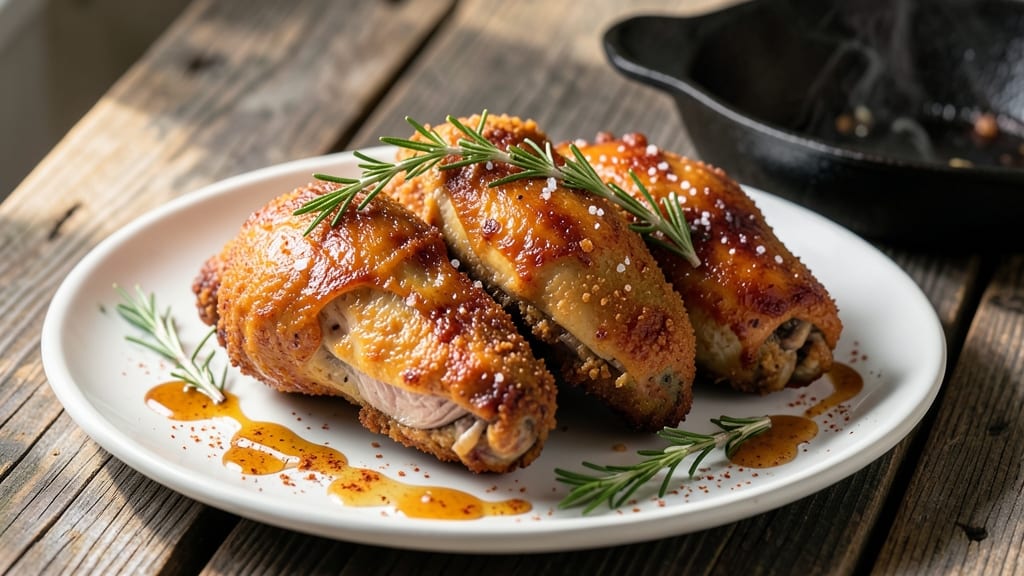
This African American Southern fried chicken recipe delivers the legendary combination of crispy skin and juicy meat that’s been passed down through generations. The secret lies in a buttermilk brine—infused with hot sauce, garlic, and herbs—that tenderizes the chicken while building flavor deep in the meat.
Unlike quick marinades, this method lets the chicken absorb moisture and seasoning for hours, ensuring every bite is packed with rich, savory depth.
The double-frying technique is where the magic happens: first at 325°F to render fat and cook the meat gently, then a quick crisp at 375°F to lock in that golden, shatteringly crisp exterior.
Traditional Southern cooks swear by vegetable or peanut oil for its high smoke point and neutral flavor, though modern twists like air-frying can deliver similar results with less mess. The seasoning blend—salt, black pepper, paprika, and a pinch of cayenne—adds warmth without overpowering the buttermilk’s tangy brightness.
What makes this recipe special is its roots in resilience and creativity. Enslaved communities adapted European frying methods using local ingredients, turning simple techniques into a dish that became a cornerstone of Southern cuisine.
Today, it’s a celebration of heritage, comfort, and skill—where every crispy bite tells a story. Serve it with classic sides like collard greens or cornbread to complete the experience.
Ready to master the art of Southern fried chicken? This method is foolproof for beginners but refined enough to impress even the most seasoned cooks. The key is patience—letting the buttermilk work its magic and trusting the double-fry process.
Once you try it, you’ll understand why this dish remains a beloved staple across generations.
Ingredients for african american southern fried chicken
Buttermilk brine, crispy skin, and juicy meat—this is the heart of Southern fried chicken tradition.
| Ingredient | Amount | Notes |
|---|---|---|
| Chicken Thighs, Bone-In, Skin-On 🍗 | 1 ½ lb | Cut into 8 even-sized pieces |
| Buttermilk 🥛 | 1 cup | Full-fat for optimal flavor |
| Hot Sauce 🌶️ | 2 tbsp | Like Crystal or Tabasco |
| Garlic Cloves 🧄 | 4 cloves | Minced for even distribution |
| Fresh Rosemary 🌿 | ¼ cup | Finely chopped, stems removed |
| Vegetable Oil 🫒 | 4 cups | High smoke point, neutral flavor |
| All-Purpose Flour 🌾 | 1 ½ cups | For dredging, sifted |
| Diamond Crystal Kosher Salt 🧂 | 1 ½ tbsp | For seasoning and brine |
| Ground Black Pepper 🌶️ | 1 tsp | Freshly cracked for aroma |
| Smoked Paprika 🌶️ | 1 tbsp | For depth and color |
| Cayenne Pepper 🔥 | ½ tsp | Adjust for heat preference |
| Peanut Oil 🫒 | 1 cup | For double-frying, optional |
The chicken thighs are the foundation—bone-in, skin-on for maximum flavor and texture. Look for free-range or heritage breed if possible, but standard supermarket thighs work beautifully. Honey Grove Farms or your local butcher often carry the best quality. The buttermilk should be full-fat (the good stuff, not the low-fat version) for that rich, tangy flavor that tenderizes the meat. Fresh rosemary adds an aromatic depth that dried just can't match—Whole Foods or Trader Joe's usually carry bundles of it. If you're short on time, dried rosemary at half the amount will work, though it lacks that fresh brightness.
No buttermilk? Mix 1 cup whole milk with 1 tbsp lemon juice or vinegar, let it curdle for 10 minutes. Hot sauce can be swapped for Worcestershire sauce (just omit the cayenne) or even a splash of soy sauce for umami depth. The vegetable oil is non-negotiable for frying—Crisco or generic brands from the grocery store work fine, but avoid olive oil (it burns too easily). For the flour, King Arthur or Gold Medal are reliable choices. The double-fry technique requires two separate batches of oil—one for the initial cook at 325°F and another for the crisp at 375°F. If you're short on oil, peanut oil (like Planters) can handle both temperatures without breaking down.
The buttermilk brine can be made up to 24 hours ahead—this is where the magic happens. Store it in the fridge, and let the chicken come to room temperature before frying for even cooking. The fried chicken reheats best at 300°F for 10-15 minutes to maintain crispiness. Keep leftovers in an airtight container for up to 3 days, though it's best enjoyed fresh. For a crowd, double the recipe—the extra work is worth it for seconds. The oil can be reused 2-3 times if strained through a fine-mesh sieve after each use, but discard it once it starts smoking excessively.
Why You'll Love This Recipe
- Two-Ingredient Magic: The buttermilk marinade does all the work—just soak the thighs overnight (or even 4 hours if you're short on time) and you’ve got tender, juicy meat that practically falls apart. No fancy techniques, no stress, just flavor waiting to happen.
- Crispy-Creamy Payoff: That skin-on thigh? Golden, shatteringly crisp with a buttermilk kiss inside—like a hug from your grandma’s kitchen. The hot sauce and rosemary punch cuts through the richness, so it’s never heavy, always alive.
- Game for Any Night: Sunday dinner? Check. Weeknight takeout replacement? Double-check. Leftovers reheat beautifully for fried chicken sandwiches or biscuit dips—because nobody should waste this kind of goodness.
- Budget-Friendly Feast: Bone-in thighs stretch further than breasts, and buttermilk is cheaper than specialty marinades. A single batch feeds four hungry people (or one very enthusiastic me) for under $10, and the leftovers? Even better the next day.
Step-by-step instructions for buttermilk brine fried chicken
This method delivers legendary Southern-style fried chicken with an ultra-crispy exterior and impossibly tender interior.
Prepare the Buttermilk Brine
In a large resealable plastic bag, combine the 1 cup buttermilk, 2 tablespoons hot sauce, 1.5 tablespoons diamond crystal kosher salt, 1 teaspoon ground black pepper, 1 tablespoon smoked paprika, and 0.5 teaspoon cayenne pepper. Seal the bag and gently massage until the spices dissolve completely. This brine infuses the chicken with flavor while keeping it moist during frying.
Add the 1.5 lb chicken thighs, making sure each piece is fully coated. Seal the bag again and refrigerate for at least 4 hours or overnight. The acidity in the buttermilk tenderizes the meat while the spices penetrate deeply. For best results, flip the bag occasionally to ensure even coating.
Create the Flour Dredge
In a large bowl, whisk together the 1.5 cups all-purpose flour, 4 cloves minced garlic, and 0.25 cup finely chopped fresh rosemary. Sift the mixture through a fine-mesh strainer into another bowl to remove any lumps. This creates a light, airy coating that will achieve that signature crispy texture.
Remove the chicken from the brine, letting any excess liquid drip off. Pat each piece dry with paper towels—this step is crucial for maximum crispiness. Working in batches, shake off any excess brine and immediately dredge each piece thoroughly in the flour mixture, pressing gently to adhere. Let the dredged chicken rest for 10 minutes to allow the flour to form a crust.
Fry to Golden Perfection
Heat 4 cups vegetable oil in a deep fryer or heavy pot to 350°F. Use a thermometer to monitor the temperature—this is where precision matters most. The oil should be hot enough to sizzle when a small piece of chicken is submerged, but not smoking.
Working in small batches to avoid overcrowding, carefully lower the dredged chicken into the hot oil. Fry for 12-15 minutes, turning occasionally, until the skin is deep golden brown and reaches an internal temperature of 165°F. The key is patience—rushing leads to uneven cooking and soggy skin. For extra crispiness, you can double-fry: cool the chicken slightly, then fry again in 1 cup peanut oil at 375°F for 3-4 minutes until ultra-crispy.
Rest and Serve
Transfer the fried chicken to a wire rack set over a baking sheet to drain excess oil. Let it rest for 5 minutes before serving. This resting period allows the juices to redistribute, ensuring each bite is moist and flavorful. The skin should remain crispy while the meat stays succulent.
Serve immediately with classic sides like mashed potatoes, collard greens, or cornbread. The combination of smoky, spicy flavors with the buttermilk tang creates a perfect balance that defines Southern fried chicken at its finest. Each piece should crackle with every bite, revealing tender, juicy meat beneath.
Pro Tips For Making African American Southern Fried Chicken
- CRISP THE SKIN FIRST: The skin’s your golden ticket, so pat those thighs bone-dry with paper towels before buttermilk—no exceptions. I used to skip this, and the crust would turn soggy halfway through frying. Trust me, the extra 30 seconds now saves you from greasy, limp chicken later.
- BRINE THE THIGHS: Toss the thighs in a mix of buttermilk, hot sauce, and 1 tablespoon salt per cup of liquid for at least 4 hours (overnight if you’re patient). This keeps them juicy and lets the seasoning sink in deep—no more dry, flavorless bites. I learned this the hard way after serving rubbery chicken to guests.
- DON’T OVERCROWD THE FRYER: Fry in batches of 2-3 pieces at a time, or the oil will drop below 350°F and your chicken will steam instead of crisp. I once fried a whole batch at once, and the skin turned greasy instead of crunchy. Patience here makes all the difference—yes, even if you’re hungry.
- GARLIC-ROSEMARY INFUSED OIL: While the oil heats, toss in 4 smashed garlic cloves and 2 sprigs of rosemary for the last 5 minutes before frying. The aroma alone sells the dish, and it adds a subtle depth the buttermilk marinade can’t match. Sounds weird, but it works—just strain the herbs before frying.
Regional styles of this recipe
Texas-Style Crispy
In Texas, the focus is all about that shatteringly crisp skin—achieved through a double-fry technique at precise temperatures. Start by frying the chicken at 325°F for 10 minutes to render fat and cook through, then finish at 375°F for 3-4 minutes in fresh oil.
Texans often add 1 tablespoon of cornstarch to the flour dredge for extra crunch. Serve with white bread for dipping—this is a must in Houston and Dallas kitchens. 🔥
Mississippi Heat
Mississippi takes its fried chicken with a spicy kick, incorporating 1 tablespoon of celery salt and ½ teaspoon of black pepper into the flour dredge. The buttermilk brine gets an extra 1 tablespoon of hot sauce (like Crystal) for tang.
This style is often paired with collard greens and cornbread, creating a full Southern meal. The heat balances the richness perfectly. 🌶️
Carolina Gold
South Carolina’s version leans into herbaceous richness with 1 tablespoon of fresh thyme added to the buttermilk brine alongside the rosemary. The flour dredge includes 1 teaspoon of onion powder for depth.
This style is lighter on cayenne but packs smoky flavor from the paprika. Serve with hushpuppies and peach cobbler for a true Carolina feast. 🥗
Georgia’s Buttermilk Secret
Georgia cooks swear by a longer buttermilk soak—up to 24 hours—to achieve unmatched tenderness. The flour dredge here is extra fine, almost like a dusting, to keep the coating light.
Georgia-style fried chicken is often less spicy but more aromatic, with 1 tablespoon of fresh parsley added to the dredge. Pair it with pimento cheese and sweet tea for the ultimate Southern combo. 💛
Louisiana’s Cajun Twist
Louisiana blends its Cajun heritage into fried chicken by adding ½ teaspoon of filé powder (ground sassafras) to the flour dredge. The buttermilk brine gets a splash of 1 tablespoon of Cajun seasoning for a spicy, earthy flavor.
This style is crispy outside and juicy inside, often served with dirty rice and okra. The filé powder adds a unique, nutty depth. 🌶️
Modern Air-Fryer Adaptation
For a healthier twist, many modern cooks use an air fryer at 375°F for 20-25 minutes, flipping halfway. The buttermilk brine and flour dredge stay the same, but the result is 90% as crispy with far less oil.
This method works great for smaller batches and is perfect for weeknight dinners. Just avoid overcrowding—the air needs to circulate! ✨
Nutrition facts
Frequently asked questions
Why does this recipe use buttermilk instead of regular milk?
The acidity in buttermilk tenderizes the chicken while adding a tangy brightness that regular milk can't match. The longer soak (4+ hours) lets the acid break down proteins, creating juicier meat with that signature Southern flavor. Plus, the fat content in full-fat buttermilk helps build a richer crust during frying.
Can I use chicken breasts instead of thighs?
Chicken breasts will work, but thighs are traditional for this recipe because they stay juicier during frying. If you must use breasts, pound them to an even thickness (½-inch) and reduce frying time to 8-10 minutes to prevent drying. For best results, stick with thighs—they're more forgiving and hold up better to the double-fry technique.
What's the deal with the double-fry method?
The first fry at 325°F gently cooks the meat while rendering fat, while the second at 375°F creates that legendary crispy skin. This two-step process prevents soggy chicken by letting excess moisture evaporate between fries. If you're short on time, skip the second fry—but you'll lose that signature crunch.
How do I keep the chicken crispy after frying?
Transfer fried chicken to a wire rack (not a plate) to drain excess oil, then serve immediately. If reheating, bake at 300°F for 10-15 minutes—never microwave, as it turns the coating rubbery. For maximum crispiness, fry in small batches and keep the second oil at 375°F—lower temps make the skin soft.
What's the best way to store leftover fried chicken?
Store in an airtight container for up to 3 days in the fridge, or freeze for 3 months. To reheat, bake at 350°F for 15 minutes (cover loosely with foil). The key is keeping it dry—moisture kills crispiness. For best texture, enjoy fresh and make only what you'll eat in one sitting.