
Main Courses
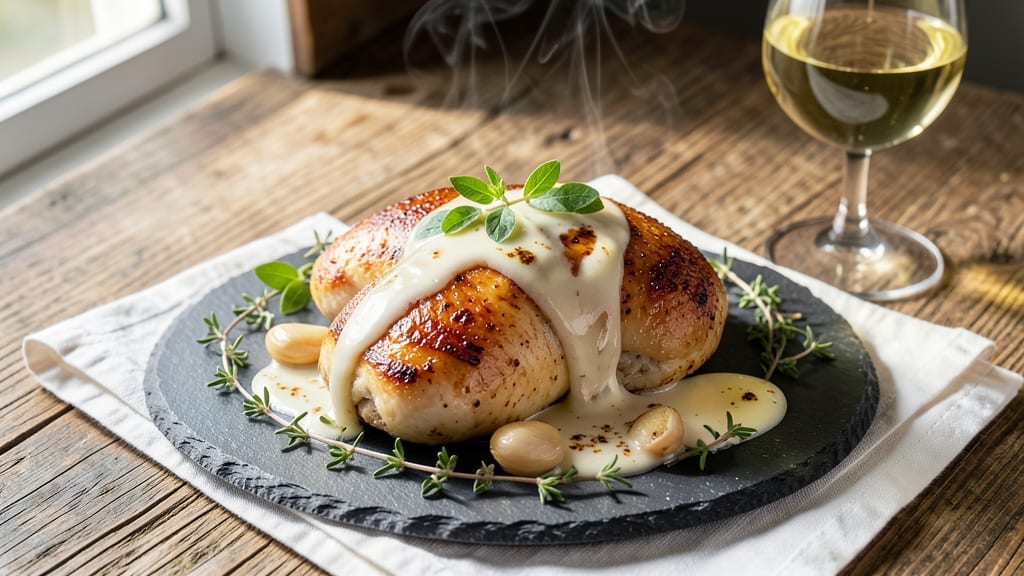
This baked chicken with white wine recipe transforms simple ingredients into a restaurant-worthy dish with crispy golden skin and a rich, herbed wine sauce.
The secret lies in marinating the chicken in white wine overnight—this tenderizes the meat while infusing it with bright, aromatic flavors that carry through to the oven.
I developed this recipe after years of perfecting the balance between acidity and richness, ensuring every bite delivers juicy chicken with a sauce that clings beautifully.
The process is straightforward: marinate the chicken, roast it in the oven until the skin is crispy and golden, then deglaze the pan with the leftover wine to create a velvety sauce.
The combination of garlic, thyme, and butter in the marinade complements the wine’s acidity, while a touch of Dijon mustard adds depth. This method guarantees a dish that’s elegant enough for a dinner party but simple enough for a weeknight.
By the time you’re done, you’ll have perfectly cooked chicken with skin that’s crispy enough to stand up to the sauce, and a pan sauce that’s rich, flavorful, and packed with herbs.
The wine reduces into a glossy, aromatic glaze that coats every bite, making this recipe a standout for any occasion. Serve it with roasted vegetables or crusty bread to soak up every last drop of that herbed wine magic.
What makes this recipe truly special is its versatility—use a dry white wine like Sauvignon Blanc or Chardonnay, and adjust the herbs to your taste. The technique is foolproof, and the results are consistently impressive, proving that you don’t need a fancy restaurant to enjoy a dish this delicious.
Let’s get started on creating your own herbed wine sauce masterpiece.
Ingredients for baked chicken white wine
Pantry staples and a bottle of white wine—this is all you need for restaurant-quality chicken.
| Ingredient | Amount | Notes |
|---|---|---|
| Chicken Thighs 🍗 | 1 ½ lb | Bone-in, skin-on preferred |
| Dry White Wine 🍷 | 1 cup | Sauvignon Blanc or Chardonnay |
| Unsalted Butter 🧈 | ½ cup | Cold, cubed for marinade |
| Fresh Thyme 🌿 | ¼ cup | Stems removed, loosely packed |
| Garlic Cloves 🧄 | 4 cloves | Minced for marinade |
| Dijon Mustard 🍯 | 1 tbsp | For depth in marinade |
| Olive Oil 🫒 | 2 tbsp | Extra-virgin for richness |
| Salt 🧂 | 1 ½ tsp | Kosher or sea salt |
| Black Pepper 🌶️ | ½ tsp | Freshly ground preferred |
| Fresh Rosemary 🌿 | ⅛ cup | Chopped, for garnish |
| Fresh Parsley 🌿 | ⅛ cup | Chopped, for garnish |
| All-Purpose Flour 🌾 | 1 tbsp | For dredging chicken |
The chicken thighs are the star here—bone-in, skin-on gives you that perfect crispy skin. Trader Joe's or any grocery store sells them prepped this way, but if you're buying whole, ask the butcher to leave the skin on. I grab Sauvignon Blanc for this recipe—it's bright enough to cut through the richness of the butter and chicken. The key is using bone-in thighs; they stay juicier than breasts during the long roast. If you can't find bone-in, skin-on thighs, use breasts but pound them to even thickness so they cook evenly.
No white wine? Chicken broth with a splash of lemon juice works in a pinch—it won't taste the same, but it'll still be delicious. Fresh thyme is ideal, but dried thyme at one-third the amount gets the job done. The Dijon mustard adds a little tang that balances the richness, so don't skip it. For the butter, I always use unsalted—it lets the wine and herbs shine. If you're short on time, microwave the butter 40 seconds to just melt it before mixing with the marinade. The flour is just for dredging the chicken before roasting—it helps crisp up the skin even more.
Marinate the chicken overnight in the fridge—this is non-negotiable for tender meat. The wine marinade keeps for 3 days in the fridge, so make extra if you're planning ahead. The cooked chicken reheats beautifully—just warm it in the oven at 350°F for 10 minutes. The sauce thickens as it cools, so if it's too thin after deglazing, simmer it for a few extra minutes. Store leftovers in the fridge for 4 days or freeze for 3 months—the flavor actually gets better the next day.
Why You'll Love This Recipe
- One-Pan Magic: I swear by this for nights when I’d rather not wash a million dishes. Just toss the chicken thighs, wine, butter, and thyme on a sheet pan, and let the oven do the work—no pots, no pans, no stress.
- Garlic-Butter Bliss: That crispy skin with the tender, juicy inside? Yes. But the real star is the sauce—wine and butter caramelize into a glossy, herby blanket that makes even the simplest side shine. (Honestly, I’ve served it over rice and called it dinner at 6:30 PM.)
- Weeknight to Dinner Party: Between us, this recipe works whether it’s a lazy Tuesday or guests are coming. The same technique—baked chicken thighs with thyme and garlic—feels fancy if you garnish it right, but it’s just as happy reheated for lunch the next day.
- Budget-Friendly Luxury: Chicken thighs are forgiving and cheap, and a bottle of white wine (even the $8 stuff) transforms them. Leftovers? Even better. The flavor only deepens, so you’ll have a second dinner without extra effort. (My wallet thanks me.)
Step-by-step instructions for baked chicken with white wine
Here's how to get that perfect golden skin and rich herbed wine sauce every time.
Prep the Chicken for Maximum Crispiness
Start by patting the chicken thighs completely dry with paper towels—this is non-negotiable for crispy skin. I like to work with them skin-side up on a cutting board, pressing firmly to remove any moisture hiding in the crevices. Season both sides generously with all 1.5 teaspoons of salt and 0.5 teaspoon of black pepper, making sure to get into the crevices.
Next, heat 2 tablespoons of olive oil in an oven-safe skillet over medium-high heat. Once shimmering, add the chicken thighs skin-side down and let them cook undisturbed for 5-6 minutes until the skin turns golden brown and crispy. Flip carefully and cook another 3-4 minutes until the internal temperature reaches 160°F. This initial sear locks in juices and builds flavor.
Create the Herbed Wine Marinade
While the chicken rests, melt 0.5 cup of unsalted butter in the same skillet over low heat. Add the 4 minced garlic cloves and cook for 30 seconds until fragrant—don't let it brown or it'll turn bitter. Stir in the 1 tablespoon of Dijon mustard and cook for another 1 minute. Pour in the 1 cup of dry white wine and scrape up any browned bits from the bottom of the pan.
Bring the mixture to a gentle simmer and reduce by half—this should take about 5 minutes. Remove from heat and stir in the 0.25 cup of fresh thyme and 1 tablespoon of all-purpose flour, whisking until smooth. This creates a velvety sauce that'll coat the chicken beautifully. Keep it warm while you finish baking.
Bake to Juicy Perfection
Transfer the seared chicken to a baking dish and pour the herbed wine sauce evenly over the top. The sauce should coat the chicken completely—this ensures every bite gets that rich, herby flavor. Cover the dish loosely with foil and bake at 375°F for 20-25 minutes until the chicken reaches 175°F internally.
Here's the thing—don't overcook it. The chicken will carry over about 5°F while resting, so pull it out when it's just slightly underdone. The skin should be crispy and the meat should pull away from the bone easily. If the sauce starts to thicken too much during baking, add 1-2 tablespoons of water to maintain its silky consistency.
Garnish and Serve
Remove the chicken from the oven and let it rest for 5 minutes before serving. This resting period is crucial—it allows the juices to redistribute throughout the meat, preventing dryness. While it rests, sprinkle the chicken with 0.125 cup of chopped fresh rosemary and 0.125 cup of chopped fresh parsley for a pop of color and freshness.
Serve the chicken with the herbed wine sauce spooned over the top. The skin should be crispy enough to stand up on its own, and each bite should deliver juicy, flavorful meat with that rich, herby wine sauce clinging to every strand. Pair it with roasted vegetables or crusty bread to soak up all that delicious sauce.
Pro Tips For Making Baked Chicken White Wine
- USE BONE-IN THIGHS: Skin-on, bone-in thighs stay juicier and develop richer flavor—no need for extra basting. The bone acts like a thermometer, signaling when the meat’s done without overcooking.
- SALT THYME STEMS: Crush thyme stems before adding them to the pan—releases more aroma and oil. I used to toss them whole and wondered why my dish never had that deep herbal punch.
- DON’T BOIL THE WINE: Simmer it gently until reduced by half, then add butter—this keeps the alcohol from turning harsh. After one batch where the wine tasted like cooking wine, I learned to play it cool.
- REST UNDER FOIL: Tent the chicken with foil for 5–10 minutes after baking. This traps steam, keeping the meat tender while you finish the sauce—no more dry, overworked chicken.
Serving suggestions for this baked chicken white wine
Classic Wine Sauce Pairings
The herbed wine sauce in this recipe is versatile enough to pair beautifully with traditional sides. I love serving it with roasted asparagus tossed in lemon zest and olive oil—the bright acidity cuts through the richness of the chicken.
For a heartier option, try creamy mashed potatoes made with roasted garlic and a splash of whole milk—the smooth texture balances the sauce's depth. 🥗
Another favorite is crusty baguette slices for dipping—just toast them lightly in the oven until golden. The bread soaks up the sauce perfectly, making every bite even more satisfying.
If you prefer vegetables, sautéed green beans with slivered almonds and a hint of soy sauce add a satisfying crunch and umami contrast.
Elegant Garnishes
Fresh herbs elevate this dish instantly. Sprinkle chopped parsley and rosemary over the chicken just before serving—their vibrant colors make the plate look restaurant-worthy. For a pop of brightness, add thinly sliced lemon wedges on the side or drizzle a few drops of lemon juice over the sauce. 🍋
If you want to add a touch of luxury, finish with toasted breadcrumbs mixed with grated Parmesan cheese—this adds a nutty crunch that contrasts beautifully with the tender chicken. I also love a sprinkle of flaky sea salt right before serving to enhance all the flavors.
Wine Pairing Perfection
The white wine in the recipe pairs naturally with similar wines at the table. A crisp Sauvignon Blanc from New Zealand or a buttery Chardonnay from California complements the dish beautifully. The acidity in these wines mirrors the sauce's brightness, creating a harmonious balance. 🍷
For beer lovers, a Belgian witbier like Hoegaarden adds a refreshing contrast with its citrusy notes. If you prefer red wine, a light Pinot Noir works surprisingly well—its delicate fruitiness doesn't overpower the dish. Always serve your wine slightly chilled (around 50°F) to enhance its flavors.
Make-Ahead Serving Tips
This dish reheats beautifully, making it perfect for meal prep. Store the chicken and sauce separately in airtight containers in the fridge for up to 4 days.
When ready to serve, reheat the chicken in the oven at 350°F for 10 minutes while warming the sauce on the stovetop over low heat. 🔥
For a stress-free dinner party, assemble the dish ahead of time and reheat just before serving. The flavors actually deepen overnight, so leftovers taste even better the next day. If you're serving a crowd, double the recipe—the sauce is always a crowd-pleaser!
Nutrition facts
Frequently asked questions
Can I use chicken breasts instead of thighs?
You can try, but thighs work better for this recipe! Chicken breasts are leaner and can dry out during the long bake. If you must use breasts, pound them to ½-inch thickness and reduce the oven time to 15-18 minutes to avoid overcooking. For extra moisture, add 1 tablespoon of chicken broth to the marinade.
What if I don't have white wine?
No problem! Use 1 cup of chicken broth mixed with 1 tablespoon of lemon juice as a substitute. For extra depth, add ½ teaspoon of white wine vinegar or a pinch of cream of tartar to mimic the wine's acidity. The flavor won't be identical, but it'll still be delicious.
Why does the chicken skin sometimes come out soggy?
Soggy skin usually happens when moisture gets trapped under it. Always pat the chicken completely dry before seasoning, and avoid overcrowding the pan during searing. For extra crispiness, broil the chicken for 2-3 minutes at the end of baking. Also, make sure your oven rack is in the middle position for even heat circulation.
Can I make this recipe ahead of time?
This dish actually tastes better the next day. Marinate the chicken overnight, then refrigerate the fully assembled dish (covered) for up to 2 days. Reheat in the oven at 350°F for 10 minutes—the flavors meld beautifully. For the sauce, reduce it slightly before storing to prevent sliminess when reheated.
What's the best way to store leftovers?
Store chicken and sauce separately in airtight containers in the fridge for up to 4 days. For longer storage, freeze for 3 months. To reheat, warm the sauce on the stovetop over low heat and the chicken in the oven at 350°F for 10 minutes, covered with foil. The sauce may thicken slightly when reheated—just add a splash of water or broth if needed.