
Main Courses
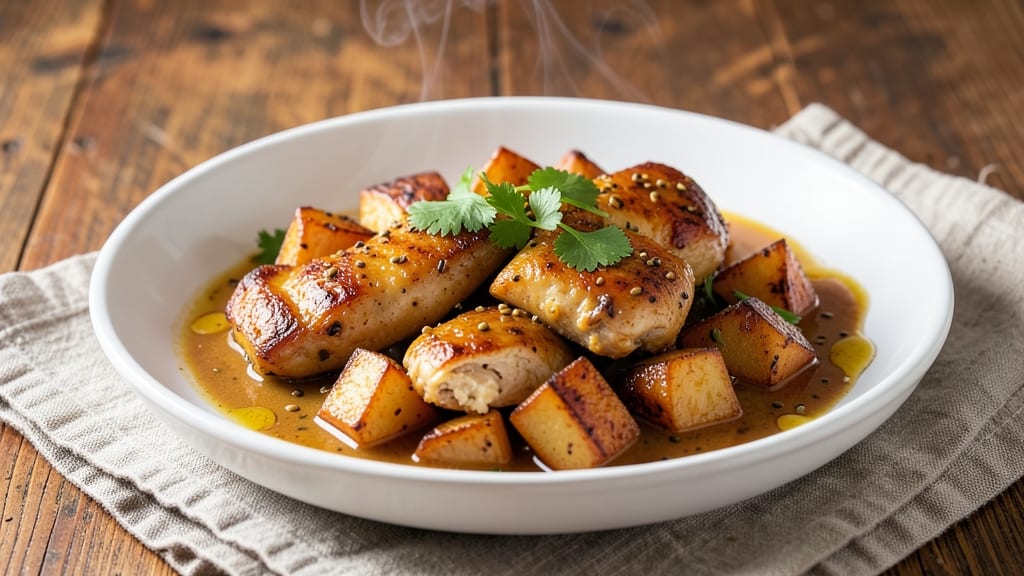
Aloo Chicken Salan delivers the perfect balance of tender chicken, fluffy potatoes, and aromatic South Indian spices in a rich, tangy gravy. This classic dish transforms simple ingredients into a flavorful symphony that's both comforting and restaurant-quality. The secret lies in the tempering (tadka) and slow simmering that develops deep, layered flavors without overpowering the natural taste of the chicken and potatoes.
What sets this recipe apart is the careful blending of spices—cumin, coriander, and mustard seeds—to create a fragrant base, followed by the signature tang from tamarind and coconut milk. The potatoes cook until tender yet hold their shape, absorbing the rich, spiced gravy while the chicken remains juicy and flavorful.
This dish is a staple in South Indian homes, often served with steamed rice or roti for a complete meal.
By the time you're done, you'll have a pot of aromatic, slightly tangy curry with tender chicken pieces swimming in a velvety gravy that clings to every bite. The spices are balanced just right—warm, earthy, and subtly sweet—with a touch of acidity that brightens the dish.
The result is a comforting yet sophisticated meal that feels like a hug in every spoonful.
Perfect for family dinners or special occasions, this aloo chicken salan is versatile enough to pair with rice, dal, or even crusty bread. The recipe is designed to be authentic yet approachable, ensuring you achieve that perfect harmony of textures and flavors. Let's get cooking!
Ingredients for aloo chicken salan
Tender chicken, fluffy potatoes, and aromatic South Indian spices create this restaurant-quality dish in one pot.
| Ingredient | Amount | Notes |
|---|---|---|
| Boneless Chicken Thighs 🍗 | 1 ½ lb | Cut into bite-sized pieces |
| Russet Potatoes 🥔 | 1 ½ lb | Peeled and cut into 1-inch cubes |
| Coconut Milk 🥥 | 1 can (13.5 oz) | Full-fat for creaminess |
| Tamarind Paste 🍈 | 2 tbsp | Adjust for tanginess |
| Mustard Seeds 🌿 | 1 tsp | Whole, for tempering |
| Cumin Seeds 🌶️ | 1 tsp | Toasted for aroma |
| Coriander Seeds 🌿 | 1 tsp | Toasted for depth |
| Dried Red Chilies 🌶️ | 2 pieces | Adjust for heat preference |
| Fresh Curry Leaves 🌿 | ¼ cup | Torn, not chopped |
| Ginger 🧄 | 2 tbsp | Grated, fresh preferred |
| Garlic Cloves 🧄 | 6 cloves | Minced for tempering |
| Onion 🧅 | 1 medium | Finely chopped |
| Tomato 🍅 | 1 medium | Chopped, ripe preferred |
| Salt 🧂 | 1 ½ tsp | Adjust to taste |
| Turmeric Powder 🌿 | ½ tsp | Freshly ground preferred |
| Garam Masala Powder 🌶️ | 1 tsp | For finishing touch |
| Vegetable Oil 🫒 | ½ cup | For tempering |
The chicken and potatoes are the stars here—boneless thighs stay juicier than breasts, and Russet potatoes hold their shape beautifully. Grab fresh curry leaves at an Indian grocery store if you can—they're non-negotiable for that authentic aroma. For the spices, toast your whole spices (cumin, coriander) in a dry pan for 30 seconds before adding to oil—this brings out their magic. If you're short on time, pre-toasted spice blends work too, but fresh is always better. The tamarind paste? Look for blocks at specialty stores—they're easier to control than the powdered kind.
No tamarind? Lemon juice plus a pinch of sugar mimics the tang, though it won't be identical. Short on coconut milk? Substitute with 1/2 cup heavy cream plus 1/2 cup water, but the texture won't be as velvety. Fresh ginger and garlic are ideal, but jarred minced ginger works in a pinch—just double the amount. The dried red chilies can be swapped for Kashmiri red chili powder if you prefer milder heat. And if you're using pre-cut potatoes, pat them dry first—this helps them crisp up slightly in the gravy.
This dish tastes even better the next day as flavors meld—make extra and freeze portions for lazy weeknights. Store in airtight containers for 4-5 days in the fridge or 3 months in the freezer. Reheat gently on low heat, adding a splash of water if it thickens too much. For serving, I always pair it with steamed basmati rice and a side of raita—the cool yogurt sauce cuts through the richness perfectly.
Why You'll Love This Recipe
- One-Pot Magic: I swear by this—just toss everything into one pot, and the tamarind and coconut milk do the heavy lifting. No fancy techniques, no extra pans, and honestly? The mustard seeds sizzle like they’re putting on a show, but you’re done before the kids even ask what’s for dinner.
- Tamarind Tang Kick: That little jar of tamarind paste? It’s the secret weapon. The first time I used it, I thought, “Wait, this is just sweet?”—then the heat hit, and suddenly the chicken had this je ne sais quoi that made my roommates beg for seconds. The balance of creamy coconut and that sharp tang? Ridiculously good.
- Lunchbox Hero: Between us, this is my go-to for meal prep. The potatoes stay firm but soak up the sauce, and the chicken stays juicy even after three days. Pack it cold, and it’s a hit with my college-aged son—no reheating drama, just hearty bites that don’t taste like “leftovers” (yes, even on a Tuesday night).
- Budget-Friendly Feast: Russet potatoes and chicken thighs are my wallet’s best friends. A single batch feeds four, and the coconut milk stretches further than you’d think. I’ll be real: the first time I made this, I thought, “This is way too cheap to taste this good,” but then I ate the last bite and realized—sometimes the best meals cost almost nothing.
Step-by-step instructions for South Indian aloo chicken salan
Let's create this fragrant, spice-infused South Indian masterpiece with perfectly tender chicken and potatoes.
Prepare the Chicken and Potatoes
Cut the 1.5 lb boneless chicken thighs into bite-sized pieces and set aside. Peel and cut the 1.5 lb russet potatoes into 1-inch cubes—this size ensures they cook evenly without turning mushy. Soak the potato cubes in cold water for 10 minutes to remove excess starch, then drain well before using. This step prevents the potatoes from becoming gummy in the final dish.
In a large bowl, combine the marinated chicken pieces with the potato cubes. Add 0.5 tsp turmeric powder and 1 tsp salt, tossing gently to coat. The turmeric not only adds color but also helps tenderize the chicken. Let this mixture sit for 10 minutes while you prepare the tempering—this gives the spices time to begin working their magic on the proteins.
Create the Spice Tempering
Heat 0.5 cup vegetable oil in a heavy-bottomed pot over medium heat. Add 1 tsp mustard seeds and let them sizzle for 30 seconds until they pop and turn golden. Add 1 tsp cumin seeds and 1 tsp coriander seeds—you'll see them dance and release their aromatic oils. After 30 seconds, toss in 2 pieces dried red chilies and 0.25 cup torn fresh curry leaves. The chilies will darken slightly while the curry leaves release their citrusy fragrance.
Immediately add 2 tbsp grated ginger and 6 minced garlic cloves, stirring constantly for 1 minute until the garlic turns golden. This is where the real flavor foundation happens—don't rush this step. The garlic should be fragrant but not burnt. Remove the pot from heat and let this tempering cool for 2 minutes—this prevents the spices from cooking off completely when you add them to the main dish.
Cook the Chicken and Potatoes
Return the pot to medium heat and add the chicken-potato mixture along with 1 medium finely chopped onion and 1 medium chopped tomato. Stir well to combine everything with the tempering. Cook uncovered for 8-10 minutes, stirring occasionally, until the chicken turns opaque and the potatoes begin to soften slightly. You'll notice the mixture darkening—this is the spices working their magic to create that signature South Indian color.
Add 2 tbsp tamarind paste and 1 tsp garam masala powder, stirring to distribute evenly. The tamarind will add that signature tangy depth while the garam masala brings warmth. Pour in 1 can (13.5 oz) full-fat coconut milk, stirring gently to avoid breaking the cream. The coconut milk should just cover the mixture—this creates a rich, velvety sauce without making the dish too watery.
Simmer to Perfection
Bring the mixture to a gentle simmer over low heat and cook uncovered for 20-25 minutes, stirring occasionally. The chicken should be fork-tender and pull away easily from the bone, while the potatoes should be soft but still hold their shape. If the sauce reduces too much and becomes thick, add 2-3 tablespoons of water to maintain the perfect consistency.
Taste and adjust seasoning—you might need an additional 0.5 tsp salt or more tamarind paste for the right balance of tang and saltiness. The dish should be flavorful but not overpowering. Once perfectly seasoned, remove from heat and let it sit covered for 5 minutes. This resting period allows all the flavors to meld together beautifully, creating that authentic South Indian restaurant taste at home.
Serve with Traditional Accompaniments
Garnish with an extra sprinkle of fresh curry leaves and serve immediately with steamed rice and a side of raita or papad. The contrast of cool yogurt or cucumber raita with the warm, spiced salan makes every bite unforgettable. This dish tastes even better the next day as the flavors continue to develop, so leftovers are a bonus!
Pro Tips For Making Aloo Chicken Salan
- Marinate Chicken Overnight: I learned this the hard way—rushing the marinade means bland, rubbery chicken. Cut the thighs into bite-sized pieces, then mix with 1 tablespoon tamarind paste, 1 teaspoon turmeric, and ½ cup yogurt. Let it sit for at least 6 hours (yes, even if you're impatient like me). The acid and spices will work their magic, giving you tender, flavorful bites that actually hold up in the coconut gravy.
- Boil Potatoes Whole First: Peeling and chopping potatoes before cooking them always leads to mush. Instead, boil whole, unpeeled russets in salted water until fork-tender (about 15 minutes). Then peel, halve, and add them to the simmering curry for the last 8-10 minutes—this keeps them intact and soaks up the coconut-tamarind sauce perfectly. No more sad, waterlogged spuds.
- Bloom Spices Before Coconut: Dump coconut milk straight into a hot pan, and you’ll end up with a greasy, unflavored mess. First, dry-toast mustard seeds, curry leaves, and green chilies in 1 tablespoon oil until they sizzle (about 30 seconds). Then add onions and ginger-garlic paste before pouring in the coconut milk—this builds layers of flavor instead of just a milky blob.
- Simmer Tamarind Slowly: Dump tamarind paste all at once, and the curry will turn bitter. Instead, dissolve 1 tablespoon tamarind paste in ¼ cup warm water first, then whisk it into the simmering gravy gradually. Let the sauce cook uncovered for 5 minutes to mellow the sourness—this balances the sweetness of the potatoes and the richness of the coconut. Trust the process.
Best sauces and condiments for these flavors
Tamarind-Coconut Gravy
This signature sauce transforms the dish with its perfect balance of tangy tamarind and creamy coconut milk. Start by dissolving 2 tbsp tamarind paste in ½ cup warm water until smooth—this prevents graininess in your final sauce.
For extra depth, I like toasting 1 tsp cumin seeds and 1 tsp coriander seeds in 2 tbsp oil until fragrant before adding them to the tamarind mixture. Simmer this base for 5 minutes to develop the flavors before incorporating the coconut milk. 🍈
Spiced Yogurt Raita
A cooling raita is essential to cut through the richness of the salan. Mix 1 cup plain yogurt with 1 tbsp grated cucumber, ½ tsp roasted cumin powder, ½ tsp salt, and 1 tbsp chopped mint.
For a spicy kick, add ¼ tsp Kashmiri red chili powder. Chill for 30 minutes before serving—this lets the flavors meld beautifully. The yogurt's acidity balances the dish's warmth perfectly.
Crispy Papad Garnish
Store-bought papad (available at Indian grocery stores) adds a delightful crunch. Heat 2-3 papad in a dry skillet for 20-30 seconds per side until crisp, then crumble over the salan just before serving.
For homemade, mix ½ cup rice flour, ¼ cup lentil flour, ½ tsp turmeric, and ½ tsp salt with water to form a dough. Roll thin and fry until golden. 🌟
Green Chili Chutney
Blend ½ cup green chilies, ½ cup cilantro, 1 tbsp tamarind paste, 1 tbsp jaggery, and 2 tbsp coconut into a vibrant chutney. This adds a fresh, spicy contrast to the rich salan.
For extra creaminess, add 1 tbsp yogurt to the blend. Serve as a side or drizzle lightly over the dish for a burst of flavor.
Lemon Pickle
Store-bought mango or lime pickle (like Bombay Mix) adds a tangy, sweet-spicy element. Spoon 1-2 tbsp alongside the salan for a restaurant-style presentation. For homemade, mix 1 cup grated mango/lime, 1 tbsp mustard seeds, 1 tbsp turmeric, 1 tbsp salt, and ½ cup oil.
Let it ferment for 2 weeks for maximum flavor. ⚡
Nutrition facts
Frequently asked questions
Can I use chicken breast instead of thighs for this recipe?
Chicken thighs work best because they stay juicier during the long simmering process. If you must use breast, cut them into smaller pieces and add them 10 minutes later in the cooking process to prevent drying out. You may also need to reduce the cooking time by 5 minutes to avoid overcooking.
What makes the potatoes in this dish different from regular potato curry?
The potatoes here are soaked in water first to remove excess starch, then cut into 1-inch cubes to maintain their shape while absorbing the rich gravy. The secret is cooking them gently in the spiced coconut-tamarind sauce until tender but still firm—never mushy. This technique creates that signature South Indian texture where each bite has both potato and sauce.
How do I adjust the spice level for kids or sensitive stomachs?
Reduce the dried red chilies to 1 piece or omit them completely. For extra mildness, remove the seeds from the chilies before adding. You can also strain the final gravy through a fine-mesh sieve to remove visible spices while keeping the flavor. Always taste as you go—you can add more salt or coconut milk to balance flavors without heat.
Can I make this recipe without coconut milk?
Yes, but the texture will be thinner. Replace with ½ cup heavy cream plus ½ cup water for richness, or use 1 cup plain yogurt for tanginess. The dish will still be flavorful, though the traditional velvety consistency will change. For a vegan version, use 1 cup cashew cream (soaked cashews blended with water).
Why does my salan taste too tangy or too bland?
Too tangy? Reduce tamarind to 1 tbsp next time. Too bland? Add ½ tsp garam masala or a pinch of black salt (kala namak) for depth. The key is balancing tamarind's acidity with coconut milk's creaminess. Always taste before serving—adjust salt and spices gradually as you go.